Episode Transcript
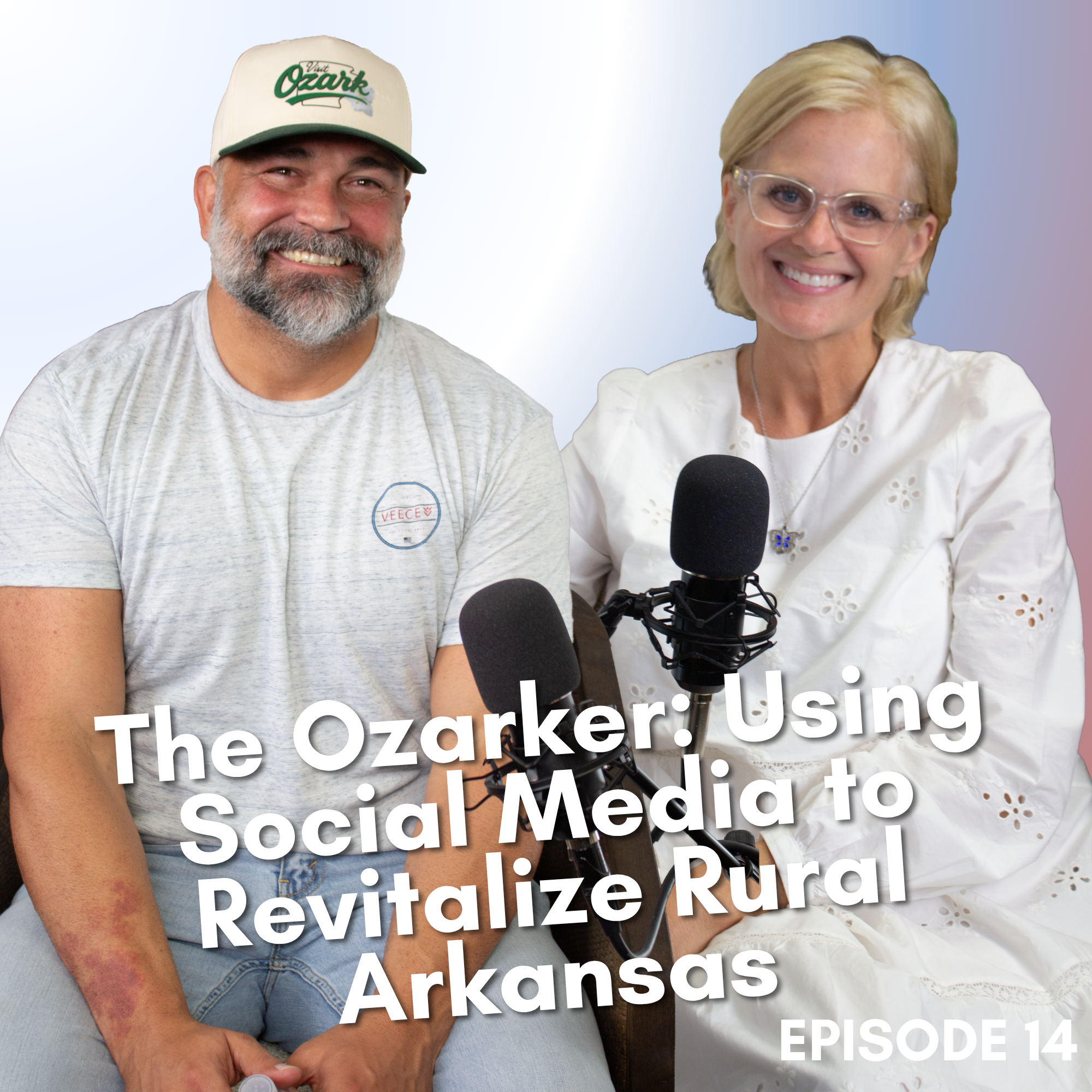
[00:00:07] Speaker A: Welcome to Small Town girl. Guys, I'm so glad to have you here with us today. I have a very special guest from my hometown, Mr. Porter Hayes, also known as Peck Hayes, the Ozarker.
[00:00:22] Speaker B: Yes.
[00:00:23] Speaker A: Can find him on social media as the Ozarker. He's doing a new thing that I think is great for our community and for the surrounding small towns in our community.
And I wanted to talk to him today about lots of things, but particularly about that because I think it is a great idea and a model maybe that some other rural Arkansans could use to stir up some interest in their. In revitalizing their small town.
So, so very excited to have him here and to be able to share him with the Arkansas Democrat Gazette audience. So thank you, Porter, for being here.
[00:01:07] Speaker B: Thank you. And before we begin, condolences to your family. You know, that being from Ozark, you know, condolences to your family and stuff. Your father was my principal, so, I mean, everybody knew him. So thoughts and prayers continue to go out to your family for that. Yes, ma'.
[00:01:22] Speaker A: Am. Thank you very much. Yes. In fact, that's how we speak. Sort of connected. I had seen your.
I had seen some of your content, and he's quite a bit younger than I am, although we grew up together. And I didn't realize that your. Your brother was a friend of mine in high school, and then his sister, who's a little bit younger than me, was also a friend. I didn't connect them, the three of them, but Porter's about 10 years younger than I am. But we grew up in the same town.
And like I said, I had seen some of your content and been interested in what you were doing, and I felt like I should know you. I knew your name and I felt like I should. And so I, you know, some of these things just kind of get on your radar or, like, sit on the periphery of your. Your thoughts. And I was still trying to kind of put. Put it all together. And then you reached out after my dad's accident.
For readers or listeners who aren't aware, I have written about it a few times now in my column, and I spoke about it in another podcast. But my father, my beloved father, who was 80 but very, very healthy, and I thought I was going to get to have him around for.
For a lot longer time. He had a horrific accident on our ranch on June 17 and died. And so we have just been through a terrible loss and profound grief in our family that we are, of course, still right in the middle of. But so many people have Reached out and been so good. And you're one of those. And so thank you. Thank you for your kind words.
[00:03:18] Speaker B: When you live in a small community, you know, like Ms. Hillard, you know, when her passing, how you can't believe that it happened, and your dad, Ms. Hillard, you know, they're people who are influential in the community. And even years past, from him being, you know, a principal and your brother following in his footsteps and being, you know, a superintendent, and now he's moved on to another career, but, you know, synonymous to Ozark. So when I heard about Ms. Hillard's passing and your dad's path, it was just. Is a shock to the community because just how much they meant to the community. So, you know, I'm sure the outpouring of people in support, but that's what, you know, you could not be around them for years, but they always mean something to you.
So that's what I love about Ozark.
And you were talking about my name and you know, my name, Porter. I was named after Porter Hillard, another influential part of the community. And he was somebody who was a giver, and he didn't want people knowing he was a giver. And he helped my mom out when she was younger and she didn't even know it was him. She just. Back in the day, you didn't have apps. You just look in your account and you go to the counter for your account. And she noticed that money was just miraculously there. Well, then she started working for Porter and she was the giver. He would hand her an envelope, go give this to so and so person. And that's when she put two and two together.
Well, his son tragically passed away in 79. And then when she was pregnant with me, she went to Porter and said, may I name my son after you? And. And brother Ted and George Gleason. They were talking about that at his funeral, shared that story. So, yes, I went by Porter when I started doing my own podcast and sports and stuff, because I my business when I started working for DirecTV, of course, Porter and. But everybody knows me as Peck, so they try to find me and even people still to this day. And in Ozark, they're like, can I call you Peck? I was like, oh, absolutely. You know, that's what they've always known me. So it is a bit confusing. But, you know, me and my brother and my sister, we've all went by our middle names. So it's a lot of people that.
But now going back to the Porter and being the Ozarker. It's just one of them things I'm sure we'll get into, but it's been a lot of fun.
It's a lot of fun when you have passion. It's a lot of fun when you can find a small way to give back to your community. The Spectator and Ozark longtime newspaper went away and you're like, man, what can I do to help? And of course, at first you just have millions of ideas.
So I tried something last year. I was like, I'm gonna start my own little thing, Ozark Nation Network. And at first it got a real, a lot of, you know, buzz because at that time you had the entertainment district going on, the prison going on. So. And then it kind of fizzled out. And you know, when the entertainment district in Ozark, you know, I wanted to be fair to the people and I wasn't being fair to the people because I was for the entertainment district. So I had to pull back from that to be fair to the citizens. You know, I'm not going to go on there and be one sided and try to say I'm part of the news or try to give somebody. So I pulled back from that and that's, I think it happened at the right time. I mean, I just wasn't getting the response. And then when John Carter become the AP director, me and him linked up and we were like, man, what can I do? And we started this, the Ozarker project through Visit Ozark and the outpouring of people that in just a short month or two that we've been doing it, you know, going to the restaurants and it's just been a lot of fun. So they had a benefit last weekend for Jackson Tedford and I'll tell you what, nine days, they put that thing on in nine days and they raised over $20,000 for that. And that's what makes me proud of what I do.
[00:07:01] Speaker A: Of course.
[00:07:01] Speaker B: And you see the community come together for somebody in need and to highlight those things.
So we live in a great community, we live in a great town. And you know our slogan, hillbilly ride, pride runs deep. It's, you know, it's a sports slogan, but yet it goes beyond sports because everybody comes together. So, you know, things like that, kickstarts that we can get to see what's going on. And not only Ozark, but invite Altus and Whitaker Village in it. There is so much, you know, you've seen with the World cup people coming to Arkansas from England.
[00:07:37] Speaker A: Yes.
[00:07:37] Speaker B: And they're like, oh my Gosh, this is a beautiful state. And so now's the perfect time. I mean, everybody's seeing our wonderful state in our area that we live in, even here in northwest Arkansas and Ozark and River Valley. So much to do. So why not highlight everything? Why not show off the food and the tourism and all the spots, the Mulberry river and the hiking. There's so much that we have in our little area that I think times we take for granted. You know, I have a cabinet cast that me and my wife, we were talking about. We just. We wish we could go out there, and my sister lives there. And you're like, man, we really take what we have for granted sometimes. So it just. I really embrace the Ozarka role, and I love it. So it's been a big passion. And of course, you know, seeing people notice, hey, I love what you're doing. Thank you for what you're doing. And going back to the benefit, when I went in to check in, the guy's like, oh, you're that guy that does the videos, you know, so it just people that you wouldn't think, see, see you. And that. That's what just motivates you to keep going. So I, you know, that's why we're here today to talk about it. And it's exciting to be able to give back in some small way to my community.
[00:08:46] Speaker A: Southern Loft believes that your home should reflect your unique personality. That's why they offer a wide variety of stylish furniture pieces that are perfect for any taste.
Whether you're looking for a new sofa for your living room or a sleek dining table for your kitchen, they have just what you need.
So when looking for that piece of furniture that reflects you, visit Southern Loft at 3155 North College in Fayetteville, or call at 479-856-6100.
So let's break some of that down for listeners who have no idea what we're talking about.
So let's start.
Start. Tell. Tell me a little bit about your story, Porter. Let's go. Let's. Let's. Let's have the background about you being raised in Ozark and how you, you know, like me, you. You developed this real strong sense of home and sort of loyalty to the. The community.
So were you born there?
[00:09:52] Speaker B: Yes, I was born in Turner Memorial Hospital. Dr. Becky.
For those, was the doctor.
And it goes with my name. Like, my name is on the Bank Ozk building. And for those who don't know, Bank Ozk was Bank of the Ozarks, and then it was bank of Ozark. So, you know, you take a lot of pride in that. And so being born, I get it's something that's instilled in some people. Not everybody has it, and that's okay. I just feel like I was instilled with. I can't explain it sometimes. My wife, she's from Michigan, and we. We met and she sees this small town, and she sees it from the outside, but it's good because she can give me perspective. But there's just something that I take pride in that I give 110%.
[00:10:39] Speaker A: So you went.
You were born there, and then you went from kindergarten to 12th grade?
[00:10:44] Speaker B: No, in 4th grade. My dad was in the military, and he was stationed at Fort Chaffee. And when the army establishment was there at Fort Chaffee, they moved to Fort Polka, Louisiana.
[00:10:55] Speaker A: Okay.
[00:10:55] Speaker B: So then he got stationed to Little Rock. Well, we were in Little Rock, and then my parents divorced when I was 12, and he stayed in Little Rock until his duty was up there, and then he moved to Connecticut. So me and my mother moved back to Ozark in sixth grade.
[00:11:09] Speaker A: Okay.
[00:11:10] Speaker B: So there was a gap of. From fourth grade to seventh grade. I was in, like. I want to count if you go to high school, five different schools.
[00:11:19] Speaker A: Okay.
[00:11:20] Speaker B: Because, you know, I went to Little Rock, then I went to Jacksonville, then I got the air base, and I come back to Ozark.
[00:11:24] Speaker A: So when you came back to Ozark, were you happy to be home? Was there a sense of, okay, well, I'm back where I belong now?
[00:11:31] Speaker B: It took me a minute. It's weird. Sixth grade is a weird time to introduce yourself. I mean, you know, friends. But again, we didn't have social media back then.
[00:11:38] Speaker A: Right.
[00:11:39] Speaker B: So you're. You're pulling yourself away for two years, and you come back and yes, you have. Some of your old friends changed, though. But then there's new people that come back.
[00:11:47] Speaker A: Right, right.
[00:11:47] Speaker B: And then from.
Went to Ozark my seventh grade year, and then I went to a small private school in Clarksville, my 8th and 9th grade year, and then coming back in 10th grade, so it was. I was in and out.
Yeah, so you miss a lot. And the small private school that I went to didn't have any kind of sports or anything, so I really missed being a part of it. And Coach Parrish was, I mean, always very kind to me. And, you know, when my parents got divorced, I lived on Gibson street there. Lance Carpenter song, 12th and Gibson so I lived on Gibson Street. You know, I lived right down from.
And for those who remember, back in the day, when a school day, snow day, I would look out and see if the gate was closed. If the gate was closed, I knew there was school.
[00:12:28] Speaker A: I actually did a stint on Gibson street too. When my parents moved us to Ozark, I was starting kindergarten and they were building a house on my grandparents farm up on Carter King Mountain. And the house where I would grow up and. But anyway, so we rented on Gibson Street.
It's the house that's behind that little clinic now. It's like the first house behind that clinic at the end of the street.
And so I have some. I have a year of memories there on Gibson Street. The only time in my growing up life that I ever lived in town. But.
Okay, so. So you come back. Let's see, what. What grade did you say sixth grade
[00:13:13] Speaker B: is When I come back to Ozark from Little Rock.
[00:13:15] Speaker A: But then you were gone from seventh
[00:13:16] Speaker B: to eighth and ninth grade I went to. So I come back my 10th grade year. And it was funny, you talk about, you know, Coach Parrish. I mean, my first day walking into the school, you know, I. I told my mom the day before school started, I want to go back to Ozark.
[00:13:28] Speaker A: Yeah.
[00:13:29] Speaker B: So I'm enrolling in Ozark the day of school and Coach Paris, like, would you bring your basketball clothes? You know, I was like, I'll go get them. You know, so it's just one of those things. He was a very influential part of my life, helping me grow up because it was just me and my mom from sixth grade on. So him and George Lindley, a realtor there in Ozark, they shaped me for who I am today with work ethic and being a man and all that. But, you know, I was having a lot of trouble. And, you know, we used to be able to pop the lock in the gym to get in the gym. And when I coach Dustin Peters, he first got to Ozark, a bunch of players were there. And I walked up and they're like, what are we doing? They're like, we're talking, trying to get in and play ball. I was like, well, we don't. I yanked the door open right in front of him. So Coach Parrish handed me a key. The next day, he said, here. Because I would just go in there for hours, you know, it was my place to escape, you know. You know, and I would go in there for hours and just shoot and just be by myself. And so, yeah, he. He was one of those influential.
[00:14:29] Speaker A: I think there are probably a lot of people who would say that about Coach John Parrish? You know, he has. His name is on our. Our new. Well, it's not new anymore, but our. Our big nice Jim. He's a part of the Arkansas hall of Fame, Sports hall of Fame. He's. He's. He and our. Our girls basket coach who was a legend when I was there, Coach Ron Rippey.
So we have some good tradition.
[00:14:53] Speaker B: And that's the thing. Polar opposite personality.
[00:14:55] Speaker A: Oh, goodness.
[00:14:56] Speaker B: Yes, but they were. I mean, Coach Rippy and Coach Parrish, I mean, they would give you the shirt off their back. Coach Rippy was just one of the. He's a kind soul. I. I love that is what I am blessed about growing up in Ozark is we had those pillars, we had those people. I was very fortunate and blessed to have father figures to, whether they knew it or not, step in and help me be who I am today. And my wife, that's one of the things she tells me is your work ethic. And I had that foundation between Coach Parish and George that they helped me be who I am.
[00:15:30] Speaker A: Well, that's really a beautiful thing to know and for you to say. And it kind of ties in with some of my other podcast conversations that I've had recently. We've talked a lot about school and just the power of influence, especially with kids who have a gap, like needing a father figure.
And I'm so glad that those guys were there to stand in that gap for you. So when you graduated from high school, did you stay in town or did you go off?
[00:16:00] Speaker B: No, that was the weird part.
Wanted to go to South. My. My dad's side of the family is from South Carolina, so from the first grade up until my high school years, from the day school was out till the school got. I was in South Carolina for the summer. Okay. And that was. I mean, that's. Yes. So that part of my family I just have a deep, deep connection with. And I would spend my. All my summer. My friends in Ozark hated it because they didn't see me for a whole summer, you know, so I would go out there. And then when I graduated, I was wanting to go to a small school out there in South Carolina, North Greenville College. And so then I just like, okay. My mom had back surgery, so I. I was too worried about going all the way across country to go to college, so I went to a small rural college in Oklahoma, Connor State. Because in. In Ozark, you either went to West Ark or you went to Tech.
[00:16:52] Speaker A: Yes.
[00:16:53] Speaker B: And I didn't want it. We Called it Redneck Tech and West Ark, you know, so I didn't want to go there because I wanted to kind of explain, explore. But I. So I went to Connor State and college wasn't for me. I didn't like college, didn't do college. And it was one of them that. So I just started working. I got out of college and. And moved back to Ozark in O3 and just, you know, just started working. And of course, you know, your first look for a job, it's Butterball. You know, I've worked there three different times. That's where me and my wife eventually, you know, met was. Was a stint at Butterball. So you just start your adult life and go on, but it's just being able to be immersed in the town. And a lot of what I did with this Ozarker was I live in mulberry, which is 10, 15 miles away. I'm not able to be physically in the community. So what better way is to be a part of the community?
[00:17:47] Speaker A: All right, so tell us. I know you have a podcast called Hog Talk.
[00:17:51] Speaker B: Yes, Hog Talk, yes.
[00:17:53] Speaker A: And how do people find your podcast?
[00:17:55] Speaker B: So they go on the Hog Talk. Hawg for y' all have the same kind of reasons we do. So we go live. I've been with it for seven years. I have a co host, Adam hall, and we go live on Sundays and Thursdays. Some are usually just once a month, but we're consistently on on all social media platforms. But we go live. It's funny, it's in my house. I go upstairs, six o', clock, we'll record our matter of fact tonight, as we're recording on a Monday, we go live. So that is a passion. I got started with that because the.
The women's sports at Arkansas didn't have much coverage. And sometimes it was me and Paul Boyd, and then Pig Trail Nation would do a lot for the women's sports, but I covered women's programs there for five years at Arkansas, and it was just again, we go back to the work ethic. When I am immersed in something, I give it my all. I give all my passion. And sometimes I'm too much because I want to do so much and there's only so little time.
[00:18:55] Speaker A: Right, Right.
[00:18:56] Speaker B: So I can say these stories now. When I was at DirecTV, I would literally park my work van outside of Bogle park or Bud Walton switch into interview clothes and I would go to a Mike Neighbors press conference or go cover a softball game.
Then I'd get back in my work clothes and Go back to work. It's just I had to find a way in the podcast world and the content creation world, you gotta find a way to stand out. And I had to have an outlet. And the outlet was women's sports. So being an outsider, I'm not truly an Arkansas fan. That's what's the craziest thing is, you know, I'm a Clemson Tiger fan. So when I got started with Hog Talk, it's like, what can you bring? I can bring an outsider's perspective. I'm truly a Clemson fan and two guys brought me on and once a month I was on there. But then it slowly started to where now I own the podcast and I have a co host. And so it's one of those. And if you watch it, I have the hillbilly football helmet on my shelf. And back during football season, I have the. From football season till baseball season, I have the Ozark Hillbillies banner hanging up and then it's. And then have this Special Olympics flag because my son, he was in this Special Olympics and he is in football now. So all those things tie together. So it's just. I love it. I love being part of it.
[00:20:12] Speaker A: So tell me how you came up with this concept of the Ozarker and that's what you call yourself, the Ozarker.
And so if people are looking for you on social media, just search Ozarker.
[00:20:25] Speaker B: Yeah, well, right now it's on my personal page. Porter Hayes, you go on there and I do local.
That was one of the things. John Carter, he actually came up with the name. And I said, man, I love it. So it's the Ozarker and what better way to beast Anonymous.
[00:20:40] Speaker A: And John Carter is in charge of the advertising and promotion.
[00:20:44] Speaker B: He just started a few months back
[00:20:45] Speaker A: in Ozark for this city. Okay.
[00:20:48] Speaker B: And that's been. So they, they changed that name to Visit Ozark, as you see on the hat. And so we're like, let's come up with this name, this idea because we're going to go around and do videos and more. There's going to be a. We just got started. So I'm excited to see what we can do. But just what little we have done has been amazing. It's been a lot of fun.
[00:21:07] Speaker A: So when did you launch?
[00:21:09] Speaker B: We launched the Ozone. I would say a month ago.
[00:21:11] Speaker A: Okay.
[00:21:11] Speaker B: So what I do is with my new work schedule, on Tuesdays I just go into town and we went to Dairy Delight and ate. Went to, you know, we told the people where we went to Ty or You know, we were thinking about little things that we can do, and we'll just go in front of a business. Hey, this business started at this time, and, you know, we're going to start giving people information and history about Ozark. It's gonna be about Ozark. And then if we get Altis and Whitaker Village to tie in with it, we're gonna promote the whole area because, you know, the tourism. It's wine country, It's Altus and Ozark. Well, wine country and Altus don't have the hotels, but Ozark does. So, you know, it all intertwines. And Veronica Post, the mayor at Altus, and then Dennis Whitaker, he's over Whitaker Village. They've just been very open about it, and they love the concept, but, you know, when it comes to advertising and the small towns, you know, they want to make sure that they're a part of it, you know, and so what better way just to have that whole area be. Be included in it? So that's what we do. It launched, but you can go on my personal page. But we're working on getting the website with the new Visit Ozark website. So when that all gets set up, everything will go through Visit Ozark.
[00:22:19] Speaker A: Okay.
[00:22:20] Speaker B: I might own the Ozarker, but I'm tied in through Visit Ozark. So that's what the cool thing is, is with John and Visit Ozark, you're tied to Ozark. Well, I'm not. I can go any Cass. I can go Turner Bend. I can go to Redding. You know, all these things.
[00:22:34] Speaker A: Well, I love that, that you're called the Ozarker, because that sort of.
It could be all the Ozark Mountains in Ozark National Forest, which is a wider scope than just our. Our little immediate area.
But again, from what I've seen, I have thought this is just a great idea for.
I mean, except for a few pockets, you know, Arkansas is just a very rural state.
[00:23:02] Speaker B: Exactly.
[00:23:02] Speaker A: And I have.
Of course, you know, I love rural Arkansas, and this is. That's why this is called small town Girl.
But I have a German exchange student right now visiting. He actually was our exchange student a few years ago, and he just kind of became a part of our family, and now he's just here visiting.
And we were looking at a map of the state and the different regions the other day, and he was. I was looking at some places, asking him if he wanted to go there. And there, you know, they're just. Like I said, there's an urban center in Little Rock. You know, then there's up here in northwest Arkansas. And then there are just all these tiny places.
And honestly, Porter, they're struggling. You know, small towns are. We hear all the time about, you know, rural Arkansans struggling, small towns dying. And everybody's kind of looking for the thing that will stop that from happening. And certainly, you know, one of the things I've written about recently is support for the schools because they're, you know, the largest employer. They're the place where rural kids, you know, get their chance at an education and.
But I think.
I think we have to revitalize or die. Rex Nelson's always, you know, sharing ideas for. Because he has a heart for rural Arkansas, too. And he shared something that was a really good reading, but it was titled Revitalize or Die. Like, those are your choices. So what do you see going on in Ozark and maybe other small towns that you're visiting that you see as positive things for promoting growth?
[00:24:59] Speaker B: I'm seeing a lot of people start to believe in the towns.
You know, it's taking, you know, of course it takes money. We know that. But taking people to believe. And I'll tell you what, luck and chance and, you know, we're talking about small worlds. How the people, you know, my brother and sister, how you're like, oh, we're all intertwined and we know people, and you see them at Walmart and IGA or Harps.
It's one of those things that in Ozark we, you know, Rivertown was one of those staples. Well, it went away, and now a new Mexican restaurant's in there. Yes, we have two Mexican restaurants in Ozark, but it's the fact that Lovito and Fort Smith had enough trust in Ozark to invest, and they redid Rivertown and now there's Mexican restaurant there. There was some people that had land in Ozark and they visited Ozark, but they were from Tulsa and they opened up a boutique antique shop in Ozark, the Foxy Goose on the Square.
[00:25:52] Speaker A: Yeah, I haven't been there.
[00:25:53] Speaker B: It is amazing. It is so cool.
[00:25:55] Speaker A: I actually saw where. I think you shared something about it.
[00:25:58] Speaker B: They had their grand opening.
[00:25:59] Speaker A: Looks so neat.
[00:26:00] Speaker B: It is. It's not your typical. And I'll tell you what. What? And I have to shout them out because, you know, you have the River Market antique store.
[00:26:10] Speaker A: I love it, too.
[00:26:11] Speaker B: They have came in and they worked with Ms. Gage and they're like, we're not going to be open when you open.
They want to work together. And that's something you don't see. And they're from Tulsa. They're not from Ozark, but they've seen this small town since.
So there's a couple days during the week that they're not open because they know that's their big days.
[00:26:31] Speaker A: Yes, that's right.
[00:26:32] Speaker B: And then they'll open. So it's just that camaraderie that come together. You know, we can talk about all the negative stuff and the small town politics and stuff like that. That's gonna always be there.
And it's so easy to get caught up in.
[00:26:46] Speaker A: Yes.
[00:26:46] Speaker B: So I really took a step back from it. I'm like, okay, do I really want to spend my energy talking about the five or ten people that. That's all they want to do is be negative and cause. And stir up trouble. No, I did that. I got caught up into it and. And I might as well talk to the camera or the lights or the doors because you're not going to get anywhere. So that's what I really love about the Ozarker is it's all about positivity. It's all about sharing the hometown and highlighting the businesses and, you know, like I said, the Foxy Goose. But there's a lot of other things coming in. There's a new cafe coming into town.
[00:27:21] Speaker A: Is that Thirst?
[00:27:22] Speaker B: Yes. That's going to be the coffee shop right there. And it's opening up.
[00:27:25] Speaker A: I'm fascinated by that. Who's opening that?
[00:27:28] Speaker B: I believe Corey Biggs is his name.
He's opening that up. And there's another gentleman that's part of it. I can't remember.
[00:27:34] Speaker A: I've just seen some really good advertising on Facebook that's gotten me curious.
[00:27:38] Speaker B: And it's downtown.
[00:27:39] Speaker A: I love coffee and I love Simply Risen too.
[00:27:42] Speaker B: Yes. Well, that's funny. You talk about small town, but you know when. When they moved all the city offices from where Banco ZK is over to the community center, like you're driving a mile, but it's like, it's small town, but people now, it's. They want the proximity, you know, they want something close. But yes, that's coming in. But there's going to be a cafe called Two Sisters Cafe that's going in around the corner and they're going to have. And that's the thing. Ozark needs a brunch spot bad. A breakfast and brunch spot. Because yes, i40 Travel center is amazing. Hillbilly Hideout is amazing to go eat. But having something in town, there's nothing on the weekends that is that brunch.
[00:28:16] Speaker A: Now when you Say that's around the corner. Is that like it's where, you know
[00:28:20] Speaker B: where Shanda's her hair. It's going to be across the road from that down.
[00:28:23] Speaker A: Just a couple across from the Presbyterian Church. Church.
[00:28:26] Speaker B: Not far. It's in this. You know where the First Baptist Church youth building is?
[00:28:31] Speaker A: Yeah.
[00:28:31] Speaker B: Okay. It's the next building adjacent to it. It was always run down. It was always vacant. And they have turned that into a little cafe. It's not open yet. I don't know when it's going to be open. But they took this.
[00:28:42] Speaker A: Who is that?
[00:28:43] Speaker B: I don't. I have not met the ownership. I haven't met them yet. I've seen. But that's one thing. Once they start opening and really putting out there, then I introduce myself and, and do all that stuff.
[00:28:54] Speaker A: That's going to be.
[00:28:54] Speaker B: I love it.
[00:28:55] Speaker A: Two fun new places. And you said that you, you went and ate at Todd. Did you talk to Nick and the family?
[00:29:01] Speaker B: It was funny. Yes. They didn't know I, like I said, I, I'd like to be anonymous, but yet I'm one of those that I want to spread. But I, I get very nervous. It's so hard. Like the other day when you're recording yourself eating and other people are watching you eat and so you can hear when I'm outside, I'm vocal and vibrant and then I'm inside like, and I'm having the chicken fried rice and you could hear my tone of voice. But yes, it was funny because I was sitting there doing the video and talking and the ladies, they were having their lunch. It was in between lunch rush and dinner rush. And she brought me over a plate of food. They're always so nice and if you get a big order, they're like, here, here's some egg drop soup for free. Or look, you've came in two times, three times this week. We're going to pay for this meal. It's. They are.
[00:29:47] Speaker A: That is one of the things about
[00:29:49] Speaker B: the, about the community that you see that they, you could tell they appreciate the town during COVID you know, when people couldn't get out. That was one of those that we made sure that we helped support because they are just super nice people. That's one thing I can say about the places.
[00:30:08] Speaker A: Well, the food is great.
I mean, I've had Thai lots of places and I just think we have one of the best.
[00:30:14] Speaker B: Oh yes.
[00:30:15] Speaker A: And it's just right there. So surprising. But it's right there in Ozark.
[00:30:18] Speaker B: It helps when the service is great. I mean again, that small town feel. You can go in any place in Ozark and Ozark Burger Company, Zach's place, you know, a lot eleto a lot of the brewing company, you know, always you go in there and it's the service. It does make you feel like you're at home.
[00:30:34] Speaker A: Now who does Ozark Burger now? Because it was O arc Burger.
[00:30:38] Speaker B: I believe it's his brother.
[00:30:40] Speaker A: Okay.
[00:30:40] Speaker B: Don't get me wrong again with, you know, people change ownerships, but it was the brother. It was Oark Burger Company. But then to be honest, there's only one Oark General store, you know.
[00:30:51] Speaker A: Sure.
[00:30:51] Speaker B: So you could try to replicate it in Ozark. I love. But they do have really good food. I believe it's his brother. It might have changed hands between now and then, but they just put a Z in there. Put a Z in there and still great, great food. We went in there about a week ago and had some food there. But that's what's crazy is like I want to highlight it, but man, you go out to eat two or three times a week and you're trying to do it. I mean, yeah, I got to be careful sometimes. But no, it's. It's a lot of fun to be able to go to Thai and Roma's there.
One of the best Italian places in the river valley. It's. So we do take a lot of pride in what we have because we have some good choices to.
[00:31:30] Speaker A: We don't have to grew up there and I grew up there and it's just completely different restaurant scene.
[00:31:36] Speaker B: Yeah.
[00:31:36] Speaker A: We didn't have Thai.
[00:31:37] Speaker B: We didn't have mugging jugs and Pizza Cottage.
[00:31:39] Speaker A: Right. We had some good pizza and some good burgers and that was about it because.
And I loved both of the Mexican places.
[00:31:47] Speaker B: Well, that was the thing. Mikasita across the river is right there on the river. And I hated how that just all come about, you know, right there on the river. And they were receiving talks of when they were wanting to put the marina. They were going to have a walk. All because my. My grandma had land and my mom lived there until she passed away. Right on the river.
[00:32:04] Speaker A: Yes.
[00:32:06] Speaker B: Next to where they used to shoot the fireworks off. Long time ago. It was across the river right next to the bridge.
It was Lonnie Mac and Ruth Tolbert's yard. And I don't know why. I guess some kind of politics about it not being in city limit. I don't know what caused it to move away from there. But you talk about right there next to the river bridge. It was really pretty.
[00:32:26] Speaker A: It was upsetting. It really was.
[00:32:27] Speaker B: This year they had it at west side City park and there was a guy, I come across his page. He took some pictures and where they shot the fireworks. He had pictures of the bridge and the fireworks was coming up behind. It was really beautiful. So I asked permission to use some of the photos and made a video highlighting it. But yeah, it's things that you miss. The places that tasty freeze that are no longer there. But the roadrunner, any of those things that you think of that was years past. That's always a hot topic when you ask people in town if you could bring one place back, A and H Cafe and things, what would you bring back? And that's a tough one for some people.
Lakeside Food Market. But everybody talks about Pizza Cottage. I was, I remember it, but I was too young when it burnt down to really. I mean, we'd go there a couple times, but it wasn't like what it
[00:33:14] Speaker A: meant to other people because, oh, it was so delicious. That was actually my aunt and uncle's house.
[00:33:19] Speaker B: Okay.
[00:33:20] Speaker A: And we lived up on top of Carter King Mountain. And so you would come down Carter King Mountain. There's pizza cars right there. There's Lakeside Food Market. There's A and H Cafe. I miss all.
I would go to Lakeside all the time with my dad and we would get stuff for sandwiches and fish and bait, you know, and go.
But Porter, you talked about this benefit for Jackson Tedford and I wanted to circle back to that because for me this is such an example of what a community of people can do that like individuals can, you know. And I think this is, this is something else that is a model for other small towns in the state.
And I know that, that these things do happen in other small towns in the state. But it, it was a wonderful event that was held to benefit. There's a family in our community who's was diagnosed with leukemia.
And so they are having to stay a lot of time in Little Rock for treatments. And he has a long road ahead of him. And so we were trying to raise money for.
To offset some of those expenses and tell a little bit about your involvement in that and then how it turned out.
[00:34:48] Speaker B: You know, there's a lot of negative things with social media that people talk about, but the power of social media and how quickly you can make things happen in a positive way, I take little credit. I am one of those that. I just seen what they were doing. The Knights of Columbus and Buffalo Letting and Hillary Archer. Those are the ones that spearheaded it. I was just a messenger.
[00:35:15] Speaker A: Yeah.
[00:35:16] Speaker B: I. I take little credit for. For the event. I. I went there and I just happened to see that they were promoting it and I. And again, hey, man, how can I get in St. Lawrence Hall? I want to do something to promote. Hey, this is going to be here. Braxton letting met me and. And we just shot a little video. Hey, you know, come out Friday night and enjoy. But the. The fact that you have people going out on social media and the donations. I mean, people were donating items for the live auction. And then you have music and then all the food was donated.
[00:35:50] Speaker A: Yes.
[00:35:50] Speaker B: All the barbecue dinner. That's not cheap.
[00:35:52] Speaker A: No.
[00:35:53] Speaker B: You know, and so you see that. And just to be a little part
[00:35:57] Speaker A: of it and just that little bitty town and we're able to raise $20,000.
[00:36:03] Speaker B: I was blown away when I seen that. I mean, that's incredible.
[00:36:06] Speaker A: And, you know, I.
I know that that touched them so much. Not only helped with, like, a physical need, you know, material need, but that. But touched them so much. You feel held, you know, by your community. Feel like everyone's coming together, you know, to support you. And I can say that, you know, recently in my.
The loss of my dad, the outpouring of support from the community was just.
It was overwhelming. It was so humbling, you know, and it was there. I think, you know, in the case of Lucas and Carrie and the.
And Jackson, there are so few things that. That do that can really help you when you're in a situation like that. Like.
And it's the same thing about, you know, a death in the family. There are so few things that people can say, you know, that really.
[00:37:15] Speaker B: Yes.
[00:37:16] Speaker A: But to see.
[00:37:18] Speaker B: Well, and then having, you know, my mother passed away and you can attest to this, you know, I mean, there's. And this is nothing against anybody. It's just my experience from it.
You know, everybody wants to say I'm sorry, but there's only so many I'm sorrys. You can hear it before it. I'm not saying it didn't mean anything from them, but, you know, that's all people can do is try to be there and just in some way say, I'm sorry. But me, when, you know, everybody's lining up to tell you there's, you know, it's just so many times you can hear that with, you know, without it just like being numb.
[00:37:49] Speaker A: Yes.
[00:37:50] Speaker B: You know, and you're just trying to be in your emotions and yours. But with this situation with Jackson, it's Like, look, we live in a small town. I've got two boys his age.
And not to make it selfish or make it about me, but you think, well, if that was my son, what if it was your child and they'd go to school together and you know them. I've known Lucas and Corey for years, and how would the community be there? If it was my child and like my stepsons and my son, if that was them, I know what would happen. They would be.
The same thing would happen. So it's. You want to make it personal because it hits you personally, but it's not about you at the same time.
[00:38:30] Speaker A: But it is so powerful when you see a community come together like that. And just like the people who, you know, for the most part, the people like me and like you, who gave what they could for one of those little meals.
[00:38:45] Speaker B: Oh, yeah.
[00:38:46] Speaker A: That. You know, one person, most. You know, most of us just giving what we can. It's not going to be an amount like that. But when we all come together, then there's a $20,000 check, you know, $20,000 donation. Before we wrap up, I want to go back to a story that you told me that I would love for you to share, because it is about just school and the role that it. You know, you talked about the role that school people had played in your life, but you shared a story with me that having to do with my brother when he was there at Ozark schools, and just the good experience with your child.
Tell that story as we kind of wrap up here, because I think it's another example of the impact or the potential that a school experience that school people have, particularly in a small community for kids. So what happened?
[00:39:57] Speaker B: I'll try to do the best I can.
[00:39:58] Speaker A: Okay. It's okay if you cry.
Yeah.
[00:40:02] Speaker B: No.
My son, he's 16 now, and he's got autism. And for those, you know, when you're in pre K, you went to the Franklin County Learning center and they had kids and then they had adults, but there was no the school age. So he went there and at five, of course, the transition over to the public school setting, and you're really worried. You're like, okay, my son's education, how is he going to get teased?
Because he had a speech impediment. It was speech apraxia, where it's a form of autism, where you can understand what they're saying, but you can't articulate. So he went through years and years of speech therapy and the amazing people at Franklin County Learning center that I mean, and then post all the other therapists that he went through. But so he got into public school and they have a Special Olympics program there at Ozark. Brittany west was amazing spearheading that and being over that. Chris McCain. Ms. Schaefer, there was a lot of people. When I found out who was going to be in charge of the special education program there, I felt a sense of relief because you're looking at over 200 years of experience of these people in schools and dealing with Special Olympics. But so when they started doing the Special Olympics, they had the track and field and all this stuff and they have unified now where a kid gets to pair up with somebody and he got to pair up with his stepbrother for an event. But he comes home one day and he's like, dad, dad. He's, you know, because in. In Ozark, if you play sports, you get athletic pass.
[00:41:45] Speaker A: Yeah.
[00:41:46] Speaker B: You get to go in all the games for free.
[00:41:48] Speaker A: Right.
[00:41:48] Speaker B: And he come home and he said, dad, Dad. I said, what, Bob? And because his stepbrother was in seventh grade playing football and he was the water boy.
[00:41:56] Speaker A: I want.
[00:41:56] Speaker B: We.
What started with that is we wanted him to be active, so the coaches there let him come to summer workouts. We just want him to be a part of the team. Didn't know he would end up being what it is now, which is incredible. And another part of that.
But he come to me and he said, dad, he said, I got an athletic pass. I said, what do you mean? He said, they gave all the Special Olympics kids the athletic passes.
[00:42:23] Speaker A: And I.
[00:42:24] Speaker B: This is like. It was insane, cuz it was like, you know, inclusion. You. You want them to be included.
[00:42:32] Speaker A: Sure.
[00:42:33] Speaker B: And to have that sense of inclusivity, you know, like they're a part of. They're not any different.
I got a hold of Ms. McCain and, and your brother and I said, I need to come speak to y'.
[00:42:46] Speaker A: All.
[00:42:47] Speaker B: I need. And you need to hear what it means. You need to hear what.
Because you're doing things out of your kindness in your heart and it means a lot to you be able to do that, but they do not. And for those who give and do these things, you truly do not know what it means to the parents to have their child included. But they don't realize how much it means to the kid. Like he was freaking elated that he was a part of.
You talk about things, moments in your life that shape you for who you are.
It was that inclusive of giving him that athletic pass. And I'm standing in front of the school board and you know, school board meetings, they probably hear the worst of the worst. And I wanted to share something positive and tell them how much it meant to me that my son was included and how much it meant to him. And they have not stopped doing that since.
But fast forward to the coaches in seventh grade, he was the waterboy. And you know, the very last game in seventh grade, they let him run the ball. And know one of those instances and my dad, my son come to me and said, I want, I want to be on the team. I want to be on the team.
It was that inclusion that he is now in going into his 11th grade year and he has not missed a year of football. He's been on that team. And the coaching staff, how they have, I mean, everybody knows Gavin and Ozark and just how they treat him. And you know, as, as a father who watches their son play any kind of sports, for them to get to see them score a touchdown or a two point conversion or run the ball like that, those are memories that I will never forget. And you can't repay people for that. There's not, there's no amount of money or there's no amount of things that I could give back to the community. So that again, it's like I've had been blessed with what they have done for me and my family and my child that I give back. I cover the sports there at Ozark, but I give it my all because how they treat my son and those moments of like last year at Dover, they let him score a two point conversion and they went to a team camp, Coach Watson and Bullard and Cap, all the coaches there, Tolbert, I mean, coach, parent, like everybody just.
And the players, like those are his
[00:45:05] Speaker A: brothers, they love him.
[00:45:07] Speaker B: And that will never, I'll never be able to replace that, you know, so. But it started with that moment like. And I hope that people can see that doing good and including the kids with any kind of learning disability means a lot.
[00:45:24] Speaker A: Sure.
[00:45:24] Speaker B: But it's.
I'll just never forget him coming home and how happy he was and you know, the big hillbilly little hillbilly game. And they brought them out with them.
[00:45:34] Speaker A: Yes.
[00:45:35] Speaker B: And you just see the kids, the extra skip in their step.
[00:45:39] Speaker A: Yes.
[00:45:39] Speaker B: You know, and, and for those kids who play all the time and they're the stars, I mean, to them it's just another run, it's another touchdown, it's another basket. But for them, that could be the only time they get to do that, experience that. So it does Mean, more for. For that. And.
[00:45:56] Speaker A: But, you know, he brings so much to the school and to the team that way, too. Because if you are a person who just kind of takes it for granted, he reminds you this is a big deal, you know, and he reminds you, like, not to take things for granted. And the.
And that's really. I wanted you to tell that story because I think that is an example of the magic, you know, that can happen in a community and in a school. And it's what we want. Like, that is.
That's what we want more of.
[00:46:30] Speaker B: Yeah. And I don't know if I've even told your brother that story. I hope you share it with him, because, you know, that's what me and him. It's one of the things, you know, a lot of people knows your acquaintances, but you could walk by them. I can walk by your brother and say hello, but he doesn't realize the impact he's had on my life and the gratitude I have for him. And he may never know that, but, you know, with him.
[00:46:56] Speaker A: Yes.
[00:46:57] Speaker B: But it's those things that. That happens all the time. You're walking by people, people, and you do not know the impact you're having on somebody's life. The positivity that, you know, with revitalizing Ozark and going back to this Ozarker thing. You're going to businesses that see you and you're sharing.
You're sharing my business. You're eating in my store. You're showing my jewelry. You know, I was in two businesses last week, and they had just got started, and nobody knew they were even there because, I mean, you get lost in the transition. You're just driving to work here and there.
They're just like, thank you. It means a lot that you would come to my store and just post it on Facebook. I mean, to me, it's Angel. She used to run a pony express. She goes around the town and does an excellent job of hey, I'm here. Go here, there. You know, and Dairy Delight. You know, we ate at Dairy delight. And that $6.99 burger special they have, there's a lot of people. That's burger, fries, and drink. Holy crap. I'm going there. And Sherry sent me a message. She's like, that's one of the busiest Tuesdays we've had because of that one video. So, look, social media is power. It's positive. You don't understand what positive impact you can have.
Your daily walk, your faith, and, like, your brother's soul in his heart, like, the Kindness of his heart, of what he did.
I know if it touched my life and my son's life, how many other people has he touched that he don't know?
[00:48:25] Speaker A: Well, you know what's so lovely about that is you were talking about going to the school board meeting and they were all kind of bracing themselves to hear a complaint. And someone in a position of leadership, like the superintendent, like he was, you have that. You do get chewed on a lot. And you hear, you hear a lot of complaints. And that's part of the job, you know, because you're the, you're the one responsible.
But I love, Porter, what you're choosing to do. You know, the truth is social media, just like probably any kind of media and just like choices we make all the time, it can be negative or positive, it can be used for the, for the good or the bad.
But I love to see you choosing to use the gifts you have and the outlets that you have for, for something positive. Something that brings us together, something that helps people.
I think we need and something that also, like, revitalizes our rural areas because that's such a need that we all have here in Arkansas and everywhere. And so that's my hope, having you on, is that people who see this, maybe from other areas will, will look to your example and realize you're just, you know, this regular guy who had an idea and you just, you're putting in the shoe leather on it. You're right.
[00:49:54] Speaker B: And look, you don't have to be young to do it. I'm 44 years old and just started it, but, you know, also having the support of my wife to allow me to, you know, we're talking about the podcast and you think I'm in my 40s and, you know, five, six, seven years ago, you're saying, oh, it's just this hobby that will, will, will pan out and then it grows into more and. But people don't realize the support she's given me to be able to. When we bought our house, I wanted to make sure it had a studio in it. So her allowing me to have that space and the time I've had to take away from her and my kids and, and family. Things people don't realize having a sports podcast, it's a second full time, second job.
[00:50:33] Speaker A: Yeah.
[00:50:33] Speaker B: So I tried to pick and choose and, and make management time. I've failed a lot of times with it because you do have to get immersed in your phone and social media. And there's times where I've made it a crutch and an excuse and. But I love her more than anything and her support.
None of this would be possible. So.
[00:50:51] Speaker A: So shout out to.
[00:50:52] Speaker B: Yeah, yes, absolutely.
[00:50:54] Speaker A: Like, yeah.
[00:50:55] Speaker B: Well, she's just been a strong, supportive man.
So for those who enjoy my content and all that, I mean her support and she sees the difference it's making and it gives her. Brings her joy. But none of this would be possible, of course, without God and her. Absolutely. God's blessed us so much to be able to have these platforms, but anybody wanting to get out there and do it, it's easy. Everybody gets so overwhelmed by it. You see this setup we have here and you think you just have to have this whole production team and all it takes is a phone and Facebook, a little bit of, you know, apps that you can kind of edit.
[00:51:33] Speaker A: Courage.
[00:51:33] Speaker B: Oh, yeah. It takes a lot of courage.
[00:51:35] Speaker A: So. So Porter, if people want to find you. Hog talk.
[00:51:39] Speaker B: Yes. H a W g. Yes. And then we're on Facebook. We're on all social media platforms. There again, you could find us.
[00:51:47] Speaker A: And then Porter Hayes.
And that's H A Y E S.
[00:51:51] Speaker B: H A y s. And then visit Ozark is. So when we get things rolling, Visit Ozark. It's come. We already got a page. But once we get that the website set up, all of our information and all of my fun videos are going to be going on that visit us.
[00:52:04] Speaker A: But right now you share them on your personal.
[00:52:06] Speaker B: Yes, ma'.
[00:52:06] Speaker A: Am. Okay. And I'll share them as often as I can and also we'll put this information where people get this podcast.
And I just appreciate you so much. Yes.
[00:52:17] Speaker B: Thank you for having me on.
[00:52:18] Speaker A: It's been, it's been visiting with me and if there's ever any way that I can help promote you and what you're doing. And I'm. I'm.
I'm gonna say too, if there are others who see this and who are interested in maybe doing this in their area, would it be appropriate to reach out maybe on Facebook?
[00:52:39] Speaker B: Look, I'm one of them. I had to have help. I didn't know what I was doing. Again, when I started Covid, I had my iPhone and a zoom and you're in your bedroom telling your kids to be quiet so you can do the audio.
And so it's one of the things. Yes. Anybody wanting to know equipment or how do I do it? That. How do I overcome things like, yes, if I can help. Cuz that's just going.
[00:53:01] Speaker A: Just reach out and ask.
[00:53:02] Speaker B: Absolutely, absolutely.
[00:53:03] Speaker A: All right. Well, thank you.
[00:53:04] Speaker B: So thank you for having me on.
[00:53:06] Speaker A: And thank you guys for tuning in.
And let let's all be inspired to get out there and do some good work to bring our communities together.
Sam.