Episode Transcript
[00:00:06] Speaker A: I am absolutely thrilled to have the guest I get to introduce to you today, Dr. Rose Smith. She is. Well, it is not an overstatement. I don't think I was thinking about this this morning. I don't think it's an overstatement to say that you saved my life very.
I do. I really. I really think by way of introduction, I'll just say I met Dr. Rose. A friend recommended that I go see her after I lost my election back in 2020.
And I was just not doing very well.
[00:00:45] Speaker B: I was a big, sad.
[00:00:47] Speaker A: Yes. I had all these ways that I was gonna make. Change things and make things better by going to the legislature. I had learned all this stuff, and it was just kind a hot potato that I couldn't get rid of. And it was just burning me up because I suddenly wasn't in the legislature and had nowhere to go with all this, you know, stuff I had learned.
And I was just really sad. I think I was disillusioned by my state and even by my home district, having grown up there and felt so loved and so much a part of my community and then so rejected when I ran as a Democrat. And so, anyway, really helped me kind of move forward from there. It was actually, you know, some of those conversations led to and were a factor in me learning to do some activism and to write about my experiences. So in some ways, you could say, kind of led me here because I ended up, you know, doing the work that I did and that I'm still doing here at the Democrat Gazette. And then, you know, I was thinking about it, though we didn't really talk about a whole lot else besides that, like, specific compartment of my life, the issue of my election and my subsequent sadness.
Then I had this was, I think, 20, 23.
I had fainted, fallen down and fainted at a ball game and had had been to the doctor and been to several specialists. And the gist, you know, was that I had some autoimmune issues, some heart issues going on that seemed to be related to chronic stress and started trying to kind of poke around for where the chronic stress was coming from. And I was very stupid and ignorant at the time.
[00:02:54] Speaker B: Say those words.
[00:02:55] Speaker A: I know, but I just.
I just did not.
I used a frame for my life.
That is one frame that a person can use, but in a lens through which I really was in a lot of denial, I think, about what my marriage was, and I just didn't know what a panic attack was. I didn't realize I was having them. So. So I Didn't understand the stress that I was really under.
And I remember thinking about Dr. Rose and thinking, you know, she was a great help and just a, you know, precious soul for me, contact and maybe she could help me with this. And I remember calling you and I'll never forget it. I was sitting in my car in my garage in my nightgown for some privacy. It was like an. It was like, you know, my office,
[00:03:59] Speaker B: I get a lot of garage calls.
[00:04:01] Speaker A: Yeah.
And I remember telling you what was going on and I remember saying, but I can't, you know, I can't get a divorce. I don't believe in divorce. And you got to help me figure out how to live with this, how to live in this situation.
I don't want to, you know, I don't want to disclose close too much here. That should be private. But I just remember you sort of opened the door for me.
You sent me resources to where I could educate myself and you educated me. I mean, you took me to school and gave me a scientific, you know, a mental health based lens to look at my situation through.
And it changed my life. It gave me the power to walk away from a situation that was, I think, literally taken me down, you know, physically as well as all the other ways. And so it helped me get healthy. It was kind of like going into intensive care and you were just right there. Sometimes we, you know, talk two and three times a week with that segue. She has a lot more impressive credentials than the fact that she's had such a huge impact on my life. But this is Dr. Rose Smith, who is my therapist. And I know you're not supposed to be friends with your therapist, but I can't help but call her my friend too.
And I asked her if she would allow me to interview her on this podcast because it has been such a revelation to me that I could be this 50 year old woman with a master's degree with a network of smart friends and wonderful spiritual leaders, the religious and spiritual background. I have great family and that I could be in the situation I was in and be so utterly clueless about some basic mental health issues and terminology.
And just, just how empowering it became for me to understand my own life through some of that education that she gave me. So I would like to be able to share that with a larger audience.
And most recently with the very traumatic and shocking death of my father, she's helped me understand what grief can look like and how to do it. Therapy is not any kind of magic bullet, but it is A gift of some tools that, if you're willing to do the work with them, can be just life changing for the better. So, Dr. Rose Smith, thank you for being here.
[00:06:57] Speaker B: Thank you for having me. I'm so happy to be here, Gwen.
[00:07:01] Speaker A: Southern Loft believes that your home should reflect your unique personality. That's why they offer a wide variety of stylish furniture pieces that are perfect for any taste.
Whether you're looking for a new sofa for your living room or a sleek dining table for your kitchen, they have just what you need.
So when looking for that piece of furniture that reflects you, visit Southern loft at 3155 North College in Fayetteville, or call at 479-856-6100.
[00:07:34] Speaker B: Go ahead. I remember the moment you walked into my office. You had so much life force, and I loved that. And I was like, this is going to be really fun. And I'm at a really fortunate place in my blessed place in my practice right now where I get, you know, I can say, I love you, Gwen. And I can. I'm really at a place where I can. I get to only take people that I feel that way about. So I really have this large flock of people that I get to walk with as they navigate this world.
And I really love. I wrote a little something. I wanted to have kind of a prayer and invocation before we started this because I want to be really sensitive to any kind of diagnostic terms that we throw out or anything that, you know, our job is really to begin in here.
I pointed to my chest and that, well, let me just read the invocation and we'll kind of go from there. How about that?
[00:08:33] Speaker A: Thank you for doing that. Yes, that's wonderful.
[00:08:35] Speaker B: Of course.
So if you're comfortable, let's take one big slow breath together. In through your nose and out through your mouth, always making sure that your exhale is longer than your inhale. That resets your nervous system.
So however you understand it, God, spirit, or simply the deepest wisdom within you, today we ask that this conversation serve healing and growth for ourselves and the planet.
May these words help us understand one another more deeply, bring comfort to those who are hurting, and remind us that compassion and accountability can exist together. May it be so. And amen.
[00:09:17] Speaker A: Yes.
[00:09:20] Speaker B: All right. Well, with your scary questions, Gwen.
[00:09:23] Speaker A: Well, I think, you know, when we talked a little bit beforehand about how to approach this, because Rose has this brain that I could just pick endlessly. Like she just. She had. She.
It's a very big brain and she knows so many things. That I wish I could just download and then apply that this conversation could go everywhere and be endless.
[00:09:52] Speaker B: I felt the same way. I do feel like we could have multiple conversations.
[00:09:55] Speaker A: Yes.
[00:09:56] Speaker B: Maybe we could leave it open for that. That'd be great.
[00:10:00] Speaker A: But you know, we talked about how really kind of the goal in, or the big goal, the big picture is how do you live an authentic life and what does that look like? And certainly, you know, through my own experience and my own story, the times that that has produced conflict or been hard is when you come up against something that outwardly seems like the right thing to do or seems like the expectation, but inside your, your body's telling you that's no. Yes. No, that's good.
You know, I remember the moment that my body told me, no, not this, you're not, do not.
[00:10:53] Speaker B: And as a brief, brief timeout, our bodies have actually always been telling us that we have been raised to ignore it and to suppress it and to put cultural values over it, which is not bad. Right? I mean, we got to be socialized. I don't want my son, you know, you know, like stabbing his meat with a fork at the same time in the process of doing that. Particularly in the west, because we're so top down cerebral, sort of oriented in terms of what we think wisdom is. I think we really don't allow children to cultivate that listening. Right. And I think you had it all along.
I just think it was scary to listen. And most of us aren't taught to slow down to listen. And we aren't taught that it takes community and love and a tremendous amount of courage to really make the space sometimes to listen to how our body is actually reacting to things that maybe we've worked very hard for or have been in our life for an extremely long period of time. That's a big deal.
[00:11:56] Speaker A: Well, and you know, you said the West, I think the south, you know, we're talking about the Western, don't you know it, civilization, but the south too. I think for me there was this added layer of, you know, my understanding of God and my understanding of the Christian life really sort of.
I think it was a wrong understanding, but it was like there were these two things, you know, the spirit and the flesh, and they're separate. And the spirit needs to overcome the flesh because the flesh is weak. And so I think I was kind of at war with my body quite a bit, you know, thinking that what my body was telling me was not trustworthy and not in weakness to be overcome, you know, or sinful. You know, to 100%.
And I remember, you know, that's why I think falling down and feigning at that ball game was so like,
[00:12:57] Speaker B: it was like the moment, one of the moments, right?
[00:13:00] Speaker A: It was, it really was. Because it was like my body was going to get my attention one way or the other.
[00:13:07] Speaker B: So I have the same, if you want to call it karma or fate or sensitive body.
And you know, Gwen and I have both connected over having autoimmune issues and they're very stress related and we could probably talk about that for hours.
But I think all of us autoimmune or not, or most of us, maybe most of us reach a point where we fall down at the ball game, so to speak.
And I think that where I get really curious and excited about meeting people is are you wanting to come see me or maybe like your spiritual teacher after you fell down at the ball game or are you doubling down on what you have been doing and gonna drink an extra glass of wine and move on? Yeah, and I think that's there's, and there's nothing wrong with making that second choice. It may, you may not be in a space in your life where you have the energy for that, but if your energy, if your enthusiasm is headed towards going towards me or going towards your minister or whomever to really take that falling down at the ball game event in your life seriously, go for it. You know, that's the magic moment. That is the universe literally cracking open so that you have space to move. And it sad, it was scary for you, but it was also a really beautiful thing.
[00:14:25] Speaker A: It was, it was. And you know, I think people call like that can be a rock bottom kind of moment, you know, because it was.
And honestly when it happened, it wasn't necessarily that because I just had no idea what, what's going on with me. Why did this happen?
And then it was when I started seeing these different doctors and getting deeper into the, trying to figure out what's wrong with you, you know, what was wrong with me. And it was this one woman doctor started probing and she said, you, body behaves like it's under a tremendous amount of stress. Like, what's your life like?
Tell me about your marriage. And I was like, oh, you know, I have a great love, I have a great.
[00:15:10] Speaker B: Everything's perfect, right? I mean my life is perfect too. Exact therapist. Everything's perfect, right?
[00:15:16] Speaker A: And she just wasn't buying it, you know, and she just dug deep enough to where I kind of had to come clean with, you know, and Just to also see that when your body sometimes is telling you to run, that's.
That can be God in you. That can be like, you know, not that the spirit and flesh are separate, but that you're designed to know when you need to fight or flight, you know, or fly.
[00:15:55] Speaker B: You really are.
[00:15:56] Speaker A: And that it's not something, you know, I think for so long, I would tell myself, you just. You have to be stronger, you know, you just have to love harder, love more, do better. And that was sort of my own rebellion against what my body was saying when I was panicking and feeling such intense feelings about needing a change.
So, Rose, if you would just kind of suppose there are other people listening out there, because I know there are, because I hear from them all the time by email in reaction to certain columns. But suppose there are people out there who are really struggling with this sort of external expectations, and maybe even they've internalized it. Like, I had so much, you know, that I just thought, like, divorce is not an option. And I remember saying the words to you, like, help me. You gotta tell me how I can. Like, it was basically how I can listen to this voice and not do, you know, help me. How do I live in this situation? Because it wasn't an option to, like, change anything.
How do you help someone move towards that authentic life? And how do you. How do you do it yourself?
[00:17:21] Speaker B: That's a great question. Yeah, I was going to answer it by answering. So how do I. When I notice.
So we've kind of established that it's probably pretty toxic to have one thing going on on the inside long term, and then another thing that we're having to project on the outside long term.
Unless it's your job, right? If you're a paramedic or something like that, but you're supposed to be given tools to manage that.
We're kind of talking about just general authenticity to who we are, who are at the soul level.
And for me, I don't always do this. I'm going to pretend like I do. I always do this, but I don't always do this.
When I notice that discordance, which, because it. Because it happens to all of us, all of us have many moments where what is true for us on the inside is not matching what's on the outside, the first and best thing you can do is pause and say thank you, thank you to the divine, the universe, whatever that is, actually allowed you to wake up and deal with that. Right? Because it is not just because it's gone unnoticed by you, on the surface level does not mean it hasn't been causing problems, pain costing you money, messing up your family, messing up your career, etc. So the first step is just like, thank you, and it's uncomfortable. None of us want to face it, but it's really a gift to be cracked open in that way. Someday I'll tell you about my sort of biggest opening. Like that it was.
The short version is that I was on, like, a luxury trip that I didn't have to pay for on Maui.
And I was so challenged emotionally and spiritually at this retreat that I almost spent, like, thousands of dollars to get off the island that day, because I was just like. It was challenging, but I met some wise people, and they helped me slow my body down a little bit and kind of get in the moment. And I realized that the first thing I needed to do was say thank you to the universe or God or whomever that for showing me this. Because this has been causing me pain and suffering for a long time. And it's been an extra brick in my backpack that I've been carrying where I could be using that energy to serve the world, to serve my family, to serve God. You know what I mean?
[00:19:38] Speaker A: Yes, I do.
[00:19:39] Speaker B: I think the first step is, like, reframing it. You know, I mean, if you turn on the tv, a problem comes up, you're supposed to buy something, right? Or call somebody.
And I'm not saying that's not the case, and sometimes. But I think slowing down and saying thank you, this is a real opportunity. I've been given an opportunity, and I see this a lot with people who are retiring or shifting careers. Kind of like when you lost the election.
You know, a lot of men, as they're sort of entering retirement age, come in just for coaching with me to work on saying thank you. You know, I don't know what you know now. Who I think I am on the inside doesn't match what's happening on the outside. How do I. How do I manage that? Once. Once you can get to that spot, I promise you, the rest is easy.
[00:20:26] Speaker A: That is huge, actually, because you don't feel like saying thank you when it happens. You feel like you feel like saying, no, thank you.
Yeah, how can I get away from this?
[00:20:38] Speaker B: You feel like using no, no words.
[00:20:40] Speaker A: Yes.
And you just feel like, no, thank you. Like, I can't face this, or I can't and I can't change.
[00:20:47] Speaker B: This is not there.
[00:20:48] Speaker A: Right.
[00:20:48] Speaker B: Why is this happening now? And I don't discourage any of those questions. But, you know, I think ultimately, whatever brings us the most peace and freedom is probably the healthiest. And I've never really seen those questions when they've been asked for too long bring anyone a whole lot of peace.
But I have seen opening to the moment and saying thank you and calling the therapist in the nightgown in your garage or your minister telling your best friend something that's been going on, or starting the blog where you anonymously open up about that. That is your.
That is their moment.
[00:21:30] Speaker A: Yeah.
So how.
I mean, I feel like we don't really necessarily choose those moments. Like.
No, they just choose us. Right. They just happen.
[00:21:43] Speaker B: I feel like I certainly didn't choose mine because I would have chosen different ones.
[00:21:46] Speaker A: Yeah, me too.
[00:21:47] Speaker B: Yeah. I would have been like, maybe shipwreck at sea with the handsome young man as the life challenge.
I don't know. You know, too much philanthropic abilities that I didn't know what to do with. I certainly would not have chosen mine. And I don't think you would have chosen yours either.
[00:22:00] Speaker A: Definitely not.
[00:22:04] Speaker B: But, you know, the themes of those, I think, connect us in a way.
It's almost like we have soul pods or whatever. You know, if you ever stumble into somebody where you just kind of connect and resonate, it's like, okay, I get it. And typically, my experience, at least as a coach and therapist, is that those people tend to have the same kind of themes in their life challenges that they've picked. It's almost like they're a part of X or Y pod. So you're not alone, you know?
[00:22:31] Speaker A: Yeah.
[00:22:32] Speaker B: And I know that sounds cheesy. I hate. I almost don't even like saying it, but it's true. Here's a pod that I'm a part. I'm a part of many. Several pods, actually.
One is autoimmune pod. And we, you know, have been. It's been instilled in us through being a Southern woman, Christianity, highly successful families often, that our job is to override whatever is happening inside of our body and push through it and be perfect.
[00:23:00] Speaker A: Yes.
[00:23:01] Speaker B: Right. If you're hungry because you're about to have your period, your job is to override that because you need to stay below 1:30, right? Yes. And if your job is to be the person that cheers everyone up at Christmas, it doesn't really matter if your boyfriend broke up with you last night. You need to put a smile on it and some lipstick in your dress and get down, entertain and ask questions.
[00:23:22] Speaker A: Okay. Yeah. Perfect.
[00:23:23] Speaker B: Yeah. So that's an example of A pod, Right.
The Southern women autoimmune pod. Although I think it applies everywhere. I think another pod that I see, I don't see them in treatment as much because they don't come to treatment as much as something that you wanted to talk about and I think just maybe deserves this whole episode is people that have, like, narcissistic personality disorder or something that's kind of adjacent to that, but not the same, which is called avoidant attachment. It can be really difficult in relationships. Yes. And for sure, a pod of those. And that's actually a mostly male pod.
[00:24:05] Speaker A: And then there's going to be a pod of the people who have been affected in relationships with those people. Correct?
[00:24:13] Speaker B: 100%. And, you know, people, like, sometimes ask me, are you psychic? I'm like, no, you're just part of a pod. And I've met your pod before.
[00:24:20] Speaker A: Yeah, yeah.
[00:24:21] Speaker B: And they're books for your pod. I think that's like the main message that I would want everyone to hear is that you're not alone. You're part of a pod. They're cool people.
[00:24:29] Speaker A: Yes.
[00:24:30] Speaker B: We're not, you know, slaving away. They're doing it at their own pace, but they're becoming aware of their theme of On Earth school, like, what they're majoring in and minoring in, so to speak.
And you can find those people and that. It's just like, to me, at least, I don't know how it feels for you. You can tell me. But to me, when I find another member of my pod, it's like rocket fuel. Like, I feel like, okay, I can do this. I can do this for a few more days.
[00:24:58] Speaker A: Well, I think it's because it makes you not feel alone.
And being, you know, being alone in your.
That's just the hardest thing. When you feel like I'm the only one who.
Who's gone through this or who. And I think that's why I get spurred on to keep talking about, you know, my own experiences, because I hear from men and women who feel, you know, maybe they're from a small town, maybe they're from, you know, it's. They feel where they feel like I'm the only one who thinks these things. I sit in church and I'm the only one who thinks these things or, you know, I'm dealing with this thing in my marriage and everybody else.
[00:25:43] Speaker B: Else seems to be personal example. Yeah. So I. I come from, like, a pretty. I would say, like a big mental health family in Little Rock and in the state my dad was A huge leader in mental health politically and at the medical school.
And so my autoimmune disorder that I have is lupus, is central. And I have central nervous system lupus, which is affects my brain and spinal cord.
So I became. I got encephala encephalopathy. So my brain spinal cord became inflamed and I got psychotic.
And like, I thought I was in the CIA level psychotic. It wasn't a mental illness, it was from lupus, but it was. I was not here.
But, you know, my dad, who had been the chair of the department of psychiatry, the dean of the college of Medicine, you know, had to humble himself to go petition the courts to get me committed.
And to me, you know, and I'm a therapist. I'm from kind of a famous mental health family, and I've got then involuntarily committed.
And I mean, the irony of that is not lost on me at all.
And we can talk about delays in getting appropriate autoimmune diagnosis on a different day.
[00:26:49] Speaker A: Yes.
[00:26:51] Speaker B: You know, I just think it's important to realize that we all have those moments. In fact, the people that you think the most, that they don't have those moments, I can assure you, behind closed doors, I see it every day, I hear about it every day. They have those moments.
And it is so hard to say this, and sometimes it will take you months or years to say this, but the correct first response to that is thank you.
[00:27:17] Speaker A: Thank you.
Then what's next?
[00:27:21] Speaker B: Oh, Lord.
I think what's next is, first of all, I want to swing circle back around to something that in highlights you're really. So I grew up in central Arkansas and Little Rock, which is, I guess, more urban for our state, although rural compared to like New York City. But, you know, I think the smaller town environment that you come from, the more difficult some of those external internal things can really be. There's a lack of anonymity.
[00:27:50] Speaker A: I think so too.
[00:27:51] Speaker B: A lot of beautiful thing which is kind of this group raising of children, kind of. But the problem with that is that if it comes with a value that doesn't line up with who you are on the inside, that's really painful.
[00:28:03] Speaker A: Right.
[00:28:04] Speaker B: And that is a place that I am so thankful for your work that you're doing with this podcast.
Because these are people who deserve help, deserve to get to kind of have an integrated life and really deserve to see that, like nothing bad is going to happen if they are their true selves.
[00:28:24] Speaker A: Yes, yes, right. It can be a rocky road, but at least it leads to a beautiful place.
[00:28:36] Speaker B: It really does. And, you know, everything is with perspective. So I'm not saying that, for example, if you're gay and you're in small town, Arkansas. Right. And I know, you know, that is a really difficult thing to deal with. And I'm not gonna. I'm not gonna lie to you or anyone and say that they're not going to be people that aren't going to be absolutely awful to you.
The freedom you're gonna find at the end of whatever that journey is where you place yourself in a position where you surround yourself by people who see you, love you, and feel you for who you are. You're gonna be. You're gonna say, thank you for getting me out of environment. Thank you for getting me out of. I don't know why the word pang. Burn, just. I mean, nothing's wrong with pain.
Thank you for getting me out of this space. Right. And that doesn't mean you have to move towns.
[00:29:21] Speaker A: Well. Or just helping me learn how to. How to live with it. Live in this space with authenticity, you know?
[00:29:28] Speaker B: And I think you and Grace.
[00:29:30] Speaker A: Yes, exactly.
Well, another, you know, issue that I mentioned earlier that has really been on my mind, of course, lately is grief and how it.
How to do it.
[00:29:50] Speaker B: Yeah.
[00:29:50] Speaker A: You know, which I think is a funny thing too, that we sort of always seem to connect on. You know, I was telling David the other day, I want to get an A plus plus. Whatever it is. I want an A plus plus, you know, if it's.
[00:30:04] Speaker B: You're gonna be the top Griever.
[00:30:06] Speaker A: Right.
[00:30:07] Speaker B: If I get it done quickly.
[00:30:09] Speaker A: Right.
And if I'm, you know, whatever it is. And so, you know, but we're. We're about seven weeks out now from my. My dad's accident and that very traumatic death, you know, and. And I find myself referring back to the things that you told me that happened. You know, one of the hardest things is this is watching and bearing the grief of my mom, you know, because,
[00:30:44] Speaker B: I mean, they have been together. How many years have they been together?
[00:30:48] Speaker A: It would have been 61 years this month.
[00:30:52] Speaker B: It's pretty profound.
[00:30:55] Speaker A: It really is. And, you know, for me, for my brother and me, we have this. Our own, like, very intense, you know, grief and loss of this, you know, this security blanket that my dad was. And this.
Just someone who is always in your corner, always thinks the best of you and who you can just count on. And you're. You know, there's this. Just this part of you that is gone. But for my mom, when I sit with my mom. I realize that it's. You just sort of crank that up several notches.
You know, she's told me, you know, I feel like half of me is gone, like I'm half a person walking around.
So talk to us a little bit about so called stages of grief, how to do it, and then also how to help those, those we love who are grieving.
[00:31:57] Speaker B: Sure.
[00:31:58] Speaker A: I mean that's, I know that's like a book in it.
[00:32:04] Speaker B: So, you know, this may generate some controversy, but research suggests that the stages of grief are like not scientifically supported. So while you may go, you will experience all the emotions of sadness and anger and all that. The, the notion that we pass through grief in the same way as human beings is really silly. I mean, that's kind of like saying we're all going to go through puberty together. And in the same way, everybody's different.
And I liken it to puberty because grief is something that we evolved to have.
So if you think about it, our human or humanoid ancestors, let's say they had had like an offspring, right? Maybe a small baby, and they crossed over a rushing creek and they weren't holding the baby close enough and they lost the baby.
The mothers, or mothers and fathers or communities that did not grieve that baby literally did not learn the lesson, hold your baby tight over rushing water.
So they did not pass on their genes.
So it's evolutionarily adaptive to pause and withdraw when we have lost something that's important to us.
[00:33:14] Speaker A: Okay, does that make sense? Of course. Yes, it is.
[00:33:18] Speaker B: It is in the matrix of your DNA and there is no getting around that.
So to me, that's really the only sure thing about grief, is that for hundreds of thousands of years we've been doing it and our bodies know how to do it for the most part. What I will say is that there are two types of grief and the Department of Defense has done some really good research on a lot of this. But there's kind of regular grief and then there's what we call traumatic bereavement, which is what you're experiencing right now. So that's actually a very different picture because a traumatic event has happened that could cause post traumatic stress disorder in someone, plus the loss of a person. Right.
And that's really hairy and complicated.
I mean, but all grief is hairy and complicated. So I guess the first thing I'll say about it is like, don't buy into the stages. The second thing is, is that comfortable or not, our bodies have been Doing this throughout history. And when we grieve, we're resonating with the drumbeat of what it means to be human. Okay, and keep going. And it's not fun. But that is our part of our practice.
[00:34:38] Speaker A: Why do some people seem to. I mean, I was joking about. Kind of about the a.
Why do some people seem to be able to go through grief? You know, like, there are people I really admire who have faced just very devastating losses.
And I've seen them grieve, and then they become, like, more beautiful, more able to comfort other people, more able to just, you know, the depth and growth that can come from terrible things.
And then some people seem to get stuck and not be able to move through it, and it ends up, you know, sometimes just really, you know, there's. There's the loss of the person who dies or.
And then sometimes, you know, like, someone can't.
Can't recover from that loss, and so they're lost, too.
What makes the difference?
[00:35:57] Speaker B: I think that's a great question.
The first thing I would say, because I asked a similar question to kind of a snippy professor of mine in my PhD program, and they said, rose, stop comparing your inside to other people's outsides.
And I was like, that's interesting. And so I think that's one of my cautions about what separates out, you know, people. People from grieve well versus those who don't. Is y'.
[00:36:23] Speaker A: All.
[00:36:23] Speaker B: We none of us have any idea what's going on behind the curtains. You know, I mean, I get more of a view of it, but I don't always get a view of it. Sometimes people have been in therapy with me for years, and literally, it will be like, five years into therapy, and they'll tell me why they're actually there. So none of us know what's going on behind the closet. And so when we're feeling icky, when we're feeling like, oh, I'm not handling this grief well, I'm not processing it well enough. I'm not being strong enough for my family, et cetera, et cetera, et cetera. Be really careful that you're not kind of comparing this rough but cleansing internal experience to what you see other people doing on Instagram or what you see people doing 10 years after someone has passed away, versus seven. Seven weeks in your case, which is really short.
I think the second answer to that. So that was more of a Gwen specific response. Gwen, stop comparing your insights.
[00:37:17] Speaker A: Yeah, that's a good one.
[00:37:18] Speaker B: I'll text you that later.
I Will text you that later. The second thing is it's actually research that my really good friend Dr. Elizabeth Chison has done and a couple of others, which is on resilience in the face of trauma and grief and would probably be a podcast in and of itself, but I think boiling it down a little bit more simply. In the very beginning of our conversation, you talked about how therapy helped you shift your frame.
[00:37:44] Speaker A: Yes.
[00:37:46] Speaker B: And I think that. I don't think. We know that people who have a lot of resilience are more cognitively flexible, so they're able to shift their frame more easily, they're less rigid.
And we know that they also tend to have a significant number of other factors, like social support, soliciting social support, previous experience with managing their emotions. I mean, there's. We can go through kind of a long list of it.
There's some very cool programs right now that are for children, and I think they're going to roll some out at the VA as preventative. So building resilience in the face of grief or traumatic bereavement.
[00:38:28] Speaker A: Wow, that's cool.
[00:38:30] Speaker B: But I don't want you to hear resilience is a skill. Right. It's like riding a bike. So I don't want anyone to hear, oh, gosh, I'm not resilient enough because I'm not doing this well, you know, resilience is something we should really be teaching in school.
[00:38:41] Speaker A: I agree. Yes.
[00:38:43] Speaker B: Yeah, that's. We need to talk about that. Some days we did the emotional awareness class.
[00:38:49] Speaker A: Yeah.
If I can ever get things, you know, to where they're.
Where teachers are taken care of and their jobs are not ridiculous, you know, and the expectations are not ridiculous. That is something I think should be a part of school, is some training in these skills, because otherwise, where do you get them?
[00:39:17] Speaker B: I agree.
And the Medical University of South Carolina has done some really good research on that, actually, and they were in the process of rolling out an elementary school curriculum.
I don't want to get political, but funding has changed for that in the last few years, and so that program actually was stopped. But there is. There are those opportunities available. And I think having somebody that's not the. Let the teacher go get like a sonic drink or something and have my son's teachers. I don't. I don't know how teachers do it. I really don't. I mean, I don't know how you do it. I. You. You guys really have my respect, so.
[00:39:52] Speaker A: Well, I. I think mine is much easier than. Than what? K12 teachers are oh, my God. Are expected to do these days or, you know, in these times. But how do you. So how do you cultivate. How. What are some ways to cultivate resilience in. In children and maybe in ourselves?
[00:40:12] Speaker B: So I think one is cultivating curiosity about situations and about our frames. Okay. Right. So, for example, I decided to do this interview from my house. So I put a lot of my pretty stuff behind me so you guys can see. It looks what I'm looking at. Thank you. I'm looking at piles of. Because I was running late as usual.
Piles of guitars and amps and chords because we're a musical family. And it looks gross over there. Right.
So one way, you know, to cultivate resilience is teaching children that it's all about your frame.
Right? So, yeah, this frame looks horrible in front of me, but this frame looks really nice, and I'm okay with that. And my values line up right now in this moment, right. With having people take me seriously and not having a bunch of, like, electric guitars behind me.
[00:41:07] Speaker A: Right.
[00:41:08] Speaker B: And so I think teaching our. Our children to be flexible and how they are interpreting things, and people get nervous about that. And I. I understand that. Right. Because you wouldn't want somebody to kind of warp their head into thinking something corrupt was good. Right? So when I say that, I always say. But you pair it with values. Either your family's values or values you've helped your child identify for themselves.
[00:41:35] Speaker A: Okay.
[00:41:35] Speaker B: The frame is important. So for me, because of the lupus that I have in the way it's evolved, I've had to work less.
And my frame, my Southern American frame for that was that I was lazy, I was laying around and I mean, I could have stuck with that, Right.
But I would have lost a lot of the joy in my life, and I probably would have not said yes to chatting with you today, you know, and so, you know, instead, I am aggressively working on changing my frame of.
I get a lot of time to reflect and think, and most people in our planet don't have that. And that's giving me a ministry and a way to share it with people through my blog, through Instagram and stuff like that.
You know, I'm lucky that I can swing it financially. I mean, there are a lot of ways to change that frame, but it's been painful. It's been a real ego blow.
[00:42:32] Speaker A: Yes.
[00:42:32] Speaker B: But I think, you know, that's a way, if we can start teaching our kids that at an earlier age, you know, that's really important. I mean, another important component of resilience is learning to regulate your own emotions. So feeling the feelings without having them overwhelm you and not feeling disempowered by the emotions, how do you do that?
[00:42:55] Speaker A: That's a.
[00:42:56] Speaker B: Well, that's why we have a comprehensive emotional regulation curriculum.
[00:43:01] Speaker A: Yes.
[00:43:02] Speaker B: The short answer to that is it's a little bit like saying thank you. I mean, how we regulate our emotions is first we have to acknowledge that we're feeling some kind of way. Right. So I mean, where you see people act unhinged is when they're angry and they haven't acknowledged it to themselves. And then they're at the gas station and they're like throwing cheetos at people or whatever, road raging.
[00:43:22] Speaker A: Right.
[00:43:23] Speaker B: So the first step in emotion regulation is just noticing I am feeling angry. Yes. And then bringing your own warm, compassionate presence to that and self validating and a lot of other like silly psych terms that we could talk about. But it's really about being a good steward to yourself.
Does that make sense?
[00:43:46] Speaker A: So being kind to yourself when you feel that, you know, I mean, it sounds so cheesy.
[00:43:50] Speaker B: Can you find a cooler way to say that, Gwen?
[00:43:52] Speaker A: Yeah.
[00:43:53] Speaker B: Thank you.
[00:43:54] Speaker A: So it's like what I'm trying to think of is I agree with you,
[00:43:57] Speaker B: I agree with you. I just don't want people to think I'm cheesy. I'm like, be kind to yourself. No.
[00:44:01] Speaker A: Well, in learning, I think for me it's important that being kind to yourself is a piece of this. Because I think for me so often, like feeling a feeling, if I think it's a feeling, if I think it's a wrong feeling to have.
Yeah, you know, I shouldn't be angry, you know, and I can think of a Bible verse that backs that up. Or I shouldn't be this way, or I shouldn't be that way, you know, then you want to avoid that feeling, you know, if you feel like it's a wrong feeling to have. So I think being kind to yourself and saying, like, there's nothing wrong with this feeling, like, why do I feel this way and what do I do with it?
[00:44:44] Speaker B: Correct. There's no such thing as a wrong feeling. A feeling is a biological response to an external stimuli and we have zero control over that. It happens very quickly.
And so there's no such thing as that. There is a right and wrong way to manage and handle that feeling, both verbally, behaviorally, within your own body on multiple levels. Right. But there's not a right or wrong way to feel. And I think that's a wonderful way to also begin to cultivate resilience and awareness is like, okay, this is just how my body responded to this. Right. I mean, I'm sorry. Right. It's kind of like some people can't do dairy. It's not. It's not a character issue.
[00:45:20] Speaker A: Yeah, exactly. Exactly.
And so. And that does take kindness to sort of give yourself that grace, I think.
And then. And then the curiosity of, well, why.
So what is it causing that? You know, for me.
[00:45:38] Speaker B: Yeah. What's going on here? And there's this wonderful psychologist. She also happens to be Buddhist, although I think she really aligns with a lot of Christian and Jesus's teachings. Her name's Tara Brock. I can't recommend her enough. I've been to some of her workshops. But she has a super cool meditation that I kind of do in a version of with people when I'm coaching or doing a therapy session. Sometimes it's called the rain meditation. It's an acronym, but it's a process of recognizing what's going on when we're being triggered, inquiring about, how did this happen? You know, how did I get so angry? Right.
So that's recognizing R A. Acknowledging and then inquiring and then N is what we call non dualism, which is this experience of, you know, when your body's just, like, filled with the feeling, you know, and you. It is, like, so hard not to pick up that phone or get in the car or do whatever, or you're just shut down totally.
Right. That you're dysregulated. We're too far gone when we're out there. And the last part of this rain meditation is very helpful because it's called non identification, which is this mood you're in that's taken over your whole body. Whether it's shut it down or it's made it super dysregulated.
It is happening. It's like the waves of the ocean, but you are the ocean itself.
[00:47:06] Speaker A: Oh, I love that.
[00:47:07] Speaker B: We're not denying that it is choppy waters. It is very choppy waters. It may be the choppiest waters that you have ever seen.
[00:47:15] Speaker A: Yes.
[00:47:16] Speaker B: But you have the depth. You are the entirety of the ocean.
[00:47:19] Speaker A: Okay.
[00:47:20] Speaker B: And it's. Whether you're doing that like a guided visualization or just reminding your mind of that of, like, this is the surface experience experience that I'm having, but the big me is solid as a rock.
[00:47:33] Speaker A: Does that kind of make sense? Well, that's a good one for grief. I think even you know, because you'll. You'll just feel like this huge wave. Like, this happened to me last week. I had kind of been going along.
You know, there's a. There's an underlying sadness that sort of informs everything, you know, right now. So it's not like I was going along just fine, but I was going along feeling pretty regulated.
And then it was just like this huge wave of sadness just hit me, and I felt like it was just pulling me under, you know, and I just couldn't get out of it, you
[00:48:16] Speaker B: know, And I'm Pause you right there. We're going to stick with this, like, extended wave metaphor.
So when you get sucked under by. If you're like a surfer of paddleboard or whatever, like, if you've ever been trained with riptides, what you do is you submit to it.
That is the safest way to get through that. When it pulls you under and circles you around, you give in, because it's going to spit you out eventually. Now you pray that you have enough oxygen, but fighting it is how you're going to really pass away really quickly.
[00:48:47] Speaker A: Yeah, I was gonna say that, you know.
[00:48:51] Speaker B: Did you let yourself have a day in bed?
[00:48:53] Speaker A: Yes, I did.
You've been teaching me long enough.
I knew to do that, and I.
But it just feels in that moment. And I think, you know, I'm gonna talk to my mom about this, because sometimes I feel like she feels like that. Like she's just barely got her nose above the water, you know, And I just feel like that. That condition feels permanent, you know, it feels like the wave is the thing.
[00:49:29] Speaker B: Imagine being sucked into a riptide. Yeah. You feel like you're dying, but if
[00:49:34] Speaker A: you can remember that you are the ocean and that. That's a moment.
[00:49:42] Speaker B: Yeah.
[00:49:42] Speaker A: That is a.
It is a wave. It is a thing that is happening. It's real. You have to submit to it. You have to ride it out, but that you will outlast it, you know, and you have the depth to sustain it.
[00:50:01] Speaker B: I think that's really good, and that is meaningful. It's deeply meaningful. You know, it would be weird if your mom did not have a huge hole in her heart after losing her partner of 60 years. It'll be concerning.
[00:50:18] Speaker A: Oh, of course.
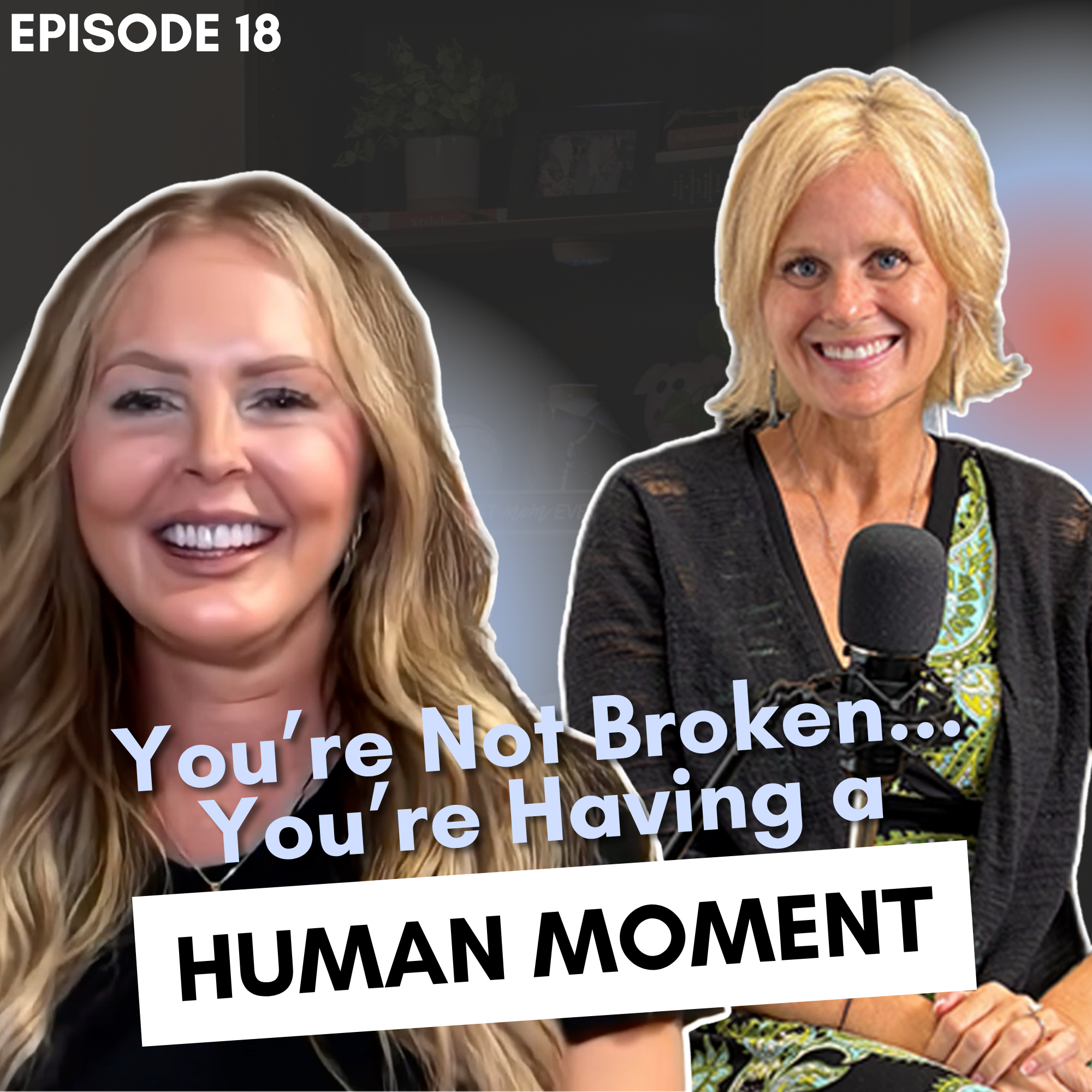
[00:50:18] Speaker B: You know. Yeah. And so another thing that I encourage people to do and I try to do myself is like, just say out loud, I'm having a really. I'm having a very human moment.
It's very tender. Yes.
Because that is what it means to be human is to fall apart. With. With grief in moments.
[00:50:37] Speaker A: Yes.
[00:50:38] Speaker B: And I think, you know, especially with your mom, and I'm not a cardiologist, but there's a lot of interesting research on the heart and losing partners. Losing partners suddenly. I mean, there's a. There's an actual physiological process where people have a broken heart.
[00:50:55] Speaker A: Broken heart syndrome. Yeah.
[00:50:56] Speaker B: It's a real thing.
[00:50:57] Speaker A: Yeah.
[00:50:57] Speaker B: So one of the things I always try to remind people, here's one thing you could do, I guess you could call it resilience during grief, is there's a. It is. There's a physiology to grief that is incredible. It takes so much out of your body.
And so the more you can kind of focus on getting enough sleep. I know it sounds cheesy, but getting enough sleep, taking a nap if you need it.
If you're a big runner, maybe go for a walk one day instead. Like, focusing on nutrition, hydration, not going overboard, but just, you know, kind of if you were training for a sprint, triathlon, or if you were involved in anything that was hard on your body, you would slow down and take extra care of it, hopefully.
And grief is one of those events.
Yeah, it's one of those events.
[00:51:47] Speaker A: It's so easy to ignore those things during grief.
[00:51:52] Speaker B: Well, then nothing's happened. Everything's fine, right?
[00:51:55] Speaker A: Well, yeah. And a lot of times you just. You don't feel like eating or drinking. Like, it's the last thing you want to do is like, these very basic trying to take care of yourself kind of things.
Well, I'm getting the signal that we're. Our time's about up. And I feel like we have just, like it's just the tip of the iceberg. Maybe I've been able to give listeners a little taste of just the richness that is there in learning some of these things that seem really basic after you learn them.
[00:52:32] Speaker B: I know, but we gotta learn them.
[00:52:33] Speaker A: Yeah, I know. And so I would love to continue this conversation with you. Can I direct people to your blog, to your Instagram?
[00:52:45] Speaker B: You can email me drroseosesmithpsychology.com on substack the strawberry season.
[00:52:51] Speaker A: Okay.
[00:52:52] Speaker B: I'm also on Instagram the strawberry season. And then I'm on Rose C. Smith 1111 on Instagram. And you can just ask to be my friend and I'll say yes because we're about to make it public anyways.
[00:53:03] Speaker A: Awesome. I love it. All right, well, thank you so much.
[00:53:08] Speaker B: Get down here sometimes.
[00:53:10] Speaker A: Yes, I will.
Lord knows I need to.
[00:53:16] Speaker B: I'm very proud of you. So it's been fun. Thanks. For having me.
[00:53:19] Speaker A: Thank you so much for being here.
[00:53:22] Speaker B: Okay. 10,000 blessings.
[00:53:23] Speaker A: All right, bye.