Episode Transcript
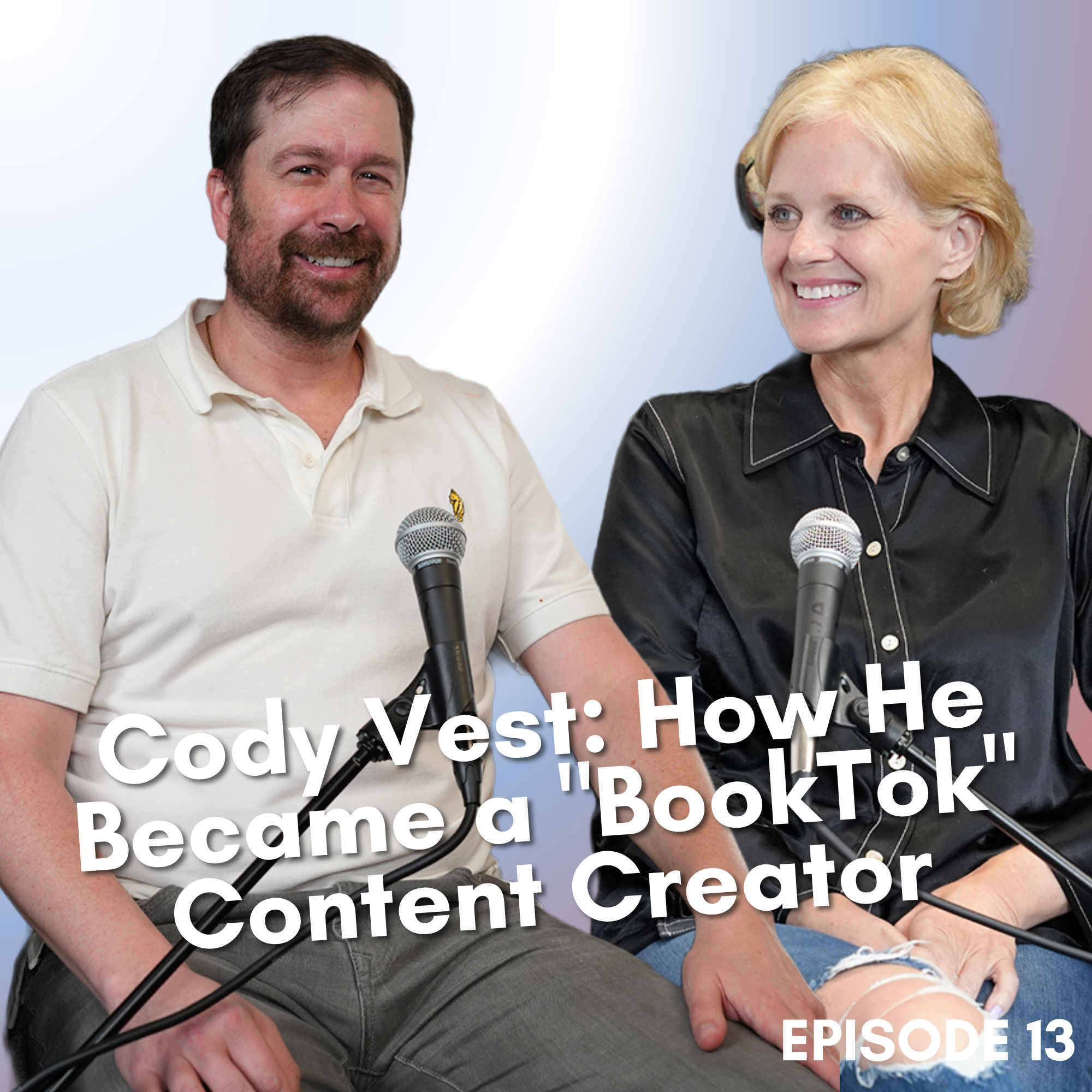
[00:00:06] Speaker A: Well, welcome to Small Town, girl. And welcome, Cody Vest.
This is a little bit of a deja vu because we recorded an interview with this fantastic human a while back and then discovered that the equipment had malfunctioned. And so. And it was, of course, the greatest interview ever. And.
And we had a lot of fun with him just right here in the studio. We are live via Zoom, because this former Arkansan lives in New York City now. We have a history with each other that dates back to our early days in Ozark, Arkansas, and Ozark Public schools and First Baptist Church. Our moms, I think my mom is.
I know she's older than your mom. I don't know how much, but I want to say 10 years or so.
But my mom, they knew each other always, and then they've taught together and then raised their families in the same church in the same town. And so Cody and I are quite, you know, there's a gap in our ages, too. I remember him more as little, you know, when I was a strapping middle schooler or whatever, but we kind of, you know, kind of went. Went different ways and after. After school and then kind of circled back together when I was running for office and then doing all this public school advocacy.
And Cody had graduated from UCA and gotten his PhD and was teaching at Rogers.
And we were just kind of interested in a lot of the same. Same issues and anyway, kind of rekindled or created kind of a new and different kind of friendship. And I'm also obsessed with his Instagram and Book Talk accounts, where he has now gone viral and become like a pretty major content creator in this base of books and recommendations. So I'm going to have him talk about himself and what he does.
But I welcome Cody Vest to this program, and I hope that this will be a chance. I mean, I want to touch on several different things, but probably the most unique thing is this space you have found yourself in as a content creator, digital content creator, and what I, a lot of people probably would call influencer.
Just kind of a thing that just is so exciting and so interesting. And I think a lot of people would love to do and that you just.
You didn't necessarily set out to do it, but it happened. And now you're living this fun life. Like, I've seen him in pictures with, you know, Carolyn Kennedy's son who's running for office, and Caroline Kennedy and then Reese Witherspoon, people like that. And so I want you to talk about that because he's kind of.
He's kind of in this, he's kind of gotten into this bubble with these celebrities and writers and it's just so awesome and fascinating. So, Cody, welcome. Thank you for doing this again.
Tell us a little bit about your background and then how you came to be in New York City doing what you're doing.
Southern Loft believes that your home should reflect your unique personality. That's why they offer a wide variety of stylish furniture pieces that are perfect for any taste.
Whether you're looking for a new sofa for your living room or a sleek dining table for your kitchen, they have just what you need.
So when looking for that piece of furniture that reflects you, visit Southern Loft at 3155 Doll North College in Fayetteville or call at 479-856-6100.
[00:04:33] Speaker B: Sure. So you know, you kind of gave a good start to my background. I was an educator for GOSH, 17.5 years. I like to say 18. I quit during COVID to go work for Walmart Corporate. I was living in northwest Arkansas at the time, so lots of opportunities there.
I found one to work on in, in a learning and development space there and I did that for five years. But while I was there, I got several promotions and move arounds like lateral moves and one I had the opportunity to move to New York with. And they told me, they said you can stay here in Bentonville if you want or you can move to our New York office. And I was like, oh, actually my brother, he had just moved to New York within the past year. I think I was like, actually I've been looking for something a little different. I've been in Arkansas my whole life. I think I was like 41 or 2 at the time. And so I said let's do this. Let's. Why not? What else am I doing? So yeah, I took that opportunity and moved to New York in 2023 and have been there, yeah, three years now. It's been amazing.
But while I was there I realized I was kind of in the publishing world is all there. And books have been my passion my entire life. I do remember my mother telling me, you know, like ever since I was little, I've always been wanting to read. And she said, told me recently, she said in the fourth grade she remembers she couldn't give me enough books to read. And I think I owe that. She said I think I owe that as a credit to my teacher. I want to, I don't know Ms. Barbara Sachs if she'll even listening but thank you for inspiring Reading in me.
And I've just been a voracious reader ever since then. I became an English when I was a teacher. I was an English teacher. I taught AP Literature, and I kept pursuing degrees focused around education and literacy.
My master's was focused around education, and my PhD was focused specifically in education, but specifically on developing literacy skills with English language learners.
So I've had such a passion for literacy and education most of my life and. And then, yeah, I just. When I left teaching and I felt like I was still in a learning and development space at Walmart. I was there for over five years.
Unfortunately, they cut my entire team when I was in New York and I found a couple contract positions. But actually, as of last month, I am doing my content creation, social media influencing full time.
And it's been incredible journey. Yeah.
[00:07:06] Speaker A: That's amazing.
[00:07:08] Speaker B: Thank you. I never thought I would be in this space, but here I am. I am. It was, I guess after I first moved to New York, I. I had made a couple TikToks in the past about education and they'd gone viral. And I picked up some steam, but nothing major, you know, enough where I would got to get a little bit of notice. But then I was like, I should make stuff about books. This is what I care the most about. I felt like I'd said my piece about education, which I think it's can go on for a while, right.
Broken the system is right now. And I made a couple videos about books, and I think it was my second one where I was ranting about why I thought where the crawdads thing is such a terrible book. Oh, my gosh. Went mega viral. And then I was like, oh. And I literally, I think I gained 50, 000 followers over almost overnight.
[00:07:53] Speaker A: Oh, my gosh. You touched a nerve.
[00:07:56] Speaker B: Yeah. And I was like, what. What do I do with this? And so that was, I think, February, March of 24. And so I was like, I guess I'm gonna keep trying making videos. And then just kept picking up steam, kept going mega viral to the point where now I've got like 300,000 followers across my platform. And I. People pay me to do brand deals with them all the time, and it's just wild. And celebs reach out for me to do. Like I interviewed Ryan Gosling back in March, I think it was for the movie project Hail Mary. So I'm having like all these celebs reach out to do, you know, come hang out with them at events and meet all these meet and greets and Interviewing.
[00:08:36] Speaker A: That's amazing.
[00:08:37] Speaker B: It's so incredible. And like, recently, one of my favorite books of all time is Pachinko. The author, Minjin Lee, sent me a DM on Instagram. She's like, hey, I know.
Would you like to come to my book launch for my newest book? I'm like, of course, Min Jin Lee. I would love to come to the book launch. So a couple of weeks ago, got to hang out with her and meet her, and I'm actually gonna be on. I'm gonna interview her on a podcast this fall.
[00:09:02] Speaker A: Oh, my gosh.
[00:09:04] Speaker B: I'm just like, it's incredible all the opportunities I've had, and they just keep rolling in. I have a management team picked me up, so that's when I was like, oh, maybe I actually can do this full time. And then for the past six months, I was looking back and I was like, I'm making more money doing this than I am was my 9 to 5 at Walmart. So corporate America's not going anywhere, so why not try this out for a little while?
[00:09:29] Speaker A: So congratulations. That is a huge, huge deal.
Thank you so much. When you said you're gonna interview Min Jin Lee on a podcast, are you starting your own podcast or are you doing this for someone?
[00:09:44] Speaker B: I'm doing it for someone. Someone else. And had asked me, she's doing a podcast. And she said, you know, I'd really like Cody Vest to be on there with me too. And I.
[00:09:57] Speaker A: Very cool.
[00:09:59] Speaker B: I'm like, you want me?
[00:10:00] Speaker A: So, yeah, yeah. That's amazing.
Well, and tell my listeners about. About Reese Witherspoon.
[00:10:09] Speaker B: Oh, gosh. Yeah. So I've actually had the opportunity to meet her twice.
Two different times she invited me to an event with her. Once was kicking off something with Apple Books and another when she wrote her own book. So I didn't actually get to interview her, though. But I got to have, like, a brief conversation with her both times. She's just as lovely as you think she would be. She's also like, itty bitty, you know, but she's so sweet, so kind. Just was so gracious to have us. There were a few other content creators she invited there as well, and it was so lovely to be with her.
Yeah, she was so nice. And then, like, I recently, I think since last time we spoke, had I been to when I got invited to go to the Santa Fe Literary Festival?
[00:10:49] Speaker A: No, I knew about you going to that, but we haven't talked about it.
[00:10:52] Speaker B: I got to meet Judy Blume there, which was absolutely incredible.
[00:10:57] Speaker A: Oh, my Gosh. Read all her books when I was little.
[00:10:59] Speaker B: Oh, I read so many of them. Yeah. So they invited me out as a creator to that. And I'm. Yeah. There. And she. Ocean Vong, Lauren Groff are some of the big names there.
[00:11:12] Speaker A: Oh, wow.
[00:11:13] Speaker B: But Ocean Vong was absolutely incredible. Like, one of the best speakers I've ever heard. Isabel Wilkerson, if you're familiar with her. The one.
Yes, he was there also. Incredible.
James McBride. I loved meeting him. He's kind of your classic grumpy old man, too, but he's also such a, like, sweetheart underneath. He's like, I don't know if I want to sign books and meet people. And then he's like, okay, come on. And then he was just a, you know, big teddy bear once you got to meet him.
But, oh, my gosh, they were all so lovely to get to meet and talk to them.
And I was just blown away that I got to be, you know, part of the conversation.
[00:11:49] Speaker A: Tell me about meeting Judy Blume. So, you know, for readers who are younger than me, I mean, I feel like everyone knows who she is. My. My girls. You might have read her, too. But, I mean, that was what you read when you were a kid.
When I was growing up, like, are you there, God? It's me, Margaret.
It was her. And Beverly Cleary.
Beverly Cleary was like Ramona and Beezus and all that. But then, wasn't Judy Blume also, like, Super Fudge?
Yes.
Blubber.
[00:12:24] Speaker B: I think that's her, too.
[00:12:26] Speaker A: Yeah, yeah, yeah, yeah.
[00:12:27] Speaker B: I read all those.
[00:12:27] Speaker A: Yeah, yeah, me, too.
[00:12:29] Speaker B: Oh. So it was actually so fun fact about Santa Fe. It is the state capital with the highest elevation. It's, like, at seven something thousand feet. So it's even higher than Denver. And the night we were all supposed to get to meet her, she got really bad altitude sick. Altitude sickness. She's almost 90.
[00:12:50] Speaker A: Yeah.
[00:12:51] Speaker B: So we didn't. I was disappointed. I was like, I'm not going to get to meet her now. Which, you know, obviously can't be helped. But then I'm literally at a restaurant, and all of a sudden, she comes and sits down at the table next to me, and I'm like, chewy Bloom is sitting next to me, like. And I was like, I don't want to bother her. She's with her family. But then there came an opportunity. She got up to leave, and I know. I know she knew. I was, like, recognizing her, and she kind of smiled at me and said hello, and I was like, hi. I was like, I don't want to bother you or anything, but just wanted to say a hu. I was one of the people who was supposed to get you me to meet you yesterday. And she was so gracious, so kind. She's like, oh, I'm so sorry I was so sick. And I'm like, you're fine, you're fine. So I just got a very brief like. But it was a really cool moment where I got to have that just thinking I wasn't going to get to then just got to meet her kind of out in the wild.
[00:13:41] Speaker A: Yeah. What a gift.
[00:13:42] Speaker B: But yeah. And she was just, she's so beautiful, so sweet and her. Yeah. So that was really cool.
[00:13:48] Speaker A: That's super cool. And then Isabelle Wilkerson. Tell me about her.
[00:13:52] Speaker B: Oh my gosh, again, like Ocean she and Ocean Vong. I heard, I think back, no, they were different nights, but either way, some of the most well spoken people I've ever heard in my life. Isabelle Wilkerson.
I had never read any of her books. So I picked up the Warmth of Other Sons. Oh my gosh. What are, are you familiar? Well, I'll just say for the audience who isn't maybe not familiar with the story of the Warmth of Other Sons.
So much of American history, I think we is whitewashed. You know, we hear about all of Ellis island and the immigration. We don't hear about what's called the Great, I think it's called the Great Migration of Black Americans from the south and Midwest or set from the south to the north and Midwest because, you know, slavery was in the south and those were freer places and so many people migrated. And what Isabel Wilkerson did is she interviewed, she issued, she described the process. It was really cool to hear about how she got filtered down to. She found I think five people's stories about why they and their families ended up migrating to the North Northeast, the Midwest to get away from the South. And it's about these stories that are untold because again, so much of what we learn is heavily whitewashed and but she was, she was, she was incredible. I got to again speak with her briefly. There was. They had about 8 to 10 of US content creators there. So we all just got little brief moments with. But so lovely, so kind signed a book for me.
[00:15:18] Speaker A: So yeah, you know, I didn't learn about the Great Migration until I was teaching college.
And so I mean, let that sink in for a minute. Like I went through high school and then I went through college getting a degree in English, then a master's degree in Liberal arts. And this is one of my, you know, one of the just sticking points for me currently in Arkansas and in other states where we hear about all these, you know, evil public schools, indoctrinating children, you know, to hate America because we teach too much, you know, black history. And I just think how ridiculous that is, you know, because I could go through all the. All that education and, like, not know what the Great Migration was. And, you know, I teach the Harlem Renaissance now, which, you know, Harlem, when it was, you know, when it became the seat of the Harlem Renaissance, that was because of the Great Migration, because so many African Americans, you know, post Civil War, moved up into Harlem, and it, you know, it became its own city of, like, over 100,000 people. And you had this, like, you know, just flowering of black culture. And there were finally there was enough safety and community and freedom to, like, create and write and do music. And so it was like, this awesome place to be, you know, for a black artist. And, of course, that's where we get, you know, Langston Hughes doing his work and Zora Neale Hurston and, you know, so many others. And anyway, though, one of the things I teach in. In that. I guess you'd call it a unit, you wouldn't really do units in college, but is Zora Neale Hurston's How It Feels to Be Colored. Me. And I do.
I get my students to, like, you know, study the vocabulary of it. And one of the words is reconstruction with a capital R, like the Reconstruction after the Civil War.
None of them know what it is.
So it's not just like my generation of people who came through these schools who didn't know this stuff, you know, because some people might say, well, yeah, that was your generation. But now there's all this liberal indoctrination.
And I'm like, no. Like, my own students now in my classes don't know what the reconstruction is.
Many of them have never even touched things like Letter from a Birmingham Jail, which I think should be, like, required reading for all Americans.
It's one of our finest pieces of American literature, you know.
Anyway, I digress, But.
But I love that book because, for one thing, it is very important. It's a very important part of our history. Just like. And I know you've been on this big voyage of discovery through east of Eden, you know, but the other Steinbeck, the Grapes of Wrath, that's the story of the Dust bowl and people, you know, migrating to California, you know, out of the Midwest to pick the fruit and do the things you know, and we do know what that is. We do read that. We do understand, you know, at least in theory, like, what that was.
But we don't know about the Great Migration.
And so, I don't know. I just think that is that Wilkerson book is an important book, and. And.
And then so many things, like, from our culture have come, you know, from the Great Migration itself. You know, the one more thing I teach that I love is A Raisin in the Sun.
[00:19:33] Speaker B: Oh, yeah?
[00:19:35] Speaker A: Yes.
You know, the parents there had moved to Chicago during the Great Migration.
And then you kind of see, like, where they are in this tenement. You know, they've gotten such. This better life, but then their children want more. You know, the parents come, you know, had come from the south, where things were so bad for them, and so they had carved out this better life, you know, in Chicago. But now the next generation, like, is ready to keep moving forward, and they.
They don't, you know, they don't have a sense of how hard it was and how. How far their parents have come. And anyway, so it just makes for great, you know, learning and classroom discussion.
And there, again, it seems like it's just a whole new world to students today. So I don't know where they're being indoctrinated, but it ain't here.
So talk to us about Ocean Vong, then.
[00:20:43] Speaker B: Oh, my gosh. Like, one of the most beautifully spoken. I felt like I was listening to some philosopher speak as he's. When he was talking. I mean, well, he's also. He's a poet.
A poet first, author second. I mean, not an author. I mean, a novelist second.
And just the way he speaks is like listening to poetry. I was just transfixed the entire time. It was one of the most. And what I loved about this literary festival, too, was they did not allow any filming of anything in there. No cameras, anything. Because they wanted to be a preserved event just for those unique experience for those people there. And I just kept thinking, I want everyone to hear these words speaking.
And. Oh, it was just incredible.
And his. If you haven't read either of his novels or his poetry is fantastic too, of course. But his two novels, On Earth were briefly gorgeous. And the Emperor of Gladness are just incredibly, incredibly gorgeous.
I especially say start with On Earth were briefly gorgeous. One of the most beautiful books I've ever read. And he's just. But it.
We were. I was talking with several of them later, and I was like, I would love for. Would have loved for Ocean Vong and Isabel Wilkerson to have a conversation together.
I felt like just everything might explode with how impactful that would have been. Just everything they had to say. And because he speaks a lot about immigrant stories, his family is Vietnamese. And hearing about his. His for that first novel focuses a lot on his mother kind of coming over here, and it's like, I think it's like semi autobiographical novel. Don't call me 100% on that. But I think it's a lot of his own experience growing up with an immigrant mother.
And so just so many amazing things. Oh, my gosh. Yes.
[00:22:35] Speaker A: Well, so this is. This could either be a segue or a side note. You know, you were, you were saying that some of your. Your first videos were about education and how you could, like, talk about that forever, but you had kind of said your piece and that's what kind of where we reconnected as adults. Like, talk a little bit about your experience in education and why you decided to get out. Like, what you think is, you know, is broken, what you would like to see happen.
Yeah, I know. That's a can of worms for me,
[00:23:11] Speaker B: my Pat, like, ever.
I always tell people, ever since I was little, I've just always wanted to help people. I've always had just been a bleeding heart liberal and didn't even know I was when I was out there thinking I was a conservative. And I was actually a bleeding heart liberal the whole time. I think we talked last time about How Obama in 2008 is what made me realize, oh, wait, this is what I actually support and care about social justice. Huge, huge, huge passion of mine. Always has been, always will be. That's. My PhD was focused around that. So I was always just.
I was felt like with education, I felt like the education.
There were the people, the teachers there who were there to collect a paycheck. They'd come in, throw some worksheets, do their thing, move out. And I was there because I wanted to make this difference. And the more I felt like I kept sacrificing myself to my job, the more that was expected of me. Like, sacrifice felt like the expectation at that point. And it's like, oh, Cody, you've done all these incredible things. And I'm like, I'm spending my own money. Every story of every teacher buying all this stuff for my classroom and my kids. My students. And then, like, spending all this extra time outside of classroom and then feeling like, but next time, could you do a little more? And meanwhile, not to stereotype coaches, because I was one at one point, I Have a coach next door to me doing the bare minimum, making far more than I am and not doing half the work. And it's like, what are we? Why are we.
What are we doing here? Exactly. And then I once Covid hit teaching during COVID was horrific, as I'm sure you know as well.
During that time when I was trying to do lessons via Zoom. No, nobody would show up. And there were no nothing to like. That part was driving me batty. And then when we went back in the fall, that was when it really hit that fall, 2020. And I'm like, I can't do this. Wearing mask all day. Students seated certain apart. If one kid got sick and they were within a certain distance, the rest of them were. They were all out for two weeks. I had a sore throat one time and told my took off a sick day and to go get it checked out. And they were like, oh, well, it's a sore throat. That means you're out for the next week now. And I'm like, wait, what? I just. No, I'm fine. It's not Covid. I got tested. They're like, well, et cetera, et cetera. And I'm like, I was just like. At that point. I remember and mentioned this to you before. During one lesson, I thought I was having a heart attack. I was up there teaching, and I'm like, my heart was racing. I was like, this. I've never. This isn't normal. And I remember going to the teacher next door to me. She's like, go to the nurse. See what they say. I get there. She takes my blood pressure. She's like, your blood pressure is really high.
You need to get to a doctor now. And I'm like, that sends me spiraling.
[00:26:03] Speaker A: Of course I'm dying. I really am dying.
[00:26:07] Speaker B: Yeah. I remember I went to one of those urgent cares, and they were like, they're like, we think you need to go to the er. And I'm like, oh, goodbye, cruel world. It's over.
And, you know, I get there. They run the gamut of tests on me, everything. They're like, you're fine. Like, your blood pressure stabilized. Now your heart is totally fine. They're like, have you had panic attacks before? And I'm like, I don't think so. Why? And then we talked it through. Turns out I was having a panic attack. I didn't know what a panic attack felt like. And they're like, oh, a panic attack mimics a heart attack. And that's when I was like, that was October of 2020. And I'm like, I've got to get that. I can't keep doing this.
[00:26:44] Speaker A: Yeah.
[00:26:45] Speaker B: And that's when I, like, pushed hardcore, found a job by the end of December, quit and left.
And that's when I realized I'm like, what are we doing to our teachers who are undervalued, underpaid, underappreciated? It's like at the start of COVID teachers were like, look viewed on as. Felt like as heroes for doing this. And then it was like, teachers, shut up and do your job and get in the classroom and risk your lives to do this. And I'm like, what are we? And that's when I started making a few videos about education, being like, listen, I'm someone who. I would have loved to do this for the rest of my life because I love teaching, especially the first decade or so of teaching. I was so passionate. I didn't even care about the money that it was lower. I was just there because I loved it so much. And then I felt like the system, the way it worked, it just broke those who were the work the hardest. So often, not. Not all. Some. There's. I know there's. People always come at me when I say that, and they're like, well, my experience wasn't like that great. I love that for you. But just know you are the exception. And it's far more. My. My scenario is far more common. I would have so many people reach out to me on social media.
They're like, I'm broken. I don't know what to do. I don't know how to find another job. Like, I'm in my 40s. How do I quit this career for 20 years? And it was just the most heartbreaking things I'd ever heard.
[00:27:59] Speaker A: Who.
[00:27:59] Speaker B: They just.
[00:28:00] Speaker A: I know I'm in some of those groups, you know, on social media where they're closed groups and. And teachers will come on there and share their stories, or they'll ask for advice, you know, and just vent. And it is heartbreaking because it's.
You know, there's so many dynamics there. Like you said, you know, there are the people who. And I think this is the majority of teachers get into it because they love people and they want to help people.
And then. And they are people who will do it. You know, they're not really motivated by money, so they'll do it for far less.
And then life just becomes so stressful because you do acquire bills and a family and a life that you're trying to sustain.
And it's those who work so hard trying to do a good job who then suffer because you're not really compensated for the amount of time and effort that you put in.
And I also think then that people, a lot of people like that, like you were, end up having to leave because it's not sustainable. And so then we do maybe end up with some of the more underachieving, you know, people who stay.
And of course, you know, as soon as I say that, I can think of all the wonderful ones who are just dug in and staying anyway. But, you know, it is the home, the teacher, the classroom teacher is the biggest factor in a kid success.
And when you look at that, you know, fact and then consider how hard we make the lives of that person, the lives of those people, you know, if the classroom teacher is the most important factor in a kid's success in education, they should be highly paid. They should be the people we are investing, you know, the most resources in the most, like, support for, you know, in other words, the opposite of what you're describing, where you end up standing up in front of the class having a panic attack. And that's your rock bottom, really, where you're like, I've got to get out of this or, you know, I'm going to kill myself. Like, I just can't sustain it.
So obviously I still, you know, do rant about these things.
But yeah, it's.
[00:30:54] Speaker B: And that one thing I really do that I think that's been a great outlet for me is my content creation about books is it gives it kind of scratches that itch I had with education where I get to feel like I'm teaching people about.
[00:31:07] Speaker A: Well, you are. Yeah. You do. I. I think so, for sure. You definitely teach me.
[00:31:13] Speaker B: Well, I get so many incredible messages from people all the time just thanking me for introducing to the books they never would have read before. It's actually funny this. I'm actually on vacation this week. I'm in Cape Cod. And both days I've been here, I've had two random people walk up to me and be like, are you Cody from Instagram?
[00:31:38] Speaker A: Yeah. That's amazing.
[00:31:40] Speaker B: This one woman, she said, my whole book club is obsessed with you. And she's like, I've been over here, like, sending pictures of you, trying to decide if it's you or not.
[00:31:48] Speaker A: Oh, my gosh.
[00:31:49] Speaker B: And then I had another man who walked up and he's like.
He's like, you got me to read.
I think it was John of John. If you saw me talk about that, this Book I loved. And then he was like, could I actually buy you a drink? He was there with his husband. I'm like, absolutely.
[00:32:04] Speaker A: That's so cool.
[00:32:06] Speaker B: So fun just to get to meet people and talk to people who never would have met otherwise because of. Because of books, the thing I love so much.
[00:32:15] Speaker A: So, I mean, I want to put all your information with this podcast so people can go and find you on social media and see what you're doing. Because if someone's listening to this and they haven't seen it yet, it'll add a whole lot to the conversation to understand, but kind of go through with us a little bit. Like, you said that you got on social media and you were ranting about where the crawdads sing. How terrible a book that.
Why do you think that that, like, pushed such a button with so many people?
[00:32:55] Speaker B: I think so many. Because it's one of those books where it's mega high, mega bestseller. A lot of people liked it, and if they love it, fantastic, great. But for me, it was absolute just trash. And I'm like, why is this so popular? And I don't think there wasn't a really a space either in booktok from what I had seen where people would get on there and talk about what they didn't like.
[00:33:18] Speaker A: Yeah.
[00:33:18] Speaker B: And I think that's how I was able to cut through the noise, because there's a million and a half people who want to be book Instagrammers and book talkers out there. Like, I have so many people trying to hit me up to give, to do this and that for them, and I just. I don't. I don't have time, space, or anything to do that for them.
But I love that journey for them and hope they can do well. But it's like, I think it just, you know, filled a void that wasn't there before. People weren't talking about.
[00:33:44] Speaker A: Well, you were kind of saying the thing that a lot of people were thinking about that book, apparently, but no one had the, like, permission to say it. And then you just were like, I hate this book.
[00:33:53] Speaker B: Yeah.
And then I was like, it's no shade toward the author themselves. They had to helped a lot of people identify with it. Although there was that weird thing about the author who. They allegedly killed some people in Africa. I think it's something crazy backstory on that. So every, you know, it's kind of a murder mystery where the crawdads sing. So everybody's like, did she write it from experience?
But I was going off about that and The Colleen Hoover trend, I just. I cannot, like. It's just dreadful, Dreadful. And I'm just like, there are so many more beautifully better written books out there, and it's okay to have some fluff sometimes. Of course, I like some, like, fluffy thrillers every now and again. Like, I love a Riley Sager book, if you know who he is. I loved Mary Higgins Clark and B.C. andrews in the 90s.
[00:34:35] Speaker A: I did too.
[00:34:36] Speaker B: You know, like, there's absolutely space for that. And read what makes you happy. But when I see those books and I'm like, why are these the mega bestsellers and we're not having some of these gorgeously written books that are so prominent out there, that are not as prominent, I want them to be elevated. And I think that's kind of what helped me kind of cut through some of the noise and why people paid attention to me just because I'm drawing attention to books that people don't read as aren't necessarily as elevated and calling out the other stuff that's just not.
[00:35:06] Speaker A: Well, that. Yeah, I think that one probably went viral because there were people who agreed with you who were like, finally, someone's saying the truth. And then there were other people who were probably really defensive because they loved it. And they were like, I can't believe you're saying this about this.
[00:35:20] Speaker B: Oh, they're 100. Were 100%.
And I also went on a rant about the Help, which I think is like a perfectly fine, perfectly well written book, but it's just so problematic with being the white savior story. My same issue I have with To Kill a Mockingbird had its time in place, but we don't need it anymore.
[00:35:39] Speaker A: Yeah. Well, what would you replace those with? What would you replace A Kill a Mockingbird with?
[00:35:44] Speaker B: The Nickel Boys by Colson Whitehead. I would love to see that one in there. It's.
That's. That would be maybe a little of an older crowd, if you're thinking younger, maybe. Roll of thunder, Hear my cry.
[00:35:53] Speaker A: Oh, I do love that book. Yes.
[00:35:55] Speaker B: Fantastic. It's by. Those are both by black authors from the point of view of black characters of that same era of history. Whereas, you know, To Kill a Mockingbird's white person from a white perspective about racism. And it's like, what is this the perspective we need to be listening to? You know, And I think it was good for 1960America, but I don't think it's for 2026America, you know, but that's. Colson Whitehead is the Nickel Boys. If you aren't Familiar. I'm sure you're familiar with him, but for anybody who might not be, Colson Whitehead is an absolutely gifted writer. He's won the Nobel Prize twice, once for the Nickel boys and the other for the Underground Railroad, which are both incredible books. He's such a talented writer. Cannot recommend him enough. And Roll of Thunder, Hear My Cry, I think is Mildred B. Taylor, and she's very middle school.
[00:36:44] Speaker A: Right. I read that in adolescent literature. The class. Yeah, but it is a good one.
[00:36:50] Speaker B: Is just Mercy by Brian Stevenson.
[00:36:52] Speaker A: That's wonderful.
[00:36:53] Speaker B: Right? Oh, my gosh.
[00:36:55] Speaker A: I think we talked about him last time. Maybe.
I wish he was president.
Yeah. He's just right for me. He is like a true American hero. Like, I think I'm just searching so hard for those right now. Like someone who tells the truth, someone who is not, like, doing something for personal gain to, you know, to gain power or money.
And he just. When I read that book for the first time, has been years now, but he just stands apart to me as someone who just.
We can be so proud of, you know, as Americans and to aspire to just be like him. And I just trust him as a leader.
You go ahead and talk about him so everyone will know what we're talking about.
But he's wonderful.
[00:37:52] Speaker B: Read his book if you haven't.
[00:37:53] Speaker A: Yeah. Read Just Mercy.
[00:37:55] Speaker B: Just Mercy, I think. Did we also talk about Know My Name last time?
That's one of one. Another book, I think, by Chanel Miller. She was the victim. I don't like to speak his name. Of the Stanford swimmer, if you remember that.
[00:38:08] Speaker A: Oh, okay. Yes, yes.
[00:38:10] Speaker B: And she was s. Was silenced for a long time and finally came forward with her memoir about the incident and just her life in general. And it is one of the most powerful, incredible books I've ever read. And I read this, and all I could think was, this needs to be taught. This needs to be taught. Pushed out. Everyone needs to read what this woman. Young woman, went through, how the. How the justice system failed her. And, you know, there was a little bit of a happy ish ending because I think the judge who did all that got eventually voted out because they realized what just so awful. But, yeah, for some reason, I always connect those two books in my mind. Just Mercy and Nobody.
[00:38:52] Speaker A: Well, because the justice. They're both examples of the justice system just absolutely, you know, working in the opposite direction from what we is supposed to and what we believe, you know, what our values are.
Well, Cody, this switches gears, I guess, a little bit, but, you know, you and I have Talked some about our experience growing up in small town, growing up in a very, you know, conservative evangelical church and just community.
And, you know, when I.
When I hear you.
And I hear you. When I hear you talking about your passion for education and then particularly these stories of people who have either been silenced or certainly not given the.
The attention that their stories deserve, you know, could you talk a little bit about yourself growing up?
You know, I've had my good friend Tony on here speaking about growing up gay in our small town, and you had that same experience and then your journey, you know, finding language for your own experience and then sort of developing a passion to elevate voices, you know, of marginalized people or people who certainly aren't the loudest voices in the room.
Talk to us a little bit about that because I think, just like Tony's story, I think it's one that a lot of people might relate to, not only just the experience of growing up gay in a small town in Arkansas, but just sort of any outsider, you know, to the.
To the mainstream and the main people in charge in these spaces, I think maybe a lot of things have changed, but there's still a lot of things that remain the same. And I want to give you the opportunity to talk about that a little bit because I think.
I think when people heard Tony's story, they really responded to that because it was someone saying, hey, this was my experience. And you're not alone if you're having that experience.
And then to see, you know, that you've gotten to.
You've carved out a great life for yourself, you know, and it helps give people hope, I think, when they're in that situation.
So talk to us about your life and growing up and in your development to.
[00:42:05] Speaker B: To hear, of course, so, you know, growing up in Ozark, I. Small town, we all know each other. Everyone knows everyone. I was always the growing up. I was always a smart kid in class, and I always kind of. That was a bit of a crutch for me is like, you know, I knew I was. Felt a little different. I was. I was kind of chubby, kind of awkward when I was younger.
And I didn't really understand queerness or that identity, what that meant really.
That really kind of came later on in my life when I fully understand. Came into my own as a queer person and what that means in adulthood and in a world and how I.
Trying to think of the right way to fight this, how I compartmentalized that part and instead relied on so much else that I had where it's like, okay, I know I'm smart. I can like. And there's actually a really interesting study about how queer men, specifically, are some of the most wildly successful people in the world.
[00:42:58] Speaker A: Yes.
[00:42:59] Speaker B: Because, you know, there's. And that's so much tied in with toxic masculinity in this world. You know, it's like, oh, my gosh, I can't be this image of, you know, all American boy masculinity, whatever that means. Instead, it's like, oh, I'm smart. I have a little bit of intelligence. I have this. I'm going to lean all the way into this, you know, and that's definitely what I did. So I was like. I remember thinking, okay, I'm going to be the valedictorian of my class. Check did that. I was like, I'm going to lean into spelling bees. One thing I realized I was really good at, I won all the spelling bees at the time. I don't know if anybody's gotten farther than me since then, but at the time. And I remember your dad actually getting on the intercom when I was in junior high, announcing to everyone that I made it the farthest any kid from Franklin county had ever made it in Franklin county history. I got fifth place in the Arkansas state spelling.
[00:43:49] Speaker A: That's amazing.
[00:43:51] Speaker B: 1995. Yeah.
[00:43:53] Speaker A: I don't think anyone has broken that record. I was waiting to see what you said because my son Harper got to the state spelling bee, and he got. He was. He. He did well, but he. He didn't place in the top five. And then my daughter Adelaide, I was kind of secretly hoping maybe they had broken your record, but then when you said you got five, neither one of them made it to the top five. They did. Well, I still remember the words they got out on was, you know, tragic for our. For. For our family, but, yeah, that's a big deal.
Yeah.
[00:44:23] Speaker B: I'll never forget Batik. B, A, T, I, K. I spelled it B, A, T, I, Q, U, E. Never forget that word.
[00:44:28] Speaker A: Heartbreaking. Yes. Yeah.
[00:44:31] Speaker B: Well, no, it was like one of those two. There was, I think six of us left that they couldn't get us out. And then they just started pulling these random words, I think, from difficult words from the dictionary and just throwing them at us. And I remember being so mad because the girl next to me right before me got vermin, which I knew how to spell. And I don't. I can't remember what the girl after me got because I was so upset.
[00:44:51] Speaker A: Right, Right.
[00:44:52] Speaker B: No, I remember. I knew that Word. But I remember vermin. I'm like, okay, I've got this next word and then I of mess it up. But I do remember spelling bees were my thing and so. But like I said, I supposed to have a very specific memory of your dad getting over the intercom and so proud.
[00:45:06] Speaker A: Yes.
[00:45:07] Speaker B: It was really cool. Really cool moment and like just little things like that. And there was also something again, I just keep thinking about junior high too, where I got to. I was the only kid in the whole school who had straight A's through all of junior high and scored in like, like whatever, top percentage of the national whatever thing. And I got this letter from Bill Clinton and like I thought it was so fancy and cool at the time. I still have my grandparents, until the day they passed away, had that picture. It was again, me and your dad. They had that framed in their house.
It was really, really cool moments.
[00:45:41] Speaker A: For readers who don't know. I don't even know if we've said this. My dad would have been your principal.
[00:45:45] Speaker B: Yes.
[00:45:45] Speaker A: Sorry.
[00:45:46] Speaker B: Sorry. Yes.
[00:45:47] Speaker A: No. Yes. Yes.
That's wonderful.
[00:45:50] Speaker B: Really cool moments.
[00:45:51] Speaker A: And.
[00:45:51] Speaker B: Yeah. And so like all that to say I leaned heavy into the academic intelligence side and I knew I could excel there. And I did. You know, I went to ucn, a full scholarship, went to, got my master's, full scholarship, got my PhD with a full scholarship as well. I never had any debt coming out of school because I'm like, I'm smart. I can rely on this. And I'm like, oh, I'm also smart. I should go on Jeopardy. I've been on three game shows since then, so. And that's kind of like just fun. Done really cool things that it's like bonus things I got to do. It's like the. From leaning into that, I guess all those years. So, you know, I like to say there's some positives that others, obviously positives that came from all of it. But just one thing. As I started coming to my own queerness, my own queer identity, I started really gravitating especially. And I'd always known I'd gravitated toward books of outsiders and people who were different and, you know, didn't fit that multiple.
But I really got into queer literature and I've been heavy into queer literature for a while now, like Ocean Vaughn, queer writer as well, who we were speaking of earlier. And so I dived heavily into that. And so I explored that a lot
[00:46:55] Speaker A: in my book probably like just searching for.
To. To not feel alone yourself, like to understand yourself and like Your life and make sense of it and. And who you were.
[00:47:08] Speaker B: Yeah, absolutely. And just so that's, I think, where some of my. I think a lot of my passion for social justice initially came from, was feeling different and finding ways to explore that outlet and realizing there's so many people out there who feel different.
And I would imagine there's more people who feel different than feel part of the quote, unquote, norm out there, you know, and so that's kind of, I think, where it all came from. And I hope that. Does that answer the question?
[00:47:36] Speaker A: It's great. No, it's perfect. Because. Because I just remember when we were talking earlier, you shared a few different stories about how people would sometimes tease you when you were growing up, and you really didn't.
This was a different time before social media. I don't think kids, Tony and I talked about this. Growing up in the 80s and 90s, if you lived in a very small town and certainly in a very conservative sort of Christian setting, you might not even know what it meant to be gay or to be queer. You didn't have language for that. You didn't have examples. You didn't have.
You certainly weren't reading anything that, you know would.
Where you could recognize yourself, you know, and where you could relate and go, oh, that's how I feel, you know, and, oh, it is like normal. Like other people have that experience too. Even though I don't know anyone or no one's ever talked to me about it, or worse. I've just heard that it's like this horrible thing, you know, that you don't want to be or you. And so that. When did that start? When did that realization start coming? I mean, I know you said you felt different, but when did you, like, develop. Was that through books that you developed sense and language to describe your own experience?
[00:49:11] Speaker B: Yeah, I think so. And, like, because hearing terms like queer, gay, whatever, all I associated growing up, you hear the HIV AIDS crisis, Matthew Shepard, if you know who he is, just all these awful things. And it's seen. It's seen as something so evil and aw.
[00:49:27] Speaker A: Yes.
[00:49:28] Speaker B: And it's the first positive example I really remember seeing is Ellen DeGeneres on her show. And I think that was 96, 97, somewhere around there. It's like, oh, okay. And then, you know, it's kind of a slow process from then. And then one thing, you know, as I got to dive more into it and kind of read more and learn more, is where something we talked about last time was pride and why it Just. Just coming off Pride Month. It's why Pride isn't like something someone randomly made up to something support queer people, LGBTQ plus, whatever.
[00:50:00] Speaker A: To push an agenda. That's why.
[00:50:02] Speaker B: Push an agenda. It comes from the Stonewall riot in 19. Uprising is what they call it now. Right. I think the STONEWALL uprising in 1969, which was on the last Sunday in June. And Stonewall Inn was a bar where a lot of it was a queer space, but it was very specifically people of color who were queer. And so the police knew they could target. Target there and get away with it a lot easier because they're like, oh, well, it's just a lot of people of color. Trans people. People aren't going to care as much. And they had done it several times before, and except this time, that Last Sunday in 1969, they fought back and they're like, you can't take us for not doing anything wrong. We're having a drink, you know, and it turned into like, I think a two or three day fight. And finally the police ended up giving up because. And then to commemorate it, a year later, they had a march. And that's where the march comes from. From Stonewall, which is down in the West Village. I think you said you'd been there, too, all the way up to Central Park. And so that's kind of the origin of pride. It's not like some, like, frivolous thing. It has a lot of deeper meaning behind it. And just to kind of honor all of the queer icons and Marsha P. Johnson, Sylvia Rivera, Harvey Milk, who is San Francisco, who was, you know, assassinated back in the day, who had.
Who had fought for the rights for queer people just to exist in spaces.
[00:51:21] Speaker A: Right.
[00:51:22] Speaker B: Because they couldn't even exist back then. And it's just like something fun. I'm actually in pro. I don't. Do you know what Provincetown is by chance?
[00:51:31] Speaker A: If I said the. Well, I know the Provincetown Players and Susan Glasspool. Is that anything related at all?
[00:51:38] Speaker B: It's the town. That's. Where I am right now is Provincetown.
[00:51:40] Speaker A: Cool.
[00:51:40] Speaker B: Okay, Cape Cod. But it's a large, vibrant queer community, similar to maybe like an Arkansas example might be Eureka Springs.
Be a little. Little bigger than that. And every. Every day they have what's called a tea dance. And I love the origin of the tea dance. So because again, it was illegal for queer people to congregate, they would say, they're having a tea dance, a tea party. And so back in the day, and so they would all come over and hang out and they're just having a tea party. But that's where. Where people would congregate back in, like, some of those. The early pioneers of Alice B. Tolklas, people like that. You know, Gertrude Stein would do that. And so to honor that, here in Provincetown, they have a tea dance every day. And I think that's so cool.
[00:52:21] Speaker A: It's interesting, isn't it, Cody, when we talk about these dates? So Stonewall was 1969, is that what you said? Yep.
[00:52:28] Speaker B: Last Sunday.
[00:52:29] Speaker A: Yeah. And so how it, you know, how that translates is I was born in 1972.
And so that's not. That's, like, around the time that I was born, that people were still being arrested essentially for being gay.
[00:52:50] Speaker B: Existing.
[00:52:50] Speaker A: Yeah, existing.
And, you know, I do think we've come a long way, in a sense, you know, people.
And those people fought really hard, you know, to gain some of the privileges and freedoms, you know, that our children have, that people have today. But you can also see the backlash. You know, it's really like everything else, like civil rights and even, like, women's suffrage. You know, a lot of times, when I teach the Harlem Renaissance, I'll put a timeline and show how, like, a lot of these things were sort of happening side by side. You know, it wasn't only, you know, like, African Americans trying to exercise their rights as citizens. There were women, you know, things going on and then. And then, you know, gay rights kind of coming just on the tail of that, like, start, like in 69. And the thing is, that is not very long ago.
No, those. Those fights were.
And those were. Those were people, like, bled and died for those rights, you know, and.
Yeah, and I just.
I don't know, I want to live myself with a sense of the fragility of that, and I want to teach that, you know, so that we don't just take it for granted, you know, that those rights are just going to be there, you know, especially when we have, you know, people working hard to overturn them every day.
So I definitely love what you're doing with your book talk and with the heart of an educator to just let people know about these stories that are out there, you know, and that we do.
You know, I think that's the strength of America, is our diversity and everybody having a voice, you know, certainly not forcing that book or that voice on anyone, but just to give them a chance to be heard, and everyone deserves
[00:55:17] Speaker B: a seat at the table. And I think one thing, the best example I've tried to explain it to People, because so many people, especially I hate to stereotype, but so many angry straight white men, CIS hetero straight white men get. Think their rights are being taken away. And it's like, your rights aren't being taken away. Taken away. Other people's rights are just being expanded to match yours.
[00:55:38] Speaker A: Yes.
[00:55:38] Speaker B: You know, no one wants to take anything from you. It's just everyone else deserves to have the same. Like I think they said slice of size of a slice of pie of the pie as you do.
[00:55:48] Speaker A: You know, that's a perfect way to say that, because I do think that some people feel that way, you know, that there's like a fear of other people having these rights or getting these freedoms. And it feels like it's taking something away. But. But it's really not. It's just.
I mean, I just had a conversation on this podcast with an educator, and we were talking about, you know, private school vouchers and all that. And we were talking about the tension we have in the United States between individual freedoms and what's the greater good. You know, we're always sort of. There's always sort of this give and take, you know, like, what is our biggest goal here? You know, is it individual freedom or is it the greater good? And how much do we sacrifice of either one to sort of hit that sweet spot where we're the most free and have the most good?
But, you know, I think that, you know, there's a misconception when we think that other people having freedom takes freedom away from us because.
And I think you see this in, like, the voucher system, you know, where people are so focused on only their child getting this optimum education, and it's kind of just like to heck with, you know, the rest of the people in the public school. If it. If it takes their money away or makes their education, you know, not equitable, then too bad.
But, you know, I think we, the best of, you know, of who we are as Americans, we want the same freedoms for other people that we want for ourselves or we want the same good things for other people's kids that we want for our kids.
And that is like, you know, that's what. That's like. What makes us the strongest is that. That diversity, that wide, you know, span of opportunity for everyone. And when we give more and more of that, it. It multiplies. It doesn't, like, run out, you know.
[00:58:25] Speaker B: Exactly. Exactly.
[00:58:26] Speaker A: So, but I do think people are very motivated by, you know, a fear or of scarcity, as if. As if, you know, that's That's.
[00:58:39] Speaker B: Yeah, that's exactly what it is. But it's just, it's so hard to cut through the noise too of what we hear around us for people, you know, because especially those who are like, like locked into like Fox News or something. And it's like, it's, it's called Fox Entertainment News for a reason. And I want you to think about that and realize when you hear all that chatter and it's like if you sit down and just have one on one conversations with people, I found, like that's where I have the most breakthroughs.
[00:59:05] Speaker A: Yes.
[00:59:05] Speaker B: But also it's not my job to sit down and have one on one conversations with everybody. It's not your job. It's not anybody's job to do that. And that's what's so frustrating. The whole, you know, there's the, I'm sure you've heard the expression before about, you know, specifically black women must be exhausted.
[00:59:19] Speaker A: Oh yes.
[00:59:20] Speaker B: Because like they. So many times people want to. Oh well, you know, we want to have the, the one on one conversation with a black person, with a black woman about their lived experience. It's like it's not their job to do this for you. You can educate yourself.
[00:59:33] Speaker A: Right.
[00:59:34] Speaker B: And I just hear so many. I have several really good black friends and who have talked to me about this before because they know it's something I'm passionate about.
We've had conversations about how I just get so sick of every day having to explain things to white people that I shouldn't have to explain over and over again. And it's like, what am I supposed to do? You know, I can't.
I just have to suck it up and do it or else then I look like the classic quote, angry black person, you know, and it's just.
And same things with queer people as well, you know, and all sorts of different types of people.
[01:00:11] Speaker A: Sure.
Yeah.
But it is sort of that one on one dynamic. The proximity that it seems like does have the most opportunity to create change. Because I find that, you know, myself even, you know, in a political situation in Arkansas, you have groups who just don't want to talk to each other, you know, but then when people do have one on one conversations, you find things in common, you know, that are a starting place for like working together.
[01:00:57] Speaker B: Yeah.
[01:00:57] Speaker A: And if you just, if you just won't do the work of talking to each other, you kind of stay in these silos. But that is, I do think a very different thing too than asking someone in a marginalized group to be the spokesperson.
And we do have a laziness, an intellectual laziness. You know, that's a great way to describe it of not educating ourselves about the experience of other people.
Well, one last question I have for you, Cody, is when you, you know, if there's someone, if there's a young Arkansan out there or not a young one, someone our age who has something to say and would like to sort of break into this space. I mean, the way you describe it is sort of like it just happened. Like you were just doing something you were passionate about and it just happened. That sort of seems almost like a Cinderella story, you know, like, what advice would you give to someone who.
Who really wanted. Had something to say to offer and wanted to break into that content creator space? Case? What would you tell them to do?
[01:02:21] Speaker B: I'd say make sure it's something you're passionate about.
You know, you're not going to want to talk like, I don't care about cooking, for example. I don't want to talk about cooking. Make sure it's something you're really passionate about. For me, it's books. So that's where it's like, I know, I know I'm always going to be reading whether or not I'm making content about it. Books are something I do regardless. So if it's cooking, whatever it may be for you, make sure it's that. Make sure you're always authentic. People can sniff out inauthenticity a mile away.
Be passionate and know you have to be a little bit larger than life on it. You know, we, you. You're hearing me talk now. Like, I do get a little passionate in this, I think, at times. Yeah. But I'm like, over the top because, like, you've got to stand out a little bit.
People, people love.
People love lists is something I've learned.
Like, usually when I'm like, here are the five best books I've read. People love that. They love when I do a countdown as opposed to just review one book. Okay, so that's something kind of random. I've kind of really noticed somewhat recently.
But yeah, those are kind of the biggest thing for me is make sure it's a passion. Be authentic. Be who you are. Oh, and just make sure you have a thick skin, too. People are mean out there. Like, people are mean. I think you. I saw you comment on my video. I'm a huge Britney Spears fan until the day I die.
[01:03:41] Speaker A: And I was, I was kind of hoping you'd have on a Britney shirt today.
[01:03:46] Speaker B: I have a couple.
But I.
Huge Britney Spears fan. And I was wearing a shirt in one of my videos and some man comp, some random man, faceless person out there said, how can anybody take you seriously in a Britney Spears shirt? I'm roughly your age and would never be caught dead wearing that. I'm like, cool. Good for you. So what I did in response was like, that. It doesn't even bother me. Like, I just.
[01:04:10] Speaker A: I loved what you did. It was so, like, brave to me. I loved it.
[01:04:15] Speaker B: So I instead recommended highly intellectual books wearing a different Britney Spears shirt for every single one. Because I've got like a dozen.
[01:04:23] Speaker A: Yeah, I loved it.
[01:04:24] Speaker B: I was like, okay, I can, I can play this game, so.
[01:04:27] Speaker A: And I can win it.
I loved it so much. It was great.
[01:04:31] Speaker B: The response was amazing, though. Everyone was just flooding my comments. They're like, who is this person? Let me add him. I'm like, don't. It's. He's not worth your time.
[01:04:37] Speaker A: I loved it though. And I. That's something I've got to try to develop, even just as a columnist.
A fellow columnist told me one time, do not ever read the comments on your, you know, on your. On your column online.
And I try not to, but every once in a while I do. And they're just the meanest people I've ever seen. I just can't even imagine, like, just reading some random person what they have to say. I mean, it's an opinion column in the first place. If you don't care what the person has. Has to say, just like, don't read it, you know, and then just writing these mean, just vile things. And I just think you just have no idea, like, you know, who I am at all and how could you write this stuff? But I'm trying to get more like, I just loved that that you did that. It was so just. You just took. You just took the reins and you were just brave. And you also just turned it into like a joke and funny and you just didn't let it.
You seemed not to let it bother you.
[01:05:44] Speaker B: It didn't bother me. Wonderful. My first thought was like, oh, I'm going to make this into a whole thing. Like, part of the thing is, like, if anyone follows me and knows me on here, they know I'm a big Britney fan and like, come for me. I was like, you can talk about me all you want. Don't you talk about Britney, though.
[01:05:58] Speaker A: Talk about Britney.
I love it.
[01:06:01] Speaker B: It's Cody.
[01:06:02] Speaker A: Well, Cody Vest, you are so cool. I love you. I'm so thankful that you did this again.
And tell. Tell the audience before we sign off how to find you on social media. And then we will also, of course, put it everywhere. People click on this.
[01:06:22] Speaker B: Sure.
[01:06:22] Speaker A: Yes.
[01:06:23] Speaker B: It's just my name, except it's reversed. There's some Cody Best. You already took Cody Best out there. It's Best Cody and it's on Instagram, TikTok, Facebook. I think it's Dr. Cody on Facebook. Is my.
[01:06:33] Speaker A: I think so, yeah.
[01:06:35] Speaker B: Because I think it was taken already or something.
[01:06:37] Speaker A: So that's Dr. Cody, right?
[01:06:39] Speaker B: Oh, on Facebook. Yes.
[01:06:41] Speaker A: And then it's vest Cody for Instagram and Tick tock. Yep. Yeah.
[01:06:45] Speaker B: But I think if you type in Cody Best, I'm sure I'm the first one that comes up.
[01:06:48] Speaker A: I'm sure you are too, because you're just kind of a big deal.
Well, you are definitely a reason for arkansans like me and especially small town Arkansans to be proud.
Thank you for your voice out there. Thank you for your friendship. I look forward to seeing you in person in a couple weeks.
Thank you for being a part of small town Girl.
[01:07:13] Speaker B: Thank you for having me. I'd love this.
[01:07:15] Speaker A: All right. Have fun at the tea party.
[01:07:17] Speaker B: Thanks.
[01:07:18] Speaker A: Okay, bye,
[01:07:23] Speaker B: Sam.