Episode Transcript
[00:00:00] Speaker A: Well, welcome to Small Town Girl. We're so glad that you're here.
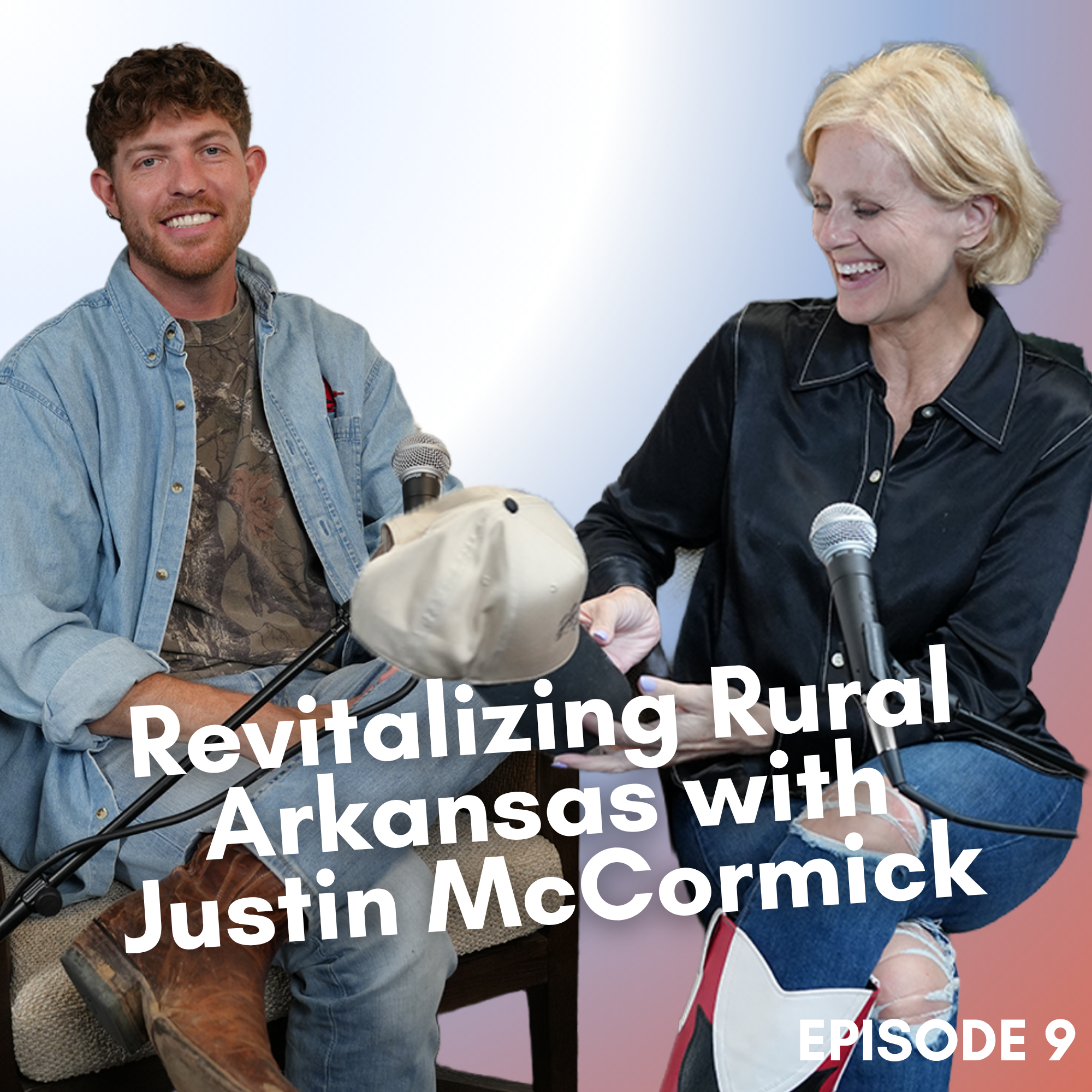
And I have a very special guest with me today. I'm very glad to welcome Justin McCormick. He's the executive director of Main Street Ozark, my hometown.
And I'm so happy to have him here, just personally, because I have been wanting to get to know him better, but also I'm interested, and I know a lot of Democrat Gazette readers are interested in rural Arkansas, and also just the revitalization or the attempt to revitalize, you know, small towns. I love the work I see you doing, and so I want to pick your brain about that, and I just also want you to share your interesting story with readers. So we'll just get right into it.
Southern Loft believes that your home should reflect your unique personality. That's why they offer a wide variety of stylish furniture pieces that are perfect for any taste.
Whether you're looking for a new sofa for your living room or a sleek dining table for your kitchen, they have just what you need.
So when looking for that piece of furniture that reflects you, visit Southern Loft at 3155 North College in Fayetteville, or call at 479-855-66100.
[00:01:37] Speaker B: Awesome. Yeah.
[00:01:38] Speaker A: Welcome, Justin.
[00:01:39] Speaker B: Howdy. I'm glad you're here.
[00:01:41] Speaker A: Yeah. Howdy to you. I wore my boots in your honor.
[00:01:45] Speaker B: Yours are fancier than mine. Mine have a little bit of mud on. We were just the rodeo yesterday.
[00:01:49] Speaker A: Well, that's because you're a real cowboy. And you really wear them. These. I. I think I. I don't know. I couldn't resist them because I thought they were so cool. And then I've maybe worn them twice. But today gave me the opportunity.
So I just.
I just met you today in person, and I'm trying to think back of from. To when I actually became aware of you. When you became aware of me. I mean, we're. We're from the same area. I'm 20 years older.
He's 34. I'm 54.
And. But at some point, through mutual connection or everybody being related, I saw you came on my radar on social media, but I think you were already out of the area doing, I don't know what college, working somewhere.
And then I was thrilled to death to see when you came back with your family and started working in Ozarks. So tell me a little bit about your background and growing up and then going away, what you did and coming back. So you. You grew up. We were told we were laughing about this earlier, the Ozark is the great megalopolis of Ozark. And then you grew up in the suburb Altus.
[00:03:10] Speaker B: Yes.
[00:03:11] Speaker A: But you went to school in the suburb of Altus, which is Coal Hill.
[00:03:15] Speaker B: Coal Hill, yes.
[00:03:16] Speaker A: Okay, so you were. When you were born, you lived in. In Altus?
[00:03:19] Speaker B: Yeah, yeah. So we.
So yeah, I grew up in Altus and in technically the outskirts of Altis between. So everybody who's from that region knows the peach shed hallways. Peach.
[00:03:30] Speaker A: Yes.
[00:03:30] Speaker B: So, like, that was my family. And so we lived right on the county.
[00:03:33] Speaker A: Okay.
[00:03:34] Speaker B: All right.
[00:03:34] Speaker A: So I've gotten peaches there before.
[00:03:36] Speaker B: Yeah. And so everybody, like, yeah, anybody growing up, we would say, like, oh, where do you live? Like Altus. And we're like, well, the peach shed. And so everybody knew that. And so, yeah, we. I grew up in my stomping grounds was Altus because that's where all my family was. That's where my grandma lived. That's where I go to church, all of that. But I went to school in Coal Hill, so I have a lot of Coal Hill, you know, memories because, you know, you grew up there.
[00:04:00] Speaker A: So Johnson county, west side, was your school. And you. Did you go to church at St. Mary's Yes.
[00:04:05] Speaker B: Still go to church at Samari's.
[00:04:07] Speaker A: Okay, so the beautiful Catholic Church on St. Mary's Mountain in Altus.
Okay. And so you, you grow up. What's it like growing up for you little kid in. In Altus?
[00:04:21] Speaker B: Yeah, well, growing up, I mean, I've always been really rooted in my family.
We, you know, we grew up with peaches. We grew up with cattle. My dad hauled cattle pretty much my whole life. And so me and my sister and. And my brother, my little sister, she was full because by the time she grew up, you know, we were able to like, pass it on. And she, she got to live the. Live the fancy life of living on the farm. We had to work it, you know, but.
But yeah, so it was really, like really close knit.
Always we're picking peaches or moving cattle or.
Or I always joke whenever I was growing up, a lot of my friends played sports, and I would always try sport.
But then my dad would be like, hey, I need help on the field, you know, or. Or hey, we need to fix fence. And so you have too much practice. So. And you know, he was, he would give me the option, but very much persuade me of saying, like, I don't have any other help.
[00:05:23] Speaker A: Right. You know, you gotta eat. Yeah, right.
[00:05:26] Speaker B: And so, you know, I was very. I was super involved in school.
You had mentioned this earlier beforehand, you were like, Ms. Ohs and things. I was Mr. Whs.
[00:05:36] Speaker A: Oh.
[00:05:37] Speaker B: You know, and I was, you know, on the yearbook, I was like, an editor of the yearbook. And I was super involved in academics.
Two of my friends beat me out for valedictorian. Salutatorian. But, you know, so we joke about that. I'm like, oh, so close.
[00:05:54] Speaker A: Right.
[00:05:55] Speaker B: But I. You know, I went to Boys State.
I was in Rotary Camp, Rallah, things like that. I was super, highly involved.
And a lot of that came from just seeing that there was so much out there. But I was so involved with stuff on the. On the farm that, you know, leaving the state for me, it wasn't.
It wasn't that we couldn't financially once I kind of got older, but we always had to come back in case cattle or produce or whatever needed to be tended to.
And so once I started getting involved in that and seeing, like, oh, I get trips and I get to go, you know, even if it's to hot springs or something.
So I got super involved, and that
[00:06:44] Speaker A: kind of like a window to the. To the rest of the world and chance to go and do.
[00:06:49] Speaker B: Yeah. And I grew up super, super shy.
[00:06:51] Speaker A: Oh, really?
[00:06:52] Speaker B: Yeah. My mom always jokes to me, because now I am fairly talkative, very gregarious and so. But growing up, no, I was. I was super to myself, they always joked, because until I was. I'm gonna expose myself here. But until I was old and, well, old enough to walk, I still wanted to be held. So I would always go up to my mom, like, hold me, you know, and so my kids did that too.
[00:07:20] Speaker A: That's not. Yeah, there's no shame.
[00:07:22] Speaker B: And now I'm looking back, I should have done it a couple more years because, you know, but. But I. So, yeah, but I was super quiet, and I just kind of, in my.
I would say 14, 15 years old, I was like, why am I so reserved? I can just, you know, And I owe that a lot to the people I grew up with. My grandma, my aunts, my uncles.
[00:07:45] Speaker A: They were all.
Yeah, that's great. Yeah. Okay, so this is not what this episode is about, but I do want to mention it because I think it's an important part of your story, obviously. And I shared the first episode with you where I interviewed my friend Tony, who grew up gay and ozark, and we're 20 years older than you are, so he didn't know anyone.
He didn't really have. And I didn't either language for that experience. And so it wasn't until, you know, I think, college and kind of getting out in the wider world that he.
He'd always felt different, but he. He didn't have the way to understand himself or say, until then. And. And so. And it's. I think it's a, you know, I think it's. It's a. It's a story reaches more people than we think. A lot of people who we know and love in these small towns where it seems so isolated, are growing up with that experience. And that was your experience, too. You. You were gay. When did you feel different or recognize that, of course, you grew up with more, I guess, Internet and. And maybe a little bit of it.
[00:09:13] Speaker B: Yeah, I was in that. You know, I was born. Born in 91, so I was in that weird, like, you know, 91, but lived in Altus. Right. So you're still, like, we didn't have Internet way back.
[00:09:23] Speaker A: Yeah.
[00:09:24] Speaker B: Until I was, you know, at home, like, until I was in high school. Like, well, in high school, but it was tv.
We. We had regular tv and then we finally got satellite. Like, I remember I was probably in high school or like, maybe junior high.
Our family was a little bit further behind, but we will. We lived in very rural Arkansas.
[00:09:48] Speaker A: Well, the reason. I mean, we didn't. We only had, of course, you know, and I was older than you, but we only had, you know, like, Channel 5, Channel 13. PBS was like myself.
[00:10:00] Speaker B: We grew up on the bunny ears.
[00:10:01] Speaker A: Yes.
[00:10:01] Speaker B: So I still had the bunny ears.
[00:10:03] Speaker A: Okay.
[00:10:03] Speaker B: And we still did. What was it, on Saturdays or Sunday mornings? We had, like, cartoons.
And so you'd go in and you'd watch. And then I would go to school and, you know, the quote unquote, rich kids would talk about all of the stuff on Cartoon Network or whatever. And I'm like, oh, well, I don't get to see it until the weekend.
[00:10:19] Speaker A: Right.
[00:10:19] Speaker B: You know.
[00:10:20] Speaker A: Well, this was even for me, before there was such thing as Cartoon Network. This was like Channel 5. Sunday mornings was always just like, Bugs Bunny and whatever, you know.
[00:10:31] Speaker B: Yeah.
[00:10:31] Speaker A: And I remember we got a. We got to pick out, like, a sugary cereal that we got to eat on Saturdays, too.
[00:10:37] Speaker B: Your cheat day.
[00:10:38] Speaker A: Which is so funny now because, you know, the rest of the days, my. My dad was making us, like, biscuits and gravy, all the good stuff, you know, but we couldn't wait for the pretty Pebbles. But.
[00:10:50] Speaker B: Yeah.
[00:10:50] Speaker A: Anyway, the reason I asked you that is because another guest and I were. Were talking about. When we're just talking about, like, we're actually just Talking about history of minorities.
And we were talking about how, you know, I think, like, for people of Tonys in my age, there were. There were no gay people on tv, you know? No.
And that's. I was wondering.
So literally, like, we did not talk about the existence of gay people.
And so he felt different, but didn't know what that meant. But so did you have an awareness that, like, did you ever see any gay people on TV or know what?
[00:11:42] Speaker B: I guess it kind of sort of, I guess, earlier on, because mine and his story of, like, the, like, acknowledgement or, like, knowing, like, hey, something's a little bit different, but not knowing exactly what that was, was very similar. On the playground, you know, around some friends, talking about who you like. And I liked a boy.
[00:12:06] Speaker A: Tell that story.
[00:12:06] Speaker B: Yes.
So we were sitting around and, you know, at Westside, we had the old.
The old building that was like the 1920s, like, really old building. And so we would go outside, and the playground was in the back. And then there was honeysuckles. And so we would all get around the honeysuckles. And y' all be eating those.
[00:12:24] Speaker A: Yes.
[00:12:25] Speaker B: And, you know, and so all of our friends are around there. And I just remember it was. It was probably five or six of us, and we were talking about, like, oh, so and so likes you. So and so likes you. When I. My best friend, I was like, well, I like them.
And for.
So I don't embarrass him or me, I won't say, okay, he remembers who. Who our best friends were in, like, second grade. Then he'll be like, oh, wait, but we. So then some of my other friends looked like.
And I was like. And they. They had mentioned, you know, oh, because not your best friend. Like, who do you like? Like. And I was like, oh. So I played it off cool. And so then I told. I said the other girl. And she. She knows Sarah. Hi, Sarah. And so she was my, like, elementary school girlfriend for years. And so I got to know her family.
We were really young, and we really, you know, sitting and watching Lion King on the little mats and, like, had our little first kiss as little kids.
[00:13:21] Speaker A: But that was when you got the message, like, it's not okay to, like, my best friend.
[00:13:26] Speaker B: Yes. And as a kid, I immediately thought, wait, I overcompensate. I need a girlfriend.
[00:13:31] Speaker A: Yeah.
[00:13:32] Speaker B: You know, I need a girl to
[00:13:34] Speaker A: make sure that, like, validate my manhood here.
[00:13:37] Speaker B: Yeah. And so. And I always.
From that moment on, I always was a ladies man. Like, I always had a girl. I always had A girlfriend. If I didn't have a girlfriend, then, you know, I was always on the hunt for a girlfriend to make sure, like, okay. But there was always that piece of me that was like, this isn't right. This doesn't feel right.
It felt more of a friendship rather than a romance. Right. And so. But for. For me, like, I would say this is gonna sound. People are probably like, oh, yeah, obviously. But, you know, like, seeing, like, Ellen DeGeneres or, like, seeing mostly lesbians on. In Hollywood was the only, like, queer experience I had.
[00:14:20] Speaker A: Yes.
[00:14:21] Speaker B: And so it still didn't quite make
[00:14:23] Speaker A: sense to me because there wasn't someone you could look at and go, okay, I. That looks.
[00:14:27] Speaker B: Yeah. And I. And I remember growing up and hearing the way individuals in my, you know, hometown or just people that I was surrounded by talk different about lesbians and men who liked other men. There was this, like, toxic, like, kind of view on, like, oh, well, the men are, like, you know, less masculine. You know, they're not gonna be helpful in the family, you know, et cetera, et cetera. And then. But for women, it was like, oh, they're strong. They're gonna beat your butt. Like, you know, like, you don't mess with her. Like, she. She's. You know, we may not agree with that, but, like, she's a good woman, you know, and so there wasn't as
[00:15:09] Speaker A: much shame surrounding it from your perspective.
[00:15:12] Speaker B: From my perspective, absolutely. And I remember that a lot growing up because we had. We had three or four couples, lesbian couples that I. I remember growing up young. Very young.
Yeah. And. And I know. I knew, like, you know, hey, they were awesome people. Oh, we love them. You know, but for the flip side, which I fell into, of course, was like, oh, no. Well, I can't be that.
[00:15:37] Speaker A: No.
[00:15:37] Speaker B: Like, you know.
[00:15:38] Speaker A: Well, yeah, that is so interesting because, you know, I've told you a little bit about my story. You know, I think, like, the way that a good, you know, Southern woman and kind of the idea of this. This sort of, you know, submissive, genteel, kind of, you know, Barbie type person is more sort of what I latched onto as ideal or what, you know, like, what I should be. To be.
[00:16:24] Speaker B: And from a strange perspective, like, yeah.
[00:16:26] Speaker A: Yeah.
[00:16:26] Speaker B: That is, like, yeah. When you saw couples, like, in Altus or Coal Hill or wherever.
Yeah. You assume.
[00:16:34] Speaker A: And so, like, for me, you know, it would.
That would have been.
That's kind of what the ideal woman would have been. And I think, though, to hear you describe that, there's definitely in our I think culture this very, you know, masculine, strong. I mean, I'm using the word masculine. Masculinity understood as this very, you know, tough, you know, cowboy, athletic, rough, rugged, which you're actually able to totally fit in. R. Which I think is something so fun.
Just about you being who you are.
[00:17:29] Speaker B: Yeah. And I've morphed. You know, I've went. I've went. Like. I think the thing about my, like, style or my, like, understanding of, like, what is masculine, like, what is. Like, my identity changes. Right. And like. Like, I've always been a little yeehaw. Like, even when I'm more quote, unquote, flamboyant or, you know, I have my ears pierced and, like, I used to have long hair and things like that. But I've always.
I've always been like, when I wake up, of do I feel like throwing on my boots and my. My jeans with my holes. The holes in them and walk out the door, I'll do it. If I feel like, hey, I want to put on my Doc Marten pumps, I'll do it, you know, and so you. You may catch me on a Wednesday that you're like, oh, wait, yeah, you know, that does. Not the.
Not the normal thing.
[00:18:21] Speaker A: You used to be pigeonholed.
[00:18:22] Speaker B: I won't.
Yeah. But right now I'm in my cowboy era.
[00:18:26] Speaker A: Your cowboy era?
[00:18:27] Speaker B: Yeah.
[00:18:27] Speaker A: Okay, well, tell me, so what did you do after high school?
[00:18:31] Speaker B: I went to the U of A.
[00:18:32] Speaker A: Okay.
[00:18:32] Speaker B: So this is my stomping grounds. Okay. Yeah. So I always love Fayetteville. My heart. So much of my heart lives in Fayetteville. And that was where. I mean, that is where I, you know, became free. And I, like, started learning things. I went to the journalism school, and I really. I joined a fraternity, Shout out to Farmhouse. And so. Which is also yeehaw. You know.
[00:18:53] Speaker A: Okay.
[00:18:53] Speaker B: So I found a subgroup because, you know, you grew up in that area of, like, coming up here was a shock to me. I was like, oh, wow. My class, I think, was 32 people that I graduated with. I came to Fayetteville, knew no one.
And so I joined a fraternity that was small so that I could kind of get that piece of home.
And so. So, yeah, I did that. And I did that for five years. I had, you know, ups and downs of that.
And. And then I went to grad school at the University of Missouri.
[00:19:24] Speaker A: Okay. She got your degree in journalism.
[00:19:26] Speaker B: Yes.
[00:19:26] Speaker A: Okay.
[00:19:28] Speaker B: Public relations advertisement with a minor in theater because, you know, a little dramatic.
[00:19:32] Speaker A: Yes.
[00:19:33] Speaker B: So I figured I might as well make that Official.
[00:19:36] Speaker A: Okay.
So then you go to Missouri for your master's.
[00:19:43] Speaker B: Yeah, So I was there for a year and a half or so.
I ended up taking longer here, not as long there.
[00:19:52] Speaker A: Yes.
[00:19:52] Speaker B: So made up time.
[00:19:53] Speaker A: I kind of did the same thing. I was five years at UCA because I started out in biology and ended in English, and there wasn't much crossover there at all. So I had to.
I loaded up on hours that last year to get my double major, but.
Okay, and so then. And what's your master's?
[00:20:14] Speaker B: Educational Leadership and Policy Analysis.
[00:20:16] Speaker A: Oh, wow.
[00:20:17] Speaker B: It's a mouthful. So I went for Higher education administration.
[00:20:20] Speaker A: And then where'd you go from there? There?
[00:20:22] Speaker B: I came back here.
[00:20:24] Speaker A: Oh, yeah.
[00:20:25] Speaker B: So I worked as the coordinator of parent and family programs at the university.
And so one of my amazing mentors, Quincy Spencer, he was looking for somebody around the time that I was moving back. And I was. I was a December grad, and December grad in higher education was rough. Any education.
And yet you were in.
[00:20:48] Speaker A: It's the middle of the year. You know how it is.
[00:20:50] Speaker B: Yeah. So the. You. You have all, you know, a lot of transition there, but it's harder for the outside to come in.
And so I was looking all over, and he messaged me and was like, hey, we have this position opened.
And so. And I was like, oh, I'm not ready to come back. I'm not ready to come back. So I was looking, looking, looking, and I went ahead and applied just in case, and I ended up getting the job, and I came back for.
It was a few years until around the pandemic, we decided to move back home. We. And in all that, adopted our son, which was a whole thing. We adopted him from Missouri, and that we realized, like, my husband was going back to school at that time, and it's expensive.
[00:21:41] Speaker A: So where did you meet your husband?
[00:21:42] Speaker B: Here.
[00:21:43] Speaker A: Okay.
[00:21:43] Speaker B: Here.
[00:21:44] Speaker A: Here at the ua. And were you guys married when you went to Missouri?
[00:21:47] Speaker B: No.
[00:21:48] Speaker A: Or did you go. Did he go with you?
[00:21:49] Speaker B: Y.
He. He. I drug him there.
[00:21:52] Speaker A: Yes.
[00:21:52] Speaker B: So. And then that's when he started working in foster care.
[00:21:55] Speaker A: I got you.
[00:21:56] Speaker B: And so that's kind of when he met our son now. So that's like, where. Where we kind of. I don't know, like, formed our family, but didn't know we were forming our family at that moment, because it wasn't until we moved back here that they contacted us and was like, hey, would y' all be interested in fostering to adopt?
And we always knew we were going to, but I always wanted Six kids.
[00:22:21] Speaker A: Yeah.
[00:22:22] Speaker B: So I was like, I want this huge family. I laugh about it now because I. One and done. Sorry. Mom and Dad. I know that they want so many more grandkids, but I'm just like, oh, my gosh, I'm so busy. But.
And so our son Hayden, we.
It was September, I believe. September of 2017.
[00:22:44] Speaker A: Okay.
[00:22:44] Speaker B: And we were at this is Kind of a Funny Story because we were with my parents, and we were gonna tell them that we were gonna adopt.
[00:22:53] Speaker A: Okay.
[00:22:54] Speaker B: So me and Jared sat down, and we're nervous. We're, like, fiddling around, and we're like, okay. And my sister stands up and we're like, wait, she's about to say something.
And she announced that she was pregnant that same night.
So we didn't want to steal the thunder. We're like, oh, my gosh. Okay. So now we have to sit with this even longer.
[00:23:16] Speaker A: Wait.
[00:23:17] Speaker B: Yeah. And so we. I forgot when it was. It was. We were in Fort Smith and we went and told them, and I was so nervous because, you know, and it was again, that thing. My family's amazing. But it was like, you know that, like, same sex couples adopting narrative that you hear. And so.
But my parents were so exciting.
[00:23:40] Speaker A: Oh, that's great.
[00:23:40] Speaker B: They loved it. Like, they were my dad. It was funny because every. You know, the system is. It's very difficult. And it took two years to finalize the adoption. And I would say every week my dad would call, is it done? Are we getting close? What's the date?
And so they. They've been amazing. But. But that all happened here in Fayetteville.
[00:24:03] Speaker A: Wow.
[00:24:04] Speaker B: Yeah.
[00:24:04] Speaker A: So you have a little boy. He's so cute.
[00:24:08] Speaker B: 14 now.
[00:24:09] Speaker A: Oh, wow. Yeah.
[00:24:10] Speaker B: Yeah.
[00:24:10] Speaker A: And how old was he when you got him?
[00:24:12] Speaker B: Oh, my gosh.
Well, that was in 2019, when we officially adopted him. So he was born in 11.
Math people out there, help me out. A reminder. I'm a journalism pretty little. Yeah, yeah, yeah. So he. Yeah, because we.
Jared, knew him, and then we got him and did the travel back and forth for almost two years or well, about a year. And then we had him placed here. We lived in Cave Springs, and so. And then we had him there until we adopted him officially.
[00:24:43] Speaker A: Now is Jared from Arkansas.
[00:24:45] Speaker B: He's from Springdale.
[00:24:46] Speaker A: Okay.
[00:24:46] Speaker B: Yep.
[00:24:47] Speaker A: And he. What's he do? He was working with Foster.
[00:24:53] Speaker B: Yeah, he does social work. He's kind of dabbled in a few things, but he does social work. And right now he's helping run the store.
[00:25:01] Speaker A: Okay. Yeah. So let's get to that.
[00:25:04] Speaker B: Yeah.
[00:25:04] Speaker A: So you were you guys in Texas?
Yes, for a while.
[00:25:09] Speaker B: We lived in Austin for about three and a half ish years.
[00:25:12] Speaker A: Okay.
[00:25:12] Speaker B: Yeah.
[00:25:13] Speaker A: And then you came back home to home? Yeah, that was a big decision.
[00:25:18] Speaker B: Yeah, we.
[00:25:19] Speaker A: What went into that?
[00:25:21] Speaker B: So, yeah, I lived. We lived in Austin. I was working there at the state capitol. And so we were doing political advocacy work or I was doing political advocacy work. And then it was. It was just a lot like it mentally. That's a lot. And so I love the people I was around and everything, but we kind of had thought about what is like an escape look like. And I don't want to say escape, but it was like when we had those moments of a lot of pressure, we wanted to go back home. So we bought a little farmhouse in Denning. So for those of y' all don't know who Denning or where Denning is, it's basically south of Altus.
[00:25:58] Speaker A: Right.
[00:25:59] Speaker B: And so we bought this little two bedroom farmhouse that we were fixing up and we were just gonna use it as when we came home, we were gonna be there. My sister was gonna put her couple horses there. It's on about an acre of land and. And we were just going to do that. But then I got the job at Main street and so I don't want to jump the gun there, but you know, that all kind of folds into that. And so I kind of fell in love with that job and like what it was doing and how it was helping somewhere that I loved.
[00:26:35] Speaker A: Yeah, I want you to talk all about Main Street. I've kind of so back, I guess, you know, in 2000, 19ish, when I was kind of starting to run for office and get a little bit more involved.
I knew Sandy who was there, and I had done some volunteering like as a high schooler. Then I went away to college, you know, got married, had all these kids.
And so it's kind of just getting my head above water, I guess. So I kind of knew, you know, and had volunteered around Ozark and always loved it and, you know, wanted to see it, you know, grow and thrive.
And then I guess it was 18, maybe 19, somewhere in there that I talked to Sandy and I worked with her trying to get that dang railroad to let us have, you know, the
[00:27:41] Speaker B: little access to the river so that
[00:27:44] Speaker A: we're going to have that park down there. And it just seemed like a.
Just a golden thing like it would be for the area. And I was just so disappointed in the, you know, that process and in the railroad, you know, Being unwilling to do that.
And then I kind of, I kind of lost track of when she retired, I guess. And I don't know what happened with Main, but Main street is a grant funded position. Is that right? Or what is it?
[00:28:13] Speaker B: So we have a few. Yeah, so we have a few different areas. So we're an arm of Main Street America, which is of Main Street Arkansas and then Main Street Ozark. And so we are funded partially through the state, partially through grant funding. The city of Ozark gives us some, some funding as well. Ok.
We all, then beyond that, it's just fundraising, sponsorships, grants here and there, private grants that we apply for.
[00:28:42] Speaker A: Okay, and so how did you get that job?
[00:28:46] Speaker B: Okay, so this job came up because Shelby, which was the former executive director, was stepping down.
And so she, she's also from Ozark. She did an amazing job and was really, really doing a lot, but had kind of like step back. And so Crystal Wright, I don't know if you know Crystal. So she had messaged me, I think on Facebook or texted me or something and was like, hey, this position. And at that moment I was like, oh my gosh, no, I don't have time for this. Like, I wish. But then I started looking more and more into it and I was like, okay, well. And I told her, I said, I don't know when I'm moving back. Like, we have kind of talked about this, but there's no definite.
[00:29:27] Speaker A: Right.
[00:29:28] Speaker B: And she was like, we need a grant writer. We need somebody who knows kind of that side of things.
So we're willing to consider you. So I applied and this is a part time position. Keep in mind, I want to know that too because you may hear me talk about things and you'll be like, wait, is it, how are you doing that part time? It's because I don't. I ignore the part time label. Yeah. And so, but yeah, and so I was like, oh, okay, part time. I can do it here and there and come back for all the events and stuff.
And so I ended up getting the job and it kind of expedited everything
[00:30:06] Speaker A: we had been starting to dream about.
[00:30:10] Speaker B: Yeah. And so then that kind of like, that kind of made us think, like, okay, well, I love the job. I loved what it was about.
My heart's always, I mean, we've moved, we've lived in Columbia, we've lived in Fayetteville, we lived in Austin, we lived in Tulsa for a very short bit.
But my heart's always been in Altus Ozark area and my family's There.
And so I was like, well, growing up, I always dreamed of downtown being something different than it was. Or like, me too, you know, and like looking at old pictures and seeing festivals where the, you know, all of the streets were shut down and there were crowds of people, you know, and I remember looking at those. And I've always loved history. I've always been a history nerd. And so I just remember even, like with my grandma, she would talk about, you know, going down to Ozone. She worked at the Model Cafe. The. The famous Model Cafe. And so we. I remember even driving by that. And just as a little kid being like that is. That was a pride point of Ozark.
And it just keeps having different owners, like, through and through. Like, growing up, I can't remember, like, the amount of things it was. Right.
[00:31:32] Speaker A: Same.
[00:31:32] Speaker B: And. And so with this position, I.
Not me alone by any stretch, but at least there's a little bit of.
I don't know if, like, powers the word. To be able to push that.
[00:31:47] Speaker A: Yes.
[00:31:47] Speaker B: To be able to say, like, hey, you know, we're worth it. We.
Our town has so much potential.
[00:31:54] Speaker A: It does.
[00:31:55] Speaker B: And. And it has so many people that love it, that just don't know how, where to start. Right. And so just kind of being that person that, you know, like Sandy and. And all these other people before me.
[00:32:08] Speaker A: So you probably work pretty close with the Chamber.
[00:32:11] Speaker B: We do.
[00:32:12] Speaker A: And your office is in that same building.
[00:32:14] Speaker B: Yeah. So Main street owns that building and the chambers in the front of it, and then we have the office in the back. And so, yeah, we. We do a lot of collaboration with the Chamber, with Ozark, A and P Commission, with the city.
So a lot of people get confused and everything. We are a separate nonprofit. We don't have any connection to the city other than partnership.
[00:32:39] Speaker A: So you came.
Started in that job part time, and then you and Jared opened a shop.
[00:32:44] Speaker B: Yeah.
[00:32:45] Speaker A: Well, tell. Tell everybody a little bit about that.
[00:32:47] Speaker B: Yeah, so that was kind of funny too, because we did. Had no intention of doing that.
[00:32:52] Speaker A: Yes.
[00:32:52] Speaker B: But I. I run an event planning floral business on the side. And so I've kind of like died down my event stuff, but I was still doing event florals. And so I needed a space bigger than our two bedroom.
[00:33:05] Speaker A: Yes.
[00:33:06] Speaker B: Little house that we're renovating to do stuff in. And we don't live in that little house anymore, by the way. We can update you on that too. But. But then we started looking at the buildings downtown and Andrea, who owns Adams Abstract, we were looking at this one and we were talking about Actually doing something with Main street of like, hey, could we do an art exhibit that rotates or something to bring people in to at least give that some life.
[00:33:35] Speaker A: Yes.
[00:33:35] Speaker B: And I looked at it and I said, wait, I think I want this.
So my husband was like, what in the world? What are we going to do with that? And I was like, well, I already need somewhere for my florals.
So what if we just opened a little shop in the front.
[00:33:53] Speaker A: Yes.
[00:33:53] Speaker B: And then we had the back as the workspace.
[00:33:57] Speaker A: Okay.
[00:33:58] Speaker B: And so that was in.
No, November.
[00:34:02] Speaker A: Yes.
[00:34:03] Speaker B: Maybe late October.
And we opened in December.
[00:34:07] Speaker A: On December 13, I went in there Christmas shopping.
[00:34:10] Speaker B: Yeah.
[00:34:10] Speaker A: So you. And you had it decorated for Christmas and was. So.
[00:34:14] Speaker B: Yeah. So we brought that to life in little over a month.
[00:34:17] Speaker A: That's what I'm hoping that we can.
We can. Not me, obviously, but I'm hoping that our people who know how to do this can. Can edit in here and show you painting the sign howdy on the. On the building. And I want to show them. This is kind of impromptu because I was not expecting him to do this, but. So he brought me this little gift bag here. And these are just some of the cool stuff that he has.
[00:34:48] Speaker B: Yeah, I thought, you know, Southern hospitality, I'd bring a little gift.
[00:34:52] Speaker A: The middle of nowhere, Arkansas, I call it home.
And then we have howdy koozies, which I'm sure those are going to be snatched up by some of the guys in my life. And then a vanilla leather scent. And cookies. I didn't. When I was in there, I don't think you had cookies. You had some.
You had a fridge with some local.
[00:35:20] Speaker B: Yeah, but ice cream, we have. Well, we have ice cream and we have cheeses.
[00:35:27] Speaker A: Yes.
[00:35:27] Speaker B: Yeah. So a cheesery. Cheesery. Is that the word? I don't know.
[00:35:31] Speaker A: Yeah, something like that.
[00:35:33] Speaker B: White River Creamery. It's actually up here. You can get at the farmer's market here in Fayetteville. So. But they have. They have theirs down there. Yeah. And then that's from the Barums in Ozark.
[00:35:43] Speaker A: Oh, cool.
[00:35:44] Speaker B: Yeah. I don't know if you know ballrooms. They live across the river there.
But. Yeah.
[00:35:48] Speaker A: Beef. I don't.
[00:35:50] Speaker B: Beef snob.
[00:35:51] Speaker A: Beef snob.
[00:35:51] Speaker B: Yeah.
[00:35:52] Speaker A: And then show them your.
[00:35:53] Speaker B: Yeah, and then we have little hats. So we do, like the. We do like the regular line of howdy Co stuff. And then all of our groceries and things are all. We try to stay regional. We try to get people, you know, these local craftsmen, local artists, local, like the. The cookies and things. Like, we have every Tuesday Someone comes in and she. She makes. Makes the most amazing sourdough cookies and bread.
[00:36:17] Speaker A: Now, howdy, Co. That's yours, isn't it? Or is it? Yeah. So this is your brand.
[00:36:22] Speaker B: Yeah, this is my brand. And I. And people are always like, well, why'd you. How do you think? And then it says, like, hold your horses on the back.
[00:36:27] Speaker A: I love that.
[00:36:28] Speaker B: And so we, you know, my grandpa, I. Somebody asked me this of like, how'd you think of howdy? I mean, howdy? You know, we just always cheer howdy with the hillbillies.
[00:36:39] Speaker A: Hey, Jody.
[00:36:40] Speaker B: Yeah, so, I mean, w. Yeah, so it's. It's ingrained in kind of the way we say hello or whatever. But my papaw, he, you know, anytime would be howdy. And it was, you know, however you spell that, you know, it had a few less consonants in it.
[00:36:58] Speaker A: Yes.
[00:36:59] Speaker B: And so whenever I was thinking of a brand, a lot of our branding, our marketing really ties into my grandparents. It ties into my mom. She was a rodeo queen back in the day. Yeah. So she was the first ever Co Hill Rodeo Queen. Yeah. Back in 84, I believe. And so she has a lot of influence on my yee haul.
And so we.
I even have my grandpa's belt here.
Herbert Holloway. So that was my grandpa. And so. So I wear his. His rodeo belt around a lot especially.
I guess it's my lucky belt. I don't know.
[00:37:37] Speaker A: So that's really. You know, my people are a little bit less cowboy rodeo, more like hill people.
[00:37:47] Speaker B: And there is a difference.
[00:37:48] Speaker A: There really is. And I mean, but we do have cows. We have. I live on a ranch now, the Triple F Ranch. My parents were both educators, and then once they got my brother and me off the gravy train, they were able to save the money and buy this ranch out towards Cecil. It was kind of my dad's dream.
And he has cattle out there, but it's just like these boots, you know, I kind of play at being a cowgirl. I'm not truly a cow, but I am definitely a hillbilly.
But they definitely overlap. But this is. More people could come and get. Local things get.
They could cowboy up there and cowgirl up.
[00:38:33] Speaker B: And we have. You know, I think that's what I really wanted to market to people that. I mean, it can market to people who are like, hey, we're going to the rodeo. We're.
I'm a bull rider. Like, hey, you have the pearl snaps.
[00:38:45] Speaker A: Yes.
[00:38:46] Speaker B: Or it could be like, hey, we're.
We just love the vibe.
[00:38:50] Speaker A: Yeah.
[00:38:50] Speaker B: Right. Like, we Just love the kind of that trend that, you know, cowboy's cool now.
But we have a lot of. We call it like a modern mercantile or, like modern western, just because we do have kind of that overlap of if you want to get it dirty, it'll do it, but it'll also look good.
[00:39:11] Speaker A: Awesome.
[00:39:12] Speaker B: Yeah.
[00:39:12] Speaker A: So. And then you still have your flowers, your floral business.
[00:39:16] Speaker B: Yeah, I still do event florals. We've really. I mean, we've had a lot of success with the store, so. So we really have put a lot into it, a lot of heart into it, and we're really trying to push that. But I still do florals. I love doing flowers. It's therapeutic for me more than it is. Like, I'm getting rich off of it.
[00:39:37] Speaker A: Yeah.
[00:39:37] Speaker B: So. But hopefully we'll get rich off the howdy co. And then I'll, you know, then I can keep doing the stuff for fun. But no, I'm just awesome. But yeah, so I dabble on quite a few things. And part of that also opening it was.
Was part of that revitalization, because I thought.
And this is from Justin's brain, of how I kind of think of things is like, as the executive director of Main street, why would I go anywhere but there? You know, like, how could I have it? Which obviously, we live in Altus. We live downtown.
Downtown Altus.
After I said that, I was like, that is Altus. But we live close to the square in, like, the middle school in an old house there. But. And so the convenience of it being in Altus and Altus having so many tourists that come through and the wineries and things like, honestly, that from a standpoint of local people, they're like, that's crazy. From a standpoint of what products we have, it would make more sense in Altus because we really do have a lot that caters to people coming in regional things, things that may. We can access really easily. But they may not know those Facebook groups or those individuals to call.
But we decided. I decided I'm gonna do it in Ozark because that's one more store that is helping Ozark bring it to life.
[00:41:06] Speaker A: Well. And hopefully there can be more collaboration between the. The two, you know, as a tourist. Touristy sort of destination.
So what else is going on that you're excited about?
I'll say this. I am super excited about the Saturday.
Is it Saturday markets?
[00:41:27] Speaker B: Yeah, the market on Main.
[00:41:29] Speaker A: I missed. How many. How many have there been?
[00:41:31] Speaker B: We've only had two.
[00:41:32] Speaker A: Okay. I missed them somehow, but I saw that you're Doing that on. On Facebook. And we're all coming Saturday. We're all excited.
[00:41:42] Speaker B: Yeah.
[00:41:42] Speaker A: And my kids were real excited. They love things like that.
[00:41:46] Speaker B: So, yeah, we did.
We did Springfest, which is our first Spring fest.
And so we've had the market on Main for the past few years.
[00:41:54] Speaker A: Okay.
[00:41:55] Speaker B: But last year, we really tried to ramp it up and get.
Get that going, because, I mean, like, in Fayetteville, we have a beautiful market.
[00:42:03] Speaker A: Oh, I know.
[00:42:04] Speaker B: Like, it is goals.
[00:42:06] Speaker A: It's wonderful.
[00:42:06] Speaker B: I wish we get to that point. We will. We will.
[00:42:09] Speaker A: Yes, I think we can.
[00:42:10] Speaker B: But we really tried to reimagine what it'd look like. And so that's. The Springfest came about because we really wanted to launch that and say, you know, what does the farmer's market like? What potential does the farmer's market have? And that event, we had a little over 20 vendors. We had local music.
We had a flower class.
We had Nerf wars and all kinds of stuff. And the turnout was great. The weather was not ideal. It was very cold that morning. And we were really nervous because between that and the rain and this past Saturday, there was a lot of rain that was in the forecast. But there were. We had. I believe we had 13 vendors this past weekend, which is more. I mean, that's even more than we did last year. And for. For those folks who don't know, for a small town of 3,500, that's a pretty decent sized farmer's market. Yeah. Especially in the growing stages. And so we're really hoping that people from all around, we keep it free for our vendors because we know the discrepancies of, you know, wage gaps and things that we have to encounter.
And we know that a lot of those local artisans, if they have to go to a market that's 25, $35, that doesn't seem a lot to us.
You know, that could be eight or ten things that they have to sell to even make that up.
And so we do keep it free so that it is community focused. And I think that that is something that we want to keep and we really want to focus more on how do we amplify that to hope one day that those people who are coming need to open our storefront.
[00:43:53] Speaker A: Yeah.
[00:43:54] Speaker B: You know.
[00:43:54] Speaker A: Yeah.
So what kinds of things do you.
I want to ask you, I guess, a couple questions about trying to revitalize downtown Ozark, because I think there will be people listening and watching who want to do what you're doing.
I know Rex Nelson, you know, is one of Our columnists who just really champions like small town Arkansas.
He often posts these or reposts these things.
You know, they say like revitalize or die.
What other things are you hoping and dreaming and doing?
[00:44:37] Speaker B: Oh my gosh, there's so much. But I think the main things we want Ozark to be walkable.
And it is. There are so many residents in the downtown area that we want access for them to have groceries, to have, you know, places to eat, places to shop.
[00:44:59] Speaker A: And be able to walk.
[00:45:00] Speaker B: Yeah. To be able to just walk or.
[00:45:02] Speaker A: I love that.
[00:45:03] Speaker B: Or have sidewalks that are ADA accessible because, you know, also the, I don't know the statistics behind it, but just like from being downtown all the time of like the individuals who have disabilities or who are in wheelchairs and things of like how when they have to get off and you know, get back on the sidewalk and things like simple things like that, that we want to make sure we create a downtown that's inviting for everybody.
But and so a little bit that we're doing to encourage that is, you know, creating green spaces, creating more shading, creating more seating, more areas for people to stop and relax between here and there. And then also looking at individuals who have already kind of invested in downtown and saying like, hey, how, how do you envision growth and how do you envision some of the, some of the places like they have the space, they don't have the means to redo their space or to, you know, put millions or whatever in, you know.
And so we're trying to help them kind of rethink those spaces of like, okay, well what can we do as a temporary of like, maybe we open.
Maybe we get it safe.
[00:46:22] Speaker A: Yes.
[00:46:23] Speaker B: And then we open for pop up shops.
[00:46:26] Speaker A: Yes.
[00:46:26] Speaker B: Or maybe we open for an art exhibit or something to move traffic through.
And then maybe that person who needs it can come in and say, oh, this is it and this is here. Yeah. And so, so trying to, trying to get creative of one of the things when we opened Howdy or Howdy Co and then really started thinking through what revitalization in Ozark, Arkansas looks like is why can we not have the things that other towns have? Right. Why do we go to Fort Smith or Conway or Fayetteville to get these resources regularly when we could have it in our backyard.
[00:47:07] Speaker A: Yes.
[00:47:08] Speaker B: And I think the thing that the biggest thing is people are afraid to take that risk.
So you have to find individuals who want to take that risk or are capable of doing that.
I acknowledge the privilege that I have to take the risk of Opening. Howdy. Cool. And so am I scared sometimes? Absolutely. Does it make me really nervous when we have weeks that we sell beef jerky?
Yes. Yes, it does. But I think there's so much heart and there's so much, like, potential for growth and just knowing that, hey, this year, next year may be difficult, but five, ten years down the road, we're gonna look back and think, look at all of our neighbors that are now thriving because of something else that we do.
We're open seven days a week.
[00:48:00] Speaker A: Oh, yeah.
[00:48:01] Speaker B: And people are always so shocked by that in Ozark. You know, here or in larger cities, people are like, oh, that's a normal.
[00:48:07] Speaker A: Right.
[00:48:07] Speaker B: In Ozark, Arkansas, for a boutique or a small thing like that, other than a McDonald's or a Harps, then, you
[00:48:16] Speaker A: know, everything closes down.
[00:48:17] Speaker B: Everything closes. And so we've been also working with our business owners or trying to, like, talk through that. What does that look like? Or maybe every once in a while, do a Saturday that you're open later or a Sunday that's open later for guests to come through.
We're also doing our summer concert series, and that'll be in the summer. July, August, September.
[00:48:39] Speaker A: Is that going to be at the.
[00:48:41] Speaker B: The Banco zk.
[00:48:42] Speaker A: Okay. Yeah. Yeah. I love that.
[00:48:44] Speaker B: Yeah. And so we're doing some work down there to try to get some spaces for individuals to be able to go all the time, but will have those. And, you know, Ozark has so much, like, musical history tied to it that a lot of people. And I think a lot of people up here in Fayetteville or northwest Arkansas, we get a lot that come through Ozark that really come down to get away from the hustle, bustle and, you know, float the river or go to Turner Bend or. And all of that.
But they don't always go all the way down. Right. They kind of, like, come back.
[00:49:27] Speaker A: Yes.
[00:49:27] Speaker B: And so we're trying to figure out what will get them to come down and view our city and shop and eat at the places, you know, and
[00:49:37] Speaker A: I think the river.
[00:49:39] Speaker B: Yeah.
[00:49:39] Speaker A: You know, that's why I was just really hoping for that.
At the time, what we were talking about was some kind of marina and, you know, a way to cross over the railroad tracks and come into town and eat and shop and then go back. Get back on your boat and go, I live on the river. I live south of the river, Cecil. But my house backs up to the river, and we just see boats, you know?
[00:50:06] Speaker B: Yeah. And they're looking to do, like, a.
It's kind of like the showboat, you know, from like Tulsa down. And they've talked about it a few years and we're really trying to figure out like who can we get, how can we get access to help us?
You know, we, we have figured out that there is a grandfather clause of access to the river. And Ozark does have that.
[00:50:31] Speaker A: Okay.
[00:50:32] Speaker B: And so that is something that we're really looking into. Henry Cagle, I'm sure you know Henry.
[00:50:38] Speaker A: Do you know, I know the name like no.
[00:50:40] Speaker B: Of him. He's helping us with the research center.
And so he. And he volunteers at the train Dep Museum.
[00:50:47] Speaker A: Good deal.
[00:50:48] Speaker B: And so he's really helped me really investigate. He is our all knowing history buff in Ozark. If you need a question, Henry probably knows the answer. If not, he will find enough time in his day to try to figure it out.
So he recently found some areas that we have proof of access to the river.
And we're trying to see that angle of what does that look like and how can Main street assist or how can we find support to really push that to get it? Because that is if you look at all the major cities in Arkansas and their access to the river, they have it.
[00:51:30] Speaker A: Yes.
[00:51:31] Speaker B: And we are in an area that is stunning on the river, but we don't have it.
And so that's something that Gar Creek, we love it.
We need to do more there.
[00:51:45] Speaker A: Yes.
[00:51:46] Speaker B: Because not every downtown has a Gar Creek, but the river really is a lot of hidden potential right there.
[00:51:55] Speaker A: Well, yeah. And you know, I walk sometimes down at south park and it's just there are people from everywhere down there, which I think is an indication too.
[00:52:08] Speaker B: Yeah.
[00:52:08] Speaker A: You know.
[00:52:09] Speaker B: Yeah. And we even talk. I mean, you know, in all this, all. I mean a lot of this boils down to Ozark has a lot of potential, a lot of infrastructure, a lot of heart, but it doesn't have the financial capacity. Right. Because if the financial capacity. If we had a financial capacity like northwest Arkansas, just imagine a bridge or a bike lane that would go from south park across the river by the bridge and then connect to Main Street.
[00:52:35] Speaker A: Yes.
[00:52:36] Speaker B: Right. And like simple things like that, that, that if we had the capability or the financial means, like how much of a game changer that would be for our economic growth.
But it's finding those individuals or that grant or that.
And that's millions of dollars that up here they're like, oh, announce it every. Every few months. But in Ozark it's like every few decades makes.
[00:53:03] Speaker A: Yes, but maybe we can change that.
[00:53:06] Speaker B: Yeah, yeah. So if anybody out there is listening, Ozark needs you. Yeah, yeah. So. So I think that that's, that's something. And we're working on that. We're trying, we're really, we're really digging into who can we talk to at the state, who can we talk to the federal level, who can we talk to locally to, to see, like, what. Where are we not looking, what door hasn't been opened yet.
[00:53:27] Speaker A: Yeah, well, so what would you like to.
If you could take a brush and paint the future of Ozark, what would it look like?
[00:53:46] Speaker B: Oh, my gosh.
[00:53:50] Speaker A: And I guess this as sort of a prototype for small towns all over Arkansas.
[00:53:55] Speaker B: Yeah, I think that's a really good question. But I think, like, I just see.
I, I don't know if it's like too general, but I just see Vibrance. I just see like, like the individuals who don't have a lot having access to it may not be to where they can, you know, keep forking out the money or doing whatever, but they have access to the nice things in life. And I think that's something that really gets people in small towns down, is sometimes it feels, it feels like, oh, well, you see these people traveling, you see these people having experiences and I can't do it. And I, that. I remember that growing up, like when I was really young, we didn't have a lot of money and so Ozark was our town.
[00:54:51] Speaker A: Yeah.
[00:54:51] Speaker B: Like that, that was where we had everything and, and we didn't have a theater, we didn't have things to do to stay.
And you see people like having birthday parties at Chuck E. Cheese and all these things. I don't want a Chuck E. Cheese. But you know, like these, these things that like, have. And so I think that if I could imagine anything, I would just. I want there to be Vibrance and there to be pride back in our downtown to where we can really see the potential.
I would also love for the people who are sitting on these beautiful historic buildings to stop and take pause and think, you know, instead of using them as a tax write off or a storage unit, how can we rethink how to create those spaces in them and just have every light on in downtown right now? There's so much darkness.
[00:55:50] Speaker A: Yeah.
[00:55:51] Speaker B: And so creating Vibrance, that's it.
[00:55:57] Speaker A: Well, if anybody can do it, you can. And you've got a lot of, You've got a lot of support.
[00:56:02] Speaker B: We do.
[00:56:02] Speaker A: Really.
[00:56:03] Speaker B: We do.
[00:56:03] Speaker A: And that's been something that's made me happy to see. See is I Think there is a good group of youngish, you know, people in Ozark who are wanting to work and make it. You know, a lot of us have come home because that is our home. You did the same thing I did.
You know, I could have gone anywhere and could be anywhere right now, but that's home. That's where I want to be. And I'm so happy and proud to say that that's how my kids are feel.
[00:56:34] Speaker B: Yeah.
And that's something too, is we want to. We want to create a town that.
[00:56:38] Speaker A: That people want to come back to.
[00:56:40] Speaker B: Yeah. Like, I. And. And, you know, it's always good to venture out. It's always good to get experiences, but I think it speaks a lot to where we grew up that people want to come back when they. And especially when they build their families.
[00:56:53] Speaker A: Yes.
[00:56:54] Speaker B: Like, I've seen that a lot of my age group, too, they're coming back or they're like, really thinking through that of like, okay, we've lived, we've enjoyed time, but now we're gonna come back home because now we're raising our family.
[00:57:07] Speaker A: Right.
[00:57:08] Speaker B: And so that's something else too, for downtown that I really want to continue to see. But I want to. I want to see people that don't leave because that FOMO is just so strong that they love our town so much that they continue that, you know, story of like, yeah, I.
Maybe I went to college, but I went right back because I absolutely love it.
[00:57:32] Speaker A: Yeah.
Well, I think there's something in there. I know my oldest daughter, she finished law school up here, and she and her husband are just hoping to be able to come back and build on the ranch and invest themselves in Ozark,
[00:57:52] Speaker B: and she needs a place downtown.
[00:57:55] Speaker A: Yeah, I'll tell her. She's.
He's a computer software engineer and she's an attorney, and she worked for Lonnie Turner for a while, not as an attorney, but before she went to law school to kind of learn the ropes. And.
And then my son is in dental school, and he wants to come back to the area when he's done.
You know, he's kind of like us. He's. His heart is just there with his family and in the river and the mountains, and so that makes my heart
[00:58:33] Speaker B: happy too, because it has a strong pull.
[00:58:37] Speaker A: Yeah.
[00:58:38] Speaker B: And I'm really happy to be back. I've loved everywhere I've lived, but it's a little bit different there.
[00:58:46] Speaker A: Yeah. Well, I'm so glad that you and your family have chosen to. To be there, and thank you. For being here with us today and sharing.
I want to let readers know what your social media is so that they can look you up and especially those who are in other rural areas who might want to network with you or maybe some wonderful donor who wants to give a big grant to Main Street.
Absolutely.
[00:59:22] Speaker B: Yeah.
[00:59:23] Speaker A: So what. How should they find you?
[00:59:26] Speaker B: Well, you can find me on a few different things. So Main Street. It's Main Street Ozark.
[00:59:31] Speaker A: Okay.
[00:59:32] Speaker B: Super easy.
[00:59:34] Speaker A: Is that like Facebook, Instagram, all that?
[00:59:36] Speaker B: Yep. So you should just be able to do Main Street Ozark. Our. Our email is Main Street Ozark3@gmail. So if anybody's an emailer and wants to email us there, that's me behind the email.
[00:59:47] Speaker A: Okay.
[00:59:48] Speaker B: So it goes directly to me and then howdy co is@thehowdycompany AR on social media and so feel free to check us out there.
Yeah. And then I'm always happy to.
Happy to chat. Or, or like you said, small towns. Like, I mean, we're not, I guess, the absolute best at what we're doing, but we're trying and I'm always happy to talk.
[01:00:17] Speaker A: You're making collaboration happen too.
[01:00:19] Speaker B: Thank you.
[01:00:19] Speaker A: So what if someone wanted to be, to be a vendor and bring their stuff to.
To Main Street Saturdays, Main Street Market. But it's on Market on Main Street.
[01:00:32] Speaker B: Market on Main Market on Main. Yeah, it's on Saturdays. It's super easy. You can, you can either show up if you're, if you're knowledgeable of like the cottage laws and like the, the marketing law or market laws and stuff like that, but if you have questions about that, just message us. You can send us an email.
It's pretty much we make it easy. We really do. It's just kind of show up and what kind of food?
We don't have a lot of food.
We have some vegetable people, we have some canning individuals, some people who make sourdough.
And then we have a guy who makes apple butter that's really good.
And then just kind of more kind of local crafts. The smaller somebody that, like, knows how to sew quilt. We have that all the time. A lot of people are always asking like, hey, do we have any seamstress? Do we have anyone?
[01:01:29] Speaker A: Okay.
[01:01:30] Speaker B: Yep. So any one of that has that talent? That's a, that's a big.
[01:01:34] Speaker A: Do you sell fresh flowers at the market or is anybody doing that?
[01:01:38] Speaker B: We actually don't.
[01:01:39] Speaker A: Okay.
[01:01:40] Speaker B: No, we do flower classes every once in a while. Yeah. And so, yeah, local, like fresh flowers, things like that would be great. I don't have time to do that because I'm running the market too.
[01:01:49] Speaker A: What about food trucks?
[01:01:51] Speaker B: Yeah, we always love a food truck. And we don't have a lot. We love, like, coffee carts, food trucks, anything like that. The market is from 8am to 1pm okay. So it really does. It hits that breakfast to lunch.
[01:02:04] Speaker A: Okay.
[01:02:05] Speaker B: And so that's always something that we have a lot of people interested in it. But I think it's sometimes hard for people to come out that early if they're from away. But we're. Hey, even if you need to set up before, we can coordinate that, if they reach out to me. Yeah, we keep it easy.
[01:02:20] Speaker A: And that's Main Street 3 at Main Street Ozark.
[01:02:25] Speaker B: 3.
[01:02:26] Speaker A: Main Street Ozark 3 Gmail.
And then just Main Street Ozark on all our socials.
[01:02:36] Speaker B: Yeah. And we have Instagram and Facebook.
[01:02:39] Speaker A: All right.
[01:02:40] Speaker B: Yeah. And so you can check out our stuff there.
[01:02:42] Speaker A: Well, Justin McCormick, thank you for being here.
[01:02:45] Speaker B: I'm really so happy you had.
Happy to hop on anytime you need to chat.
[01:02:52] Speaker A: And thank you for being here with us. Check out Justin McCormick's social media and see what he's doing with Main Street Ozark and get connected.
[01:03:05] Speaker B: Thank y'.
[01:03:05] Speaker A: All.
[01:03:18] Speaker B: It.