Episode Transcript
[00:00:03] Speaker A: Hi, there.
Welcome to Small Town Girl. Thank you so much for being here.
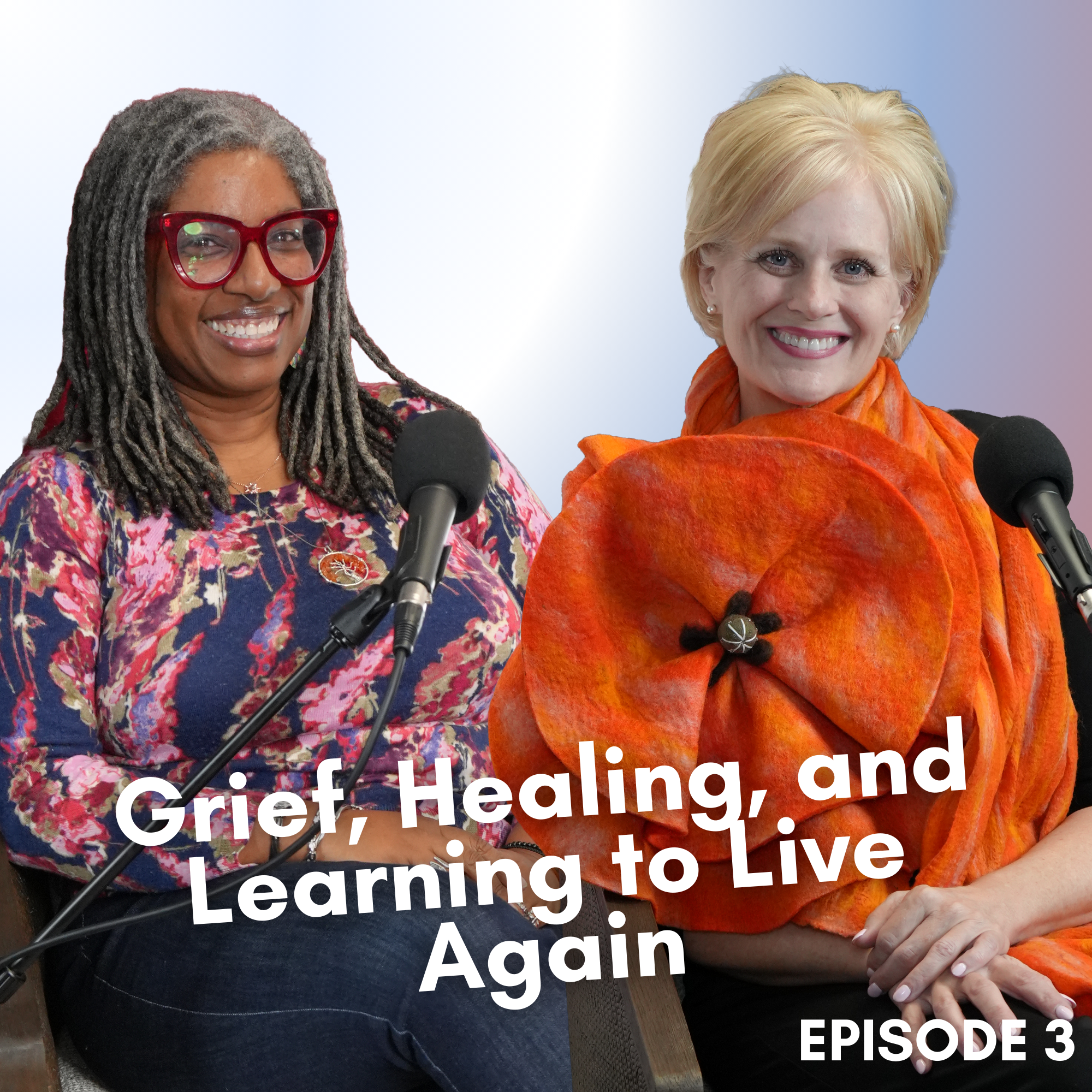
On today's Vodcast, we have my friend and soul sister Stacy McAdoo.
She's going to share with us her journey through the grief over the loss of her son and talk to us about that journey, how to heal and even learning to live and reinvent yourself after a loss.
So let's get to it.
Southern Loft believes that your home should reflect your unique personality. That's why they offer a wide variety of stylish furniture pieces that are perfect for any taste.
Whether you're looking for a new sofa for your living room or a sleek dining table for your kitchen, they have just what you need.
So when looking for that piece of furniture that reflects you, visit Southern Loft at 3155 North College in Fayetteville, or call at 479-856-6100.
I'm so happy to have you here and to introduce my friend to you. This is Stacy McAdoo, and, gosh, this.
This feels just sacred to me today, just having her here.
She's someone who is just an inspiration to me.
A hero, a heroine. I always feel weird saying that, but you're a woman and a hero, so you're a heroine.
[00:02:14] Speaker B: She Ro.
[00:02:15] Speaker A: Yeah, Giro.
I met Stacy a few years ago.
Gosh, I guess, was it probably 2020ish?
I was working with an organization that was.
We were organizing a rally for teacher pay at the Capitol, and I had Stacy's number on a list of people to call to see if she would be interested in helping. And I remember I called your number, and I had been, you know, calling these numbers all day, and I called Stacy's number, and there was just this warm voice. It was a voicemail, but it was a warm voice. And then she said, you know who she was, and call her back and everything. And then she said, have a righteous day.
And I remember I just got off the phone, and I just thought, a righteous day, like, that's a powerful word, and I didn't realize it at the time. And maybe she'll tell you about this a little bit in a minute, but she actually has a poetry group, and it's righteous with a W.
Righteous.
But that was a great introduction to her, and really, she's so humble. I don't want to make you uncomfortable from the beginning, Stacy, but I think the word righteous is such a perfect word for you as a person.
I'm really just so, so honored to have you here.
And there are a lot of Things that I could talk with Stacy about.
But I've been wanting to have this conversation for a while, just wondering and waiting to see if you were ready. I had no idea it would be in this format, but I'm glad because I think that what you have to say is very important.
And I hope that amplifying your voice will give you the chance to be the blessing to other people that you have been to me.
What we're going to talk about today is a difficult subject because.
And we can get into this a little.
I'm going to ask her some specific questions in a minute, but Stacy's lost her son a couple of years ago in a car accident, and she, she's one of those people.
Since then, as I have followed your journey, what I see is this very, just this, this, this walk of integrity through this experience, because you don't sugarcoat the experience. You're very real, you know, about the dark, you know, times and the, you know, and. But she's also this person who is just sort of relentlessly hopeful and unwilling you, you know, to succumb to the grief, the darkness, you know, that is every parent's nightmare.
And, you know, I watch you and I learn how to grieve.
Just normal human experiences.
And so that's what I think this episode, you know, is, is. Is your. You, you take us, you know, to, to the worst grief I can imagine, honestly.
And. But I think you, you know, I think you have things to say that help anyone who has grieved anything, which is all of us.
But if you will.
Well, I do want to tell everyone.
She's kind of a big deal.
You are. She was the Arkansas State Teacher of the year in 2019 and taught at Central.
If you're hanging out with her ever in Little Rock, there will be just flocks of young people coming up to hug her and tell her how much they love her and oh, I miss you. And oh, and she knows all their names and knows what they're doing in life and asks them what they're, you know, about their particular interests. So.
And, and now she's the executive director of Teach plus for Arkansas.
[00:07:19] Speaker B: Yes.
[00:07:21] Speaker A: Which really, like, trains teachers. Right.
You might talk a little bit more about that and then just maybe kind of go into telling us a little bit about your life and your family.
[00:07:37] Speaker B: Okay, so first of all, I'm taking Gwen with me everywhere because she is so good for my self esteem.
I don't know. You gave me a big charge.
Where do you want me to start? What do you Want me to?
[00:07:52] Speaker A: Well, so tell us.
Tell.
Tell the audience about your family.
You know, she's. You're married to another teacher, Laron. I can tell you that when I met you guys, I was just kind of blown away. You're such an impressive family.
And so tell us a little bit about you and Laron and your two kids, Jamie and Norell, and.
And what life, you know, looked like.
[00:08:29] Speaker B: Okay, I'm going to actually take you back because I don't know that you know all of this.
So. Growing up, I had one little. One brother that was my only sibling.
And, well, my father was murdered when I was about six years old. My brother Craig was four years younger than. Than I was, and he was my best friend. So the two of us grew up really, really close. And mama would always tell us, you know, we're all we got. You have to love each other like there's no tomorrow. And we could never go to bed angry with one another. And we always told each other how much we loved each other.
[00:09:10] Speaker A: Well, see, this is why I've always felt like from the first time I met you, that we were like sisters somehow, soul sisters. Because that could have been.
Not my father being married, certainly, but that could have been my mother, my life. And I have the one brother. He's three years younger, he's six foot five, and certainly not a little brother anymore. But that was my life. It's always been my best friend. Never go to bed mad and you do something wrong, you tell each other you're sorry, you kiss and hug, and you are like we still are.
This is, you know, this is my. This is who I've. This is. We are. We are in each other's corner. And so I. I get that. So that's Craig.
And.
[00:09:58] Speaker B: And so I think those lessons, that experience carried over not. I think I know that carried over with my nuclear family, with my husband Laron, my daughter, my son Norrel, who was almost two years older than my daughter Jamie.
So you can imagine if we were three and four years older, how close you would be if you were one grade apart in school. Like. And I can remember as when Norell was little, like, little, little, he would call Jamie his best friend. Like, they. They were best friends.
And so we just grew up.
They. We grew up. My brother and I grew up doing everything together.
And as a nuclear family, we did everything together. And it's so funny because since Craig and what has happened to me, so sometimes since Norell's death, it has triggered, I guess, some trauma from Craig because the other part of this is Craig died in a car accident when he was 22.
So when my son died in a car accident at the age of 24, it just totally shook my whole entire world. Because after Craig died, that was devastating for me at that point.
That's actually how I got into education, actually.
So when Craig died, I cut off my hair, quit my job, and enrolled in the first online master's program for teaching. Because going back again when I was little, I would line all my dolls up in my room and play school, and Craig would be my only live pupil. So I knew I wanted to be a teacher from as early as I can remember.
But I shied away from it because I listened to all the naysayers who talk all of this nonsense about how terrible the kids are and how teachers are not paid, which. That part is true, but the kids are wonderful.
So when Craig died, I knew that I needed to do what I felt I was put here on earth to do, and that was to teach.
So that's how I got into education.
[00:12:25] Speaker A: Oh, wow.
[00:12:26] Speaker B: Yeah. And I was in the Little Rock school district at Little Rock Central High for 19 years before I became the state teacher of the year. And I promise you, I saw pieces of Craig in every student that I had. And he is the reason that I met you at that rally that I have talked to you. Because advocating for better education for students is all because of him. Like, school didn't come as easy to him as it did for me. And even as early as an elementary student, I would find myself reteaching material to him in ways that made sense. So that's how he's how I got into education.
I got sidetracked. So I don't remember where I was going.
[00:13:15] Speaker A: What a story. Because your poor mother.
[00:13:18] Speaker B: I know.
[00:13:19] Speaker A: And you having gone through all that.
[00:13:22] Speaker B: I know.
And anybody. It's eerie, really, it is. Anyone who knows me.
Any. So you mentioned the righteous.
And one of the things that I always do at any workshop that I've. Well, not any, but a lot of the workshops that I do with students or with people, I would always do what's called the bio poem.
And one line in the bio poem has you identify and talk about your fears.
And one of my greatest fears was outliving my children.
And everybody knows that.
So when Craig. Here I go again. When Norell.
When Norell was growing up, I was.
I don't want to say fixated on it, but they were aware of my fears also. Right.
And I can remember when Norell turned 22.
I had a conversation with him about my mother, actually. And I told him, I said, you know, this is going to be different for my mother because you're now at the age that we never got to. You know, you're going past the age that we got to have with. With Craig.
And I. I need you to. To just recognize that she may be more emotional. Like, I don't know how we're going to respond to that, but this is new territory for us. And he understood the weight of that, or I thought he did. I think he did. I don't know. But we had those conversations.
So I was actually at a mid year retreat with my. Facilitating some training for our teacher leaders with TeachPlus, and I got a phone call in the middle of the night from his girlfriend. And I knew.
I knew something wasn't right when she called, and she wouldn't.
Wouldn't really say anything.
And then a few minutes later, I got a phone call from a police officer, and he asked if I was at home. And I said no. And he said, well, can you go home?
And I said, this is about my son, isn't it? And he's like, ma', am, can. You know, we'll meet you at home and we'll talk to you.
Talk to you then.
And I knew. I knew what that phone call was about. And I remember asking him to just go ahead and tell me now. Like, I'm 30 minutes away from my home.
He's coming. Narelle had the accident around the Pine Bluff area.
So they're coming. It's the state trooper that called. So they're coming from there. So I'm like, thinking to myself, I'm going to have to wait a long time to get this information that I know what this is.
I hung up the phone, and the first thing I thought about was, how am I going to tell my mama?
How am I going to tell my mama? Was the first thing. Not, how am I going to call Lauren?
Not. I mean, she was the first thought that I had.
And because it was, you know, Saturday night, Sunday morning, she was already a church. My mama goes to early church service and all of that, and I didn't want to tell her while she was at church. You know, at this day and age, we all have. We all share our location.
So I looked at her location, and she stayed at church forever that day. She went to every service, and I was like, mama.
So anyway, she had.
She also sort of knew because she said that she had looked at Norell's location. And saw that it hadn't been moving, you know, for a long time. So she knew something.
She thought maybe, you know, worst case scenario, he was speeding, got a ticket or, you know, or something like that is what she was thinking.
So when.
When I saw that she was leaving church, I called and I was like, hey, mom, can you.
Can you come? Are you going home or where are you headed? And she was like, tell me what's going on. I was like, now I'm acting like the sheriff or whatever. And I'm like, no, I'll meet you and at your house and tell you. And I met her at her house and told her. And yeah, that is the one of three of the worst images that I can and I've ever seen.
And I think I've totally rambled and gone on past whatever your original question was.
[00:18:37] Speaker A: I don't know. I've always wanted to know what, you know, how that played out.
And, you know, like I said, I think that's every parent's nightmare. But I didn't know that you had that extra layer of, you know, fear about it and in foreboding, you know, And I just.
I was just. It just makes me sick, you know, I think because I, you know, I'm so glad that I got to meet him.
[00:19:27] Speaker B: That's what I was thinking.
[00:19:31] Speaker A: And if there was a way that I could convey that to listeners, really. It's funny, because I was trying to do a podcast back then. I had no idea what I was doing.
And he was a civil engineer, but his hobby or his real passion, he was just very good at music and sound mixing and.
And so I don't know if you had told me that somewhere in a conversation or, you know, somehow I got connected with him to see if he could help me, and I did.
[00:20:11] Speaker B: And here's what I remember.
So the two of us first started talking about Norell.
It must have been some type of police brutality issue or something that that was going on.
[00:20:23] Speaker A: It was the young man in Memphis.
[00:20:30] Speaker B: Tyre.
[00:20:31] Speaker A: I don't remember.
I can see the name T Y R E. But I remember that happening. And I immediately thought of Norell, because.
But, I mean, I think it was before that that I had met him because I just loved him. I'm sure that. I mean, that would be the natural reaction to him. I'm sure that, you know, that anybody who's ever met him felt that way. But he, you know, I know you are just as close to your daughter in different ways than I am too. I have three daughters and there's no favoritism.
But there is something. Just like there's something special between a mama and her daughters. There is something special between a mama and her son. And I have the one son, Harper, who is, you know, 23 now.
And I just always felt like that you and Norell were the same about each other like Harper and me. And when I met him, too, I just loved him. I mean, I just related to him kind of like Harper, because he. For one thing, he was just one of the most beautiful young men I had ever seen in my life. I do. I don't know if I told you this, but I remember at the time, you know, Grace was either still in college or in law school, and I was like, oh, Grace, I really want you to meet this guy, because he's just so dazzling, just so smart and beautiful and gentle, you know, I felt like such an old granny, you know, Luddite.
[00:22:17] Speaker B: I had.
[00:22:18] Speaker A: I was. I'm gonna do this podcast, you know, But I did not have one clue about anything besides the content.
I still don't. I'm so thankful that for this studio and these people who know what they're doing, but it was just. We met at a library in Little Rock, and we just sat, and he was just. I know he had to have been amused at how stupid I was, but he was just so patient about, you know, explaining, like, what the process would be, what it would do. And he was just so precious, you know, you just wanted to eat him up.
And I just thought, oh, my gosh, that guy is just setting the world on fire, you know, just had just everything, you know, just brilliant and talented and gorgeous and so sweet and kind. And I know he made you so proud.
[00:23:15] Speaker B: So proud.
[00:23:16] Speaker A: And like my baby boy, all of them do, but, you know, just makes me so proud every day. And I also know the blood, sweat, and tears that goes into raising a kid to become the person that Norell was. And I do think that is why, when that.
That shooting happened in Memphis, that I immediately thought of him because, you know, you have some, you know, some particular worries as a parent of a young black man.
And it seems like when I heard that, I just immediately thought of him and thought of you because he was. That. That guy was trying to get home to his mom.
[00:23:59] Speaker B: I remember that. I remember. Yes.
[00:24:01] Speaker A: Yeah.
So.
So I came to the funeral.
I'd never experienced anything like that.
It was amazing.
But I remember I kept looking at your face, you know, and, you know, so many of your family and friends and the music and the Speakers were just so expressive and emotive, and it was this celebration. It was beautiful. But I do remember looking at your face and that. That was like the center of gravity for me, you know, and you've always been.
I mean, you're very gregarious and, you know, a confident speaker and everything, but you are a quieter presence, like, than la' Ron and, you know, than many of the family people around you. Your mother was sitting by you, and what was that like for you?
[00:25:24] Speaker B: It was surreal.
I felt like all of Little Rock. Well, actually, I guess more than Little Rock showed up. And I wasn't expecting that. I don't know what I was expecting, but I wasn't expecting so much visual love and support.
And I felt it. I felt it. And so that. That was really empowering.
So much. So my CEO, who lives in North Carolina, flew down here to come, you know, and I'm like, really? Like, I just. Yeah, that just blew my mind.
[00:26:12] Speaker A: But that's that humility I'm talking about, because I remember finding you afterwards and, you know, hugging you, and you were just like.
Like you were surprised I was there. And I was like, there's.
I would have never not been here.
[00:26:29] Speaker B: Seriously, I was. And I think. I think I was surprised, probably for a couple different reasons. One, I just.
I just really did not expect that many people. Like when we couldn't even pull into the parking lot, the family hearse, because there was no way where to go.
But I think the other thing is, because I've had so much death in my life, I don't do funerals, and I don't typically go to funerals. So when you say it was different, I don't really have a lot to compare it to.
I knew that.
I knew I didn't want it to be very sad, so I was intentionally trying to celebrate him.
And all I kept thinking about this is going back to the four of us as a nuclear family.
Look, I look back right now and I have no idea how we accomplished all that we accomplished in that short amount of time. Right.
The kids were with me all through my teaching career. So those students that you're talking about, that would come up, like, they knew Norell and Jamie, too, because they were always right there with me, which is something that I'm very proud of now. And I can remember my mom questioning whether or not I should be taking my kids with me everywhere. And my standpoint was, if my kids aren't welcome where I'm going, I don't need to be wherever I'm going, and I love that I did that. Yes.
Because it.
What I. The actual words that I have used is that I feel like some kind of way we defied time. Defied, defied, defied. Anyway, we stopped time. We.
Because I have no explanation. And so when I arrived at the funeral, one thing that I kept hearing people say was, his life was cut too short. You know, his life was too short. It was cut too soon, or all of these things. And I'm like, no, you know, he lived a full. He lived a full life.
And to say that he left too soon is to imply that he didn't finish whatever his purpose was for here. So I have to kind of look at it that way, that we're all put here for a certain amount of time to do whatever it is that we're supposed to do. And when that time comes, we clearly were done with whatever we were supposed to do.
[00:29:25] Speaker A: How did you say that? Or read where you've written that?
[00:29:28] Speaker B: Yeah.
[00:29:29] Speaker A: And I think that is a brave and powerful and hopeful thing to be able to say because, you know, I don't know that I said it, but I know that I definitely thought it is.
How could, you know, how could the world be deprived of this person?
[00:29:49] Speaker B: I know.
[00:29:50] Speaker A: You know, I know we needed him for so much, you know, longer and then.
[00:29:57] Speaker B: So the other part of that, though, is I mentioned how becoming.
Well, outliving my children was my greatest fear.
And I know that God knew that.
And I know that God knows that he took my brother, you know, at this age, and he let me sigh so some relief for almost two years.
And then here we are again. Right. So I was in shock because initially I was like, God isn't doing this to me.
[00:30:29] Speaker A: He could not.
[00:30:30] Speaker B: Yeah, I was like, he could not be doing this.
And I still don't understand why or what the purpose of that was.
And there's some anger and some bitterness.
But I think even when you think about anger, the root of anger is sadness.
So I would think that the root of bitterness is probably confusion. So those are the words that I choose to say.
And as of now, no answers have come to offer any type of resolve as to why.
But what I do know is I am living a very, very different life right now.
And this is going to sound really, I don't know, really strange. I don't even know that I've said this out loud. But once you have live through your worst fear, what.
[00:31:40] Speaker A: What else is there?
[00:31:41] Speaker B: Yeah, what. What. What is there? So I'm probably a lot less fearful Now I am more intentional with. With my time and more intentional about me, about taking care of myself. When we first met, you know, I was also having some health scares and issues and stuff too.
And, yeah, I've just.
For the almost last two years. It'll be two years and on the 28th, I've tried to just kind of prioritize taking care of me.
[00:32:21] Speaker A: I think that is so amazing, you know, because I think even sometimes my response to even, like, you know, much lesser griefs is to want to just take to the bed, you know, or curl up and just, you know, it's like.
It's like counterintuitive to me to think about taking care of myself. I know that's, you know, what we should do, but I feel like, you know, those are the times when I don't care about bathing or changing my clothes or eating anything healthy or.
How did you do that? How did you find that?
[00:33:18] Speaker B: My mother.
Yes, it was.
Well, probably God first, but it was my mother. So it.
Yeah, it was rough. And I didn't just immediately get to this place in November of last year. So almost a year and a couple months ago, I went to the gym and I decided one day that I was going to go to Aqua Fitness class.
And it was, you know, in the middle of the day because for a long time I didn't. I didn't see people. I didn't leave my house. I work remotely.
[00:34:00] Speaker A: Yes.
[00:34:01] Speaker B: So even when I returned to work, it was still, you know, not human touch interaction.
And so the first place that I went was to the gym in the water.
And I know the water, it was just so calming and healing and restorative.
And so I just kept going back to the gym to the Aqua Fitness class. Originally I was in with the retirees who were in there trying to make sure that they still had mobility. So I was like the youngest person in the class in that one.
And then I started after the aqua. Because it was aquamotion class. The first one after class, I would just kind of, you know, piddle around and do my own thing. And I thought that when I went to the gym, in my mind, I was gonna not see anybody that knew me, and I was gonna be. It was gonna be a safe place, which wasn't the case, but it was a safe place and I'm still going. And at this point, I am now I've added strength training to it and graduated from that first aqua motion class with the seniors to aqua hit and conditioning and all of this other stuff and overcome some Fears with the work.
[00:35:36] Speaker A: So taking care of your body, your actual flesh and blood, has helped you and been a game changer.
What else have you done to walk yourself through this?
[00:35:54] Speaker B: Done a lot of things. And it's so funny because I'll get questions like, what do you think has helped you the most?
And because I've thrown so much at it. I don't know, just like, throwing whatever.
[00:36:10] Speaker A: You can at the wall, some stick.
[00:36:15] Speaker B: So after I went to the water, then I got the strength to start going to. Or maybe I went to a grief therapist first.
I don't know. It might have been around the same time or something, but. So I have a therapist.
I have a support group that I go to.
I am trying. I have what I call my never have I ever list of things that I'm doing that are new things that I either wanted to. Always wanted to try to do, or if I find something that's interesting, I'll give it a try because.
And you know this as a mother, so much mother, wife, daughter, like, so much of who you are is thinking about your family, and that takes up so much space. And then it's not that we don't like it. It just takes up so much space. Right. So, you know, as the mom and the wife, I was the manager of everybody's schedule and keeping everybody together and reminding them about this. And did you. You know, it was just a lot.
And so I was just like, I can't.
I can't take care of. Think about anybody else right now.
And the rest of y' all are gonna have to figure out how to. How to manage your own schedules and your own lives, and I just can't.
I got lost again on where I was going with that.
[00:37:51] Speaker A: No, I think I asked you what else you did besides.
[00:37:55] Speaker B: Yeah, and one thing that I think that brings me the absolute most joy.
And it feels kind of weird that giving brings me joy, because then it's like, am I giving to give?
But one day I received a book, and it was called Journeying through Grief. And it didn't.
It didn't have a return address on it, so I didn't know who sent it to me.
And the book is actually a part of.
I can't remember the name of this organization. I want to say Stevenson or something like that, but it's called Journeying through Grief, and it's a series.
And the way it's intended is you give this book to somebody about three weeks after their death, after the death of the. Of a loved one, and it Just has some practical things in there to remind you to get up and take a bath, you know, remind you to brush your teeth, to eat or anything or stuff like that.
And what to expect once the funeral is over and people go on about their lives and, you know, everybody gets quiet. And then there are four books that come along in here. So the first one is after, like, three weeks or so. And then there's another one that comes maybe about four, three or four months. And it's like, okay, so you're. You're at this point now. And then there's one about. Okay, that, you know, you're probably starting to see holidays and anniversaries. Here's some tips on how to deal with that. And then the last one is, all right, it's been a year. You know, here. Here's what to expect.
You know, you've completed your year of first.
First birthday without them, first holiday without them, all of that.
And I love the books so much that I am now a giver of those books. Right. And so when I would see people that I knew that were losing loved ones, I add them to my list, and then now they'll know that it came from me. Because I think the beauty of that gift is you don't know who it comes from. And so you're.
[00:40:14] Speaker A: And you never did find out.
[00:40:16] Speaker B: I did find out. I did, but. And I'm trying to think how I found out.
I don't know, but it was like an. I accidentally found out. But it wasn't someone that I was. That I knew.
[00:40:28] Speaker A: Someone in your inner circle?
[00:40:29] Speaker B: No. Yeah.
[00:40:30] Speaker A: Interesting.
[00:40:30] Speaker B: Yeah. It was somebody from another city who.
Yeah. Who is a Christian, and her heart was affected, and she wanted me to know that I was not alone.
I know.
[00:40:47] Speaker A: I love that.
[00:40:48] Speaker B: I know.
So I have been gifting people, and when I send it to them, I'll say, you know, because it comes like. The purpose of it is to also write a note, you know, and help them identify and to call the.
The person that they lost by name to. To personalize it. And so I challenge whoever I send it to to please pass this on, keep it, pass it forward, and help somebody else.
So I love doing that.
And then I think one of the things we were talking about earlier when I was talking about my. Never have I ever experienced this.
So sometimes I forget that I don't have a full family unit intact right now. And if I see something that I'm interested in going to, I still buy tickets. Like, I'm buying tickets for all of us.
And what I do now is I will gift that ticket to somebody who I think may appreciate a different experience. And when I talk about these experiences, like, who the very first one. Well, the very first thing, Gwen, is about these glasses.
[00:42:02] Speaker A: I love them, by the way. They're fabulous.
[00:42:05] Speaker B: Because by nature, when you talked about my quietness, I'm so normally conservative. Like, I don't like to stand out, so I have plain little glasses. I didn't wear a lot of color, and I was actually looking for a pair of orange glasses, and I didn't like the way they looked on me. But I appreciate your orange. Yes.
[00:42:27] Speaker A: This is in honor of Norell.
[00:42:30] Speaker B: Yeah. Orange was my son's favorite color, so I got red, and I just started adding color to color to my wardrobe because it was pretty bland.
So that was the first thing. And then I saw one day on Facebook, there is a group called Adventures of Arkansas, and they had traveled somewhere to a waterfall.
And I was like, oh, man, that looks like that's fun. And then the next time they posted and they said that they were gonna go float.
Float the river. It's like, I want to do that. I didn't know these people.
So it was almost my birthday, and I told my. Called my daughter, and I was like, jamie, I want to do this, but I don't know these people. And at that point, like, I don't even really know how to swim, but I want to do it. And she was like, okay, I'll do it with you. And the righteous. All of the poets came with me, and they got some of my family members and turned it into a surprise birthday celebration. So we were floating down the river, and then that turned it. Then another one was. I had never been fishing. I always wanted to, but I was scared of the worms and all that.
So I baited my own little thing.
I'm just doing things.
[00:43:51] Speaker A: Yes.
[00:43:52] Speaker B: Yes.
[00:43:53] Speaker A: That's so brave.
[00:43:55] Speaker B: Yeah.
When I was for real, every adventure that I do, I think of Norell. I know he would have loved to be on the river with us. He would have loved that. So I think that kind of gives me peace and joy as well.
Did a drumming circle the other day about a drum.
So it's actually in the car. I'm learning how to. I'm teaching myself how to play. It's called a panda drum. And so it sounds like.
Like water. Like music. And so I realized water is. Is my thing.
[00:44:35] Speaker A: Yes.
[00:44:36] Speaker B: Right. So.
So much so that I felt this. This year, I had the brilliant idea that I was gonna start a New tradition. I was gonna go to the beach for the holidays, for Christmas.
And so I booked the ticket, and then I called my mom and Lauren and my daughter, and I was like, hey, I'm going on a vacation. I'm going. Going to the beach. If you guys would like to join me, you can, but I'm going to relax because normally when we go on vacations, you know, your sightseeing is just all that. So I'm not planning an agenda. I'm just going to relax. Y' all can come if you want to. And so they. They. They came with me, but it was 72 degrees here in. In Little Rock. I was like, really?
Really?
[00:45:26] Speaker A: So where'd you go?
[00:45:27] Speaker B: I went to Destin, Florida.
[00:45:29] Speaker A: I think I saw a post about.
[00:45:31] Speaker B: This, and it was beautiful.
[00:45:33] Speaker A: Oh, my gosh. It's beautiful. Beautiful.
[00:45:35] Speaker B: But it was 72 years. I thought I was, you know, really.
[00:45:37] Speaker A: Getting away somewhere warm.
[00:45:39] Speaker B: Yeah.
[00:45:39] Speaker A: Yeah.
Oh, goodness. Well, you know, I think you're.
You know, you. You said that Norell would be so. He would. He would love all this. I think that, you know, it.
You're honoring his life so much by deciding yourself to live.
[00:46:06] Speaker B: Y'. All. I promise, this isn't set up.
So. Speaking of live. So my daughter has, for the last two years, she's thrown what she calls a Simo Fest in October, because my son's birthday was in October, and she rents out a pavilion, and just. We're just there in the park all day and just having fun. It's the poets, it's the artists, it's the engineer, it's everybody that comes, and we're just hanging out.
And the very first year that we did it, I told you I love to give things. So have you seen those rocks that have words inscribed on them?
So the first year, I told everybody before they left to pick up a rock and take it home and, you know, and honor whatever word they chose and think of Norell when they. You know, they go on about their day.
And my cousin Christy came to me at the end of the picnic, and she had a rock in her hand, and she said, you've given so much to everybody. I found one that I want you to have.
And the rock said, live.
And she said, you know, I remember what you were like when you lost Craig, and I really want you to try to live. Please, please live. I was like, okay, Christy, I'm gonna live.
So I think those never have I ever experiences are about trying to live and honoring him, because it's so.
It's. It Takes effort. I could.
I could stay in the bed all day. Like, I actually.
I love being at home.
I love being in the bed. And I have to make myself get up and go to the gym, make myself do those things. I feel much better when I do, but every day, it's a conscious decision to do it because I could very well just not and would be happy. Well, I think I would.
[00:48:16] Speaker A: Well, you said your mother.
Is it. Is it. Is that her example?
[00:48:22] Speaker B: No, no, no. So when Craig died, my mother did stay in the bed. Like, it.
[00:48:35] Speaker A: Her whole world killed her, too.
[00:48:37] Speaker B: Yeah. Because remember, you know, her husband had been killed. She only had the two of us, and now her son is killed. Right.
She.
Yeah, she stayed in the bed for a long time. And I felt forgotten. I felt.
I felt like. Yeah, I felt like I'm still here. Yeah. Yeah. And she still grieves for him. Like, we grieve very differently. She doesn't.
She doesn't talk about her pain.
She prays, she writes it down, but she doesn't complain, and she doesn't share any of that.
And I have to get it out. Right? So I'm not afraid to tell people you've hurt me. Like, I think that people need to know when they hurt me.
I even. You know, and I know a lot of. I'm kind of going all over the place now, but, like, people would say just inappropriate things.
I can't even think of anything right now that I can say. But I know the first one was, you know, he's gone too soon. But there were other things that they would say that you would just wonder, why would you say that to me? You know, why would. Oh, I can't. Oh, I bet this is. I bet this is hard. Or, oh, I can't, you know, And I'm like, no, yeah, it is hard.
No, you don't want to know what this feels like.
Anyway, so that. That was hard.
So I knew that I wanted to make sure that I didn't forget about Jamie, you know, And I think that's part of why I have tried to grieve out loud so that she knows that all of those feelings. Because there's anger, there's frustration, like, everything gets out of whack. Your patience is shorter.
Everything, Everything. And I wanted her to know that whatever she's feeling is totally normal, because there's no one way to grieve.
And there are better ways than others.
And it's okay to not be okay. It's okay to ask for help.
It's okay to Pause, just pause the world.
And it's okay to prioritize yourself.
And I needed her to see that and know that. And during this process, my mother has seen that and she has apologized to me without me even saying, you know, anything to her. I think she.
[00:51:32] Speaker A: She realized it.
[00:51:33] Speaker B: Yeah, she's noticed it. And I knew.
I knew that she was doing the best that she could in an unimaginably difficult situation.
So I don't harbor. I didn't harbor. I probably did harbor a little resentment or jealousy or something, but I didn't articulate it to her.
So she's been really, really intentional. As a matter of fact, she.
I'm trying to think what happened. One day she came over to the house and I was sweeping, which is almost like, you know, when you're. When you're pregnant and you're getting ready to have baby, you're in this clean. Yeah. So, you know, that was part of my little grief too, I think.
I just had to have something. Had to be busy, had to have something to do.
And she saw the way I was sweeping, and I think she was like, this woman needs a hug. This woman needs help.
And she was like. She said, she was like, I'm just so sorry. I should have been over here helping before now.
I thought, you know, I thought you had had it under control. Like, I thought, like, I'm just so sorry. I'm just so sorry. And then she just started, like, physically taking care of me, like, for real. And then I was like, ooh, I like being taken care of.
I like being taken care of.
[00:53:10] Speaker A: So, yeah, it's kind of redemptive in a way.
[00:53:13] Speaker B: Yeah.
[00:53:16] Speaker A: Well, Stacy, I'm really curious now because I hope that I do not say any of those things, and I don't want to. What? Can you think of any more of those things?
I will tell you this.
A saying that I hate or have a pet peeve about is when people say, like, well, you know, everything happens for a reason. Yes, yes, I know people are, well, mean when they say that. It's just they're trying to, you know, trying to say, wrap their head around something that's impossible to wrap your head around. But it's not helpful.
[00:53:53] Speaker B: No, it's not. And so what I started doing, I just started telling people how they could help me because there's this.
I don't even know where I got this from, but there's this belief in.
It says everybody assume it's like a seven step assumptions. Assume everybody is doing the best that they can and Assume that everybody can do better, Right? So it's like, okay, don't just accept that. And that's why I do.
[00:54:29] Speaker A: I've never heard the latter part of that.
[00:54:31] Speaker B: I will lovingly call the people in to let them know, because I know that they don't mean any harm and you have harmed me.
[00:54:39] Speaker A: Exactly.
[00:54:40] Speaker B: So I need you to know. I need you to know this.
So I would just tell people how they could support me, how they could.
How they could show up for me. Simple things like, just send me a text. Ask me, have I taken a bath today? Ask me how I've shown up for myself.
If you're thinking about me and you don't know what to say, just say, thinking about you.
[00:55:03] Speaker A: Yes.
[00:55:03] Speaker B: Just send me a heart emoji. Like, you don't have to come with all of this advice or just a simple, I'm thinking of you. And one of the two of the best things that I had never thought about or encountered was a meal train. Like a specific, organized.
We're going to bring you this food on this day.
[00:55:30] Speaker A: And the community, we've had those at church. I know. Yes.
[00:55:34] Speaker B: And, you know, they were like, just put an ice chest outside. We won't bother you. We'll bring the food at this time. And I was like, oh, man, that was brilliant. But the other thing that I thought that still to this day, just blows my mind, and this is what I give to people, is a smoothie.
Because when you're grieving, you get a lot of food.
Sometimes you don't want to eat, you need nutrition, but you just don't want to eat.
And so somebody brought me a smoothie, and they were like, here, it's like, drink this. Okay? And it's so much easier to drink than it is to eat.
And that's not a big. That doesn't sound like that's a big thing.
But it worked. It worked. Yeah.
[00:56:23] Speaker A: Well, I want to ask you a question that I think I'm curious about, but I think also, like, it's typically, you know, a very complicated thing for people to navigate as parents who lose a child.
What has that been like for your marriage and for, you know, doing that together?
[00:56:53] Speaker B: It's been difficult, Extremely difficult.
As a matter of fact, most marriages, most families, most marriages who lose a child don't survive. And I remember.
I don't know how I read and know all of this little stuff, because it's like, why was I even reading this before? You know, you'd have to talk to my mother about that. I think I've been obsessed with the what ifs and death from a very early age.
But anyway, I can remember when it first happened. I told that to Lauren. I said, I don't want that to be us, because I was.
At that point, I wasn't upset or resentful.
And then I became upset with him because I felt like I was doing. I was doing all of the stuff. I was doing all of the heavy lifting, and I felt like he was outwardly expressing his sadness to the world and not to me, you know, so it's hard, and we're struggling.
We're trying to find our way back to each other. That's one of the.
The therapy sessions that I'm in. But no, it.
My whole family is just.
[00:58:18] Speaker A: Well, because I think, you know, I've observed him, you know, outwardly, you know, performing poetry and things, and you can. You know, I'm sure that is, like, therapeutic for him.
But when you come away from all that and you face each other, you're the only other person in the world, you know, who has this.
Who has, I'm sure, this same, you know, the closest to the same grief.
And every moment, you're a reminder of that for each other, you know, of this, you know, just having your heart ripped out of your chest.
[00:59:00] Speaker B: And for him, you know, Norell. Is his name spelled backwards?
[00:59:04] Speaker A: Yes.
[00:59:05] Speaker B: He thought of Norell when he was in high school, so he had always wanted to be a father.
I can remember when I was pregnant with Norell, he got so excited, and he said, I'm gonna have somebody to play with. Like, he was that happy, right?
[00:59:22] Speaker A: Yes.
[00:59:23] Speaker B: And then you also have this, I don't know, societal expectations that the man is supposed to, you know, be the strong one and all. Yeah.
[00:59:36] Speaker A: Yeah.
[00:59:36] Speaker B: So it's. Yeah, it's hard.
[00:59:38] Speaker A: Hard.
[00:59:39] Speaker B: It's hard.
[00:59:41] Speaker A: And then your baby girl, then my.
[00:59:43] Speaker B: Baby girl who thinks that nobody understands what she's going through because she lost her best friend and she was just starting to start life, you know, she had just graduated from college, had literally just moved to Atlanta. The beginning of january.
First apartment, ideal dream job. And she was there three weeks, and then the accident happened.
And.
Yeah, so she doesn't think. She doesn't think anybody understands. Even though I lost my brother, you know, but that is, you know, I'm just a mama. Like, I don't. Right.
So, yeah, she is struggling.
We're all struggling, and we're all trying to do the best that we can, to be the best that we can and to make the most of what we have left and who we have left.
[01:00:48] Speaker A: Yes, yes.
Well, how, you know, you touched on this and you have throughout the whole thing. I mean, you're. Your Christian faith is another thing, you know, that I relate to and admire about you. And also the, you know, the anger and the questions, Where are you in God? Where are you with that?
[01:01:16] Speaker B: I don't know where I am.
I don't know. It's weird because I recognize and I know that God is in me. God is everywhere.
And that God loves me.
And I'm hurt. So hurt.
And I am also healing.
And I know that, like, it can't. When I was talking about all this stuff I'm throwing. It can't be, you know, all of this. I couldn't be in this place that I am now without God's hand in it.
[01:02:06] Speaker A: And the grace.
[01:02:08] Speaker B: Yeah.
[01:02:09] Speaker A: It seems like you're just almost levitating. Like there is this grace in you.
[01:02:15] Speaker B: But what I look. But I hate that.
[01:02:17] Speaker A: But word.
[01:02:19] Speaker B: And what I want, like, I have explicitly asked, tell me. Like, and I haven't heard.
I haven't heard his voice saying why or how to go for it. Like.
Yeah.
And I will, like, I will ask for specific signs.
[01:02:43] Speaker A: Yes.
[01:02:44] Speaker B: Because I want. I guess I want it like the old day. Like, burn a bush. Like, just make it plain. Make it plain. Right. And that's not happening.
So I don't know where we are. I'm just.
[01:02:58] Speaker A: This is not advice at all.
But I.
My. One of my best friends when I was in elementary through high school, and she and her family, I was real close to her whole family. She had a younger sister and an older brother, and we all went to church together. And I spent a lot of time over at their house. And they were like my family and kind of like your family. Like, they were very close to each other and, you know, just cherished their family unit.
And her brother, you know, kind of like Norell, kind of like Harper, just was one of these golden kids. You know, I had a crush on him forever.
And, you know, he was.
He was early 20s, I think, or maybe just 20. He was young. I know she was a senior, I believe.
But he had an accident, fell asleep at the wheel and died.
And I remember, for me, you know, as a kid, I was a pretty sheltered kid.
That was, I think, one of the first times that I had just ever really just questioned God, questioned my faith, wrestled with, you know, imponderables like this, the how, why, you know, and make it make sense.
And I remember going and speaking to a lady in my church who led a Bible study that I was in. And I really loved her and trusted her. And I remember just crying and just, like, having a fit.
But it was wonderful that I could be that honest, you know, with her, it was the shaking your fist kind of fit.
And she said, gwen, I don't have any answers for you. You know, she said, what I can offer is that when I've been at this place and she had had some, you know, really, really tragic things happen in her life, and she opened up the book of Job and she. She started reading, and there was, you know, this.
This.
This passage that was like, you know, where were you when I formed the earth? You know, when I set the stars in their place? And.
And, you know, just the idea, like, can you even make one blade of grass? And it was very humbling for me because I was very angry at God. It just.
[01:06:02] Speaker B: I.
[01:06:02] Speaker A: You know, I just couldn't believe that he would do that or allow that.
And then I remember that that was from her. But it was later when I was reading in Job myself, there was just a verse that kind of jumped out to me, and it was Job speaking.
And he said, I think one of his friends was like, you just need to curse God. And Diego, God's obviously awful, doesn't love you not taking care of you.
Just a farce that you've believed your whole life.
And Job's response to that was, though he slay me, yet I will trust him.
And, oh, my word, I'm certainly not good at that at all. But it did lodge itself in my spirit somewhere because, you know, I remember thinking that's.
There's no greater trust than that.
And when. Usually, you know, and I still wrestle all the time with my faith, but, you know, I usually. When I. When I come to the end of my line of, you know, interrogation with God, there is peace for me in resigning myself, resolving to trust.
Because I think that there are just things that we cannot know.
And I hope that you get those answers. I wish that you would.
[01:08:01] Speaker B: Two childhood memories came to mind when you were talking.
One of the first books that I remember reading as a child was a book called why Bad Things Happen to Good People. Yes, I was in elementary. Again, I'm telling you. I don't know why.
[01:08:18] Speaker A: Anyway, you were normal.
[01:08:19] Speaker B: I was not normal. Mama would tell you that.
And then the other thing that popped in my head when you were talking is, I remember again, this is still elementary because I can see myself sitting. This was at Lonely Baptist Church. And it was the old one. Like, they have it, they've upgraded and it's new and big and better now. But I remember sitting at a pew, and the only thing I remember from that sermon that day was if God would allow.
Allow them to do that to Jesus, to his son, if he would allow his son to go through everything that he went through. What makes you think that you're so special that you don't have to endure, you know, X, Y and Z?
And so, you know, the.
The spiritual part of me knows that I'm not any more special than any other mother that has lost their child or anybody who has lost anybody in that, you know.
[01:09:25] Speaker A: And of course, the, you know, the agnostic, atheistic side of me thinks none of them should have to suffer like that, you know, and then. But I find, you know, that for me, anyway, I get just so far down that road and.
And dang it, Jesus is still there, you know, at least for me. It's like, even if I'm trying to just get away from him and get away from.
From, you know, shed that belief, you know, that there is a, you know, a God and an undergirding force of love, you know, in the universe, I think it's. It's.
Jesus just has a hold on me, and I know he does. You, you know, and it's this.
When I just go ahead and, you know, come to me, you who are, you know, burdened and weary and find rest. It's not that I find the answer, right?
But I do find rest. And I do find, you know, a supernatural, a grace in that, just letting go and trusting. And I guess to some people, that would be a cop out. But, you know, if for me, it's really not, because it's. It's. It's. I've gone as far as I can, you know, wrestling, and then, dang it, it's just.
He's still there and.
But I, you know, it's not all that we want, you know, and it's not.
But. But maybe there are moments, you know, when that grace comes and it is. It's enough.
[01:11:30] Speaker B: And I think to go back to.
Excuse me, when.
When you said that, I was hopeful because I'm like, am I hopeful?
I think another thing that, I don't know, I read or heard or, I don't know, absorbed was just the whole premise of gratitude. Like, when you. It's hard to be grateful and unhappy. It's hard. I think the Christian thing is, you know, if you praise, I'm gonna mess it up. But it's something along those lines. Right? So when I think about all of the good times that I had with Norell or any of my loved one, when I'm appreciative and grateful for those, it makes the loss feel less.
And I still speak of him and like, my love is present. Right. So it's not in the past.
[01:12:33] Speaker A: Yes. No one can ever take that away.
[01:12:35] Speaker B: Yeah. It's still here. So just being grateful that I had 24 years with him, 24 incredible, incredible, incredible years with him, 22 years with my brother.
I'm now past middle age, you know, so I'm grateful that I am still here and that I'm relatively mobile and healthy. And I hope to make the rest of my life just make the most, make it the best that I can make it, and just continue to be grateful.
[01:13:13] Speaker A: You know, you said earlier, Stacy, I don't know how. I don't know how we were able to accomplish what we did in that short amount of time, but I do.
It's because you're awesome.
[01:13:28] Speaker B: I told you, I'm taking you with me.
[01:13:30] Speaker A: You are so awesome. And I want to encourage you with your family. Your family is awesome, what you and your husband have built.
And I want to encourage you in that. It's worth it just to keep on, you know, fighting for that and being that. Remember who you are, you know, together. And your daughter, you know, C.S. lewis said, you know, the only place we're safe from loving, I think outside of heaven is hell. And I think about that in what you just said. You know, the only way to be safe from the kind of pain that you have experienced would be if you never had him.
[01:14:20] Speaker B: Yeah.
[01:14:21] Speaker A: You know, and you think about that and you think, oh, my gosh, no, no.
You know, go through whatever you had to to have those years of that amazing kid.
[01:14:33] Speaker B: But.
[01:14:36] Speaker A: I sure appreciate you sharing this story with me.
[01:14:39] Speaker B: Thank you for calling. I made you come.
I had no idea what we were going to talk about, but I knew I was coming when you said, can you. Yes.
[01:14:50] Speaker A: Well, I need to have you back and talk about.
There's a myriad of things that you could share with the world, but this was one. I just felt like just watching you these last two years, even from the distance that's between us, you know, from Ozark to Little Rock, has just been such a.
Oh. It's just. It's been such a lot for my path.
And I want you to know that and how much I appreciate it. And if I could just bring this light and set it in front of an audience. I know that anyone who hears it will find light for their own way. So thank you.
[01:15:44] Speaker B: Thank you. And you're look, the light in me sees the light in you.
[01:15:48] Speaker A: I'm here.
[01:15:49] Speaker B: And I thank you for honoring my baby. I thank you for meeting and embracing and loving him and me. And I thank you for the text messages where you were just like, hey.
Just hey. So thank you. Thank you.
[01:16:07] Speaker A: I love you.
[01:16:08] Speaker B: Love you, too.
It.