Episode Transcript
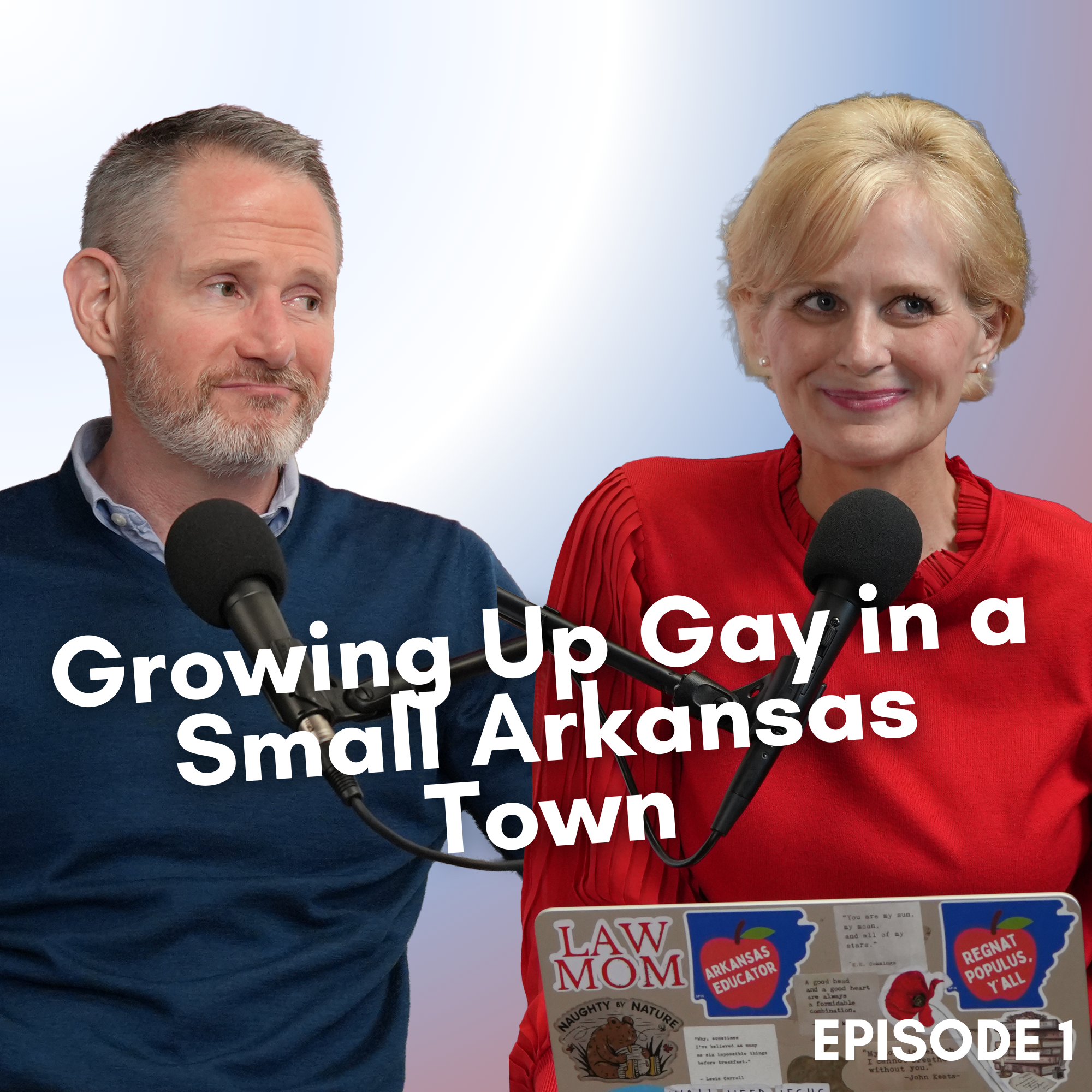
[00:00:03] Speaker A: Hello and welcome to Small Town Girl with Gwen Falkenberry. That's me.
I'm so happy you're here. Thank you for listening. This is our very first vodcast, and I'm really excited about this episode. My childhood best friend, really more like a brother, drove all the way from Dallas to be here with me and to talk about what it was like growing up gay in our small town.
I think it's going to be a meaningful conversation that could help a lot of people, and I am positive that we will have a lot of fun because we always do when we're together. Again, thank you for being here and. And let's get to it.
Well, I'm just so excited. I'm a little nervous, too, but I'm mostly excited.
This is first episode of Small Town Girl with Gwen Falkenberry, and for this episode, I have my best friend since I was a little kid.
More like a brother, really.
Tony Chapman. Dr. Tony Chapman here from Dallas. We grew up together in Ozark, Arkansas.
And this is almost like small town girl, small town boy, except you're big city boy now.
And there's so many. So many wonderful things about you and about our friendship.
But today, what I want to talk about, because this podcast or this vodcast for me is really about creating connections, having meaningful conversations.
You know, this vodcast sort of arose out of my column where best assignment ever. You know, when my editor hired me to do this, just said do. My column, just said, you know, we want you to just write about whatever's on your mind. And as you know, that can be really varied, eclectic mix of things.
But this.
What it's done is it has sort of created an opportunity for me to interact with a lot of different people with different perspectives, and I think to sort of, you know, create or hopefully create conversations that build bridges and. And that are meaningful, you know, and kind of just being honest about some things I've struggled with, I think helps maybe, you know, other people to feel like they're not alone. Anyway, that's what I want to do here.
And, you know, your story is intertwined with my story. We grew up together.
We were raised in a very conservative, conservative evangelical culture. You know, we went to college together. We were part of a. An organization that was, you know, really steeped in purity culture.
And.
And then we've kind of, you know, as adults, kind of deconstructed some of that. And. But we're, you know, we sort of remain at our core, these same two.
[00:04:06] Speaker B: Kids that, well, and Some of that culture. Although people might find it hard to believe, I was like, I still carry a lot of that.
[00:04:14] Speaker A: Yeah, me too. And some of it's good, right? I mean, and so. And then, like, for me, I was even just thinking on the way here, you know, like, all the changes we've gone through, but we've, like, retained our friendship and our love for each other, and we're just kind of able to be the same people with each other, you know, always. And so I'd like to talk to you, Tony. I really want you to just kind of tell your story, you know, what it was like to grow up gay in a small town in Arkansas.
And then, you know, where your journey has taken you.
Just with a mindset, you know, that they're. There are other people out there, you know, with stories like this or hopefully that. That, you know, might in some way, you know, build a bridge with.
And light a path for. For others who. Who maybe struggle with this or maybe just don't know, haven't talked, you know, I don't know. Sometimes, you know, my audience surprises me.
The different places they are, conversation in. In life. And so anyway, tell me, tell me, tell me a little bit about your family and. And growing up, what your life was like, your childhood in Ozark.
[00:05:47] Speaker B: Well, my mother and my dad, they're both in education.
My dad taught a technical college and then work you now as a. Yes, as a community college.
[00:06:02] Speaker A: Yeah, yeah, sort of.
[00:06:03] Speaker B: Eatonair. And mom coached and I mean, she coached everything. She was your cheer sponsor, of course. And you guys had a really close bond, which is so awesome and special.
And your mother was my fifth grade teacher. So cool.
But to talk about them, I did have.
And my grandparents, they retired. They moved to Ozark and had my cousins, so my mom and her sister moved to Ozark.
And I think my closest person as a child was my cousin, who's a year and a half younger, Joe Bill. And we.
I mean, a lot of my early memories are just us.
They had some land and playing in their pond, and we would like, hunt snakes, which is so weird, but things that boys do in the country, I think, you know, And I mean, some of my best memories, like, we would have a thing because he was more afraid than I was, and I would, like, go and lift up the rock and we would see if there was a snake there because it's super exciting because you're in Ozark, Arkansas, and what do you know? And he would be ready with the rocks to like, because we were going to try to kill it. And usually they would get into the pond before we killed them, but that was, like, one of my favorite things to do, so. So.
[00:07:24] Speaker A: And you were the spider killer, right?
[00:07:26] Speaker B: And so. Oh, yeah.
[00:07:27] Speaker A: Or you tortured spider.
[00:07:28] Speaker B: No, I was spider tormentor because I didn't have a lot of fear of stuff like that. And he was terrified of spiders. And so, yeah, I remember, like, holding a tarantula. I had caught a tarantula, put it in a jar. He had a broken leg, and I held it over him.
[00:07:41] Speaker A: That is so mean.
[00:07:42] Speaker B: Awful. And he, like, just. He starts screaming and he gets up, even though his leg's in a cast and he's trying to get away. And I just thought it was hilarious. But now I look back, I was like, how awful. I mean, you know, but that's what you do to the people you love when you're a child, so. So a lot of country. Normal country stuff, I think. And did you ask me, like, what it's like being.
[00:08:03] Speaker A: Well, so growing up, I guess what I want to get, you know, I want to establish that, like, just.
I mean, a lot of that same stuff is, I think everyone.
[00:08:12] Speaker B: That's what I was like. I kind of want to relate. It's like I kind of was, in a lot of ways, just like anyone else you did, especially in that time, what was available for entertainment.
[00:08:24] Speaker A: So when you, you know, when we were growing up, you know, I think I've told you this before. Like, it never even.
It never occurred to me that, like, you might be gay.
And I don't think we really had the vocabulary.
[00:08:41] Speaker B: I didn't know what that was. Yeah. And I think it's hard an identity.
[00:08:45] Speaker A: For sure, like, for kids right now, to rel to it all, which is. Is a wonderful thing in a way. But it just, like, I don't. I don't know that I even.
I didn't know any gay people, and I didn't.
I just didn't even know. I don't know how to talk about it and. Is that you knew a lot of gay people? I did, but I didn't know they were. And, you know.
Yeah, you're right. A lot of my friends, guys who were friends turned out, you know, to. To come out to me at different times, but talk about that a little bit. Like when you became aware or started feeling like there was something different, but you didn't necessarily have a way to talk about it.
[00:09:30] Speaker B: It's weird in a lot of ways. I mean, I did not feel different.
Other people told me I was different.
I remember I might have been in second or third grade or something. No, it was even earlier than that. And it was a memory. And it apparently was important because, you know, you remember negative things.
But a boy that I was playing with on the playground who said, you act like a girl.
And I just said, no, I don't.
[00:09:56] Speaker A: Because I was like.
[00:09:58] Speaker B: I just acted like me. What are you talking about? I'm not a girl. What's wrong with you? And that was, I guess, that I kind of shared with you that when I was a kid, I liked to play with baby dolls.
[00:10:09] Speaker A: Yeah. Tell the baby doll story.
[00:10:11] Speaker B: Yes. Because it's so sweet. It makes me just so thankful that I had the mother that I did.
She was protective, yet wanted to make me happy at the same time.
So I had been wanting a baby doll so bad.
And I know I've been begging and begging and begging, at least with her, with Dad.
I don't know if I did or not, you know, but.
And I even whispered so. And I know this. Okay, this is totally off topic, which is just what I do.
We were at the town square, and this is. We'll get there. And there was this guy dressed up as Santa. And of course I thought it was Santa. And I don't know why I knew that I shouldn't ask for a baby doll to people, but it was Santa, so it was gonna be okay.
[00:11:02] Speaker A: Safe.
[00:11:02] Speaker B: Right?
And so I know I whispered in the quietest voice because he said, what do you want for Christmas? I was like a baby doll like that. And I didn't want anyone else to know that.
And my.
And then I looked and I saw that my dad made eye contact with the guy. And I think he worked with my dad or something. And I remember just this fear.
So that was different.
[00:11:28] Speaker A: That is.
[00:11:29] Speaker B: That had nothing to do with being gay. It's just that I knew that boys who wanted to play with baby dolls were different.
[00:11:36] Speaker A: Yeah. It's interesting, isn't it?
[00:11:38] Speaker B: But it's so weird.
[00:11:38] Speaker A: I mean, it's a whole other can of worms. But it's interesting that it was an insult for someone to say, you acted like a girl.
[00:11:46] Speaker B: Absolutely.
[00:11:47] Speaker A: That's a whole other. What's wrong with that other can of worms? Yeah. So.
[00:11:51] Speaker B: But I was. But I didn't really. I don't know if I took it. I just thought he was crazy.
[00:11:55] Speaker A: Yeah, good.
[00:11:56] Speaker B: No, I don't. That's good, because no one had ever said that to me before.
[00:12:00] Speaker A: So tell about Christmas morning, though.
[00:12:02] Speaker B: Okay. Yeah, I know I'd been asking for it.
And I was very spoiled, as you know.
And I walked in.
I would love to add this, which may be edited, that my mom, when I was younger and still believe in Santa, she would have everything out. We didn't open the presents. It was just out for us. Like, we opened presents the night before, but Christmas, Santa had out, and you could just go and play with all your toys. And so. But she would say, always, she said, I'm going to be asleep on the, you know, on the couch. Or it might have been, I'm going to be asleep in my room, but wake me up before you go in there. And now I understand why, because I've done that with my own daughter.
You just want to see that. You just want to see that magic. So I walked in and of course, I was scanning the room because I knew what I wanted and there was no dollar.
And I went. I'd had a tent, and I opened up the tent, and in the middle of the tent was a little baby doll in a bathtub.
And of course, I grabbed it and I rushed to the bathroom sink and I filled it with water. And you push this little button, it sprayed water. But I was so happy.
And so that was cool. And I know that that was.
You know, not all boys who are gay want to play with dolls or some want to do this and this and this. But that was the one thing I.
[00:13:29] Speaker A: Would say that is just human.
[00:13:32] Speaker B: I talked to Joe Bill later because I was trying to explain to him because he thought I just, like, turned gay in college or decided that, I don't know, something like that. And I was like, no, I kind of like. You do?
[00:13:43] Speaker A: Yeah.
[00:13:43] Speaker B: I told him. I was like, well, remember I used to play dolls? He's like, well, we both did. We did it together. And I was like, oh, valid. I guess I didn't make me gay. I just played, you know.
[00:13:51] Speaker A: Well, that's.
[00:13:52] Speaker B: That's.
[00:13:52] Speaker A: That. That's a whole gender conversation again, you know, because, like.
[00:13:57] Speaker B: But I was taught. Well, I think I've talked to you before that.
And I think this impacted a lot of how I presented, how I did things later in my life. Is the baby doll thing was a secret, so my cousin could know. And I had a friend up the street, but. And I don't. And I know my parents talked to me about, like, that the baby dolls stayed here. I had my boy toys, but those things I could only play with. With some friends.
[00:14:25] Speaker A: So.
[00:14:26] Speaker B: And I think my parents were trying to protect me. I'm sure they were, but they Wanted me to be happy, but they wanted to protect me from other people.
[00:14:33] Speaker A: It's complicated. I mean, I've been there with my own kids about different things, so. And I'm sure you have so connect that though, to how you begin to hide.
You know, like when you had feelings for guys.
[00:14:48] Speaker B: Well, I have another pretty important story that. Because you said. How did you know you were different? I'm always like. Other people told me.
I think I was in sixth grade before I hit puberty.
[00:15:01] Speaker A: And Was this the basketball one? Thank you.
[00:15:03] Speaker B: No, no, that's later.
[00:15:07] Speaker A: I'm still mad.
[00:15:08] Speaker B: I've never told you this story.
[00:15:09] Speaker A: I'm still mad at those people.
[00:15:10] Speaker B: I know.
[00:15:10] Speaker A: Okay, we can.
[00:15:12] Speaker B: But a really good friend who moved away. But like, we were like, best season fifth into the sixth grade. And then he moved and he was more of like a boy. Boy and friends with all the later jocks and all that kind of thing that. I mean, I guess my friends were largely. But they were the nicer. Not jockey jock. Jocks. Yeah.
[00:15:34] Speaker A: Mayteenth.
[00:15:37] Speaker B: Maybe.
But he told me.
And Jason was his name. Do you remember Jason Storch?
[00:15:43] Speaker A: A little bit.
[00:15:44] Speaker B: Yeah.
And he told me that this other boy. I won't say his name because it sounds awful now. Told him.
He said, you know, I know he's not or anything, but Tony X kind of like.
And I.
That rocked me. I remember being 12. I mean, I remember that. And I remember feeling like, oh, my God.
Because never had my life would I have thought that. I mean, I remember going to the altar when I was in third grade and giving my life to Jesus and all these things.
First of all, it was a derogatory term. I didn't really know what it meant.
[00:16:21] Speaker A: Yeah, same.
[00:16:22] Speaker B: But I kind of did too.
And then later puberty hit and then I. And I was on the football team because that's what boys do.
Especially boys who've been told that they acted like.
And definitely did not think they were and definitely absolutely didn't want someone else to think that.
So of course I played football. I was in beginner's band. But then that was kind of geeky or. So I quit that.
All the things that. To fit in.
So in junior high, I remember.
I don't know if it was like 8th or 9th. Something in there.
Me seeing it was usually. And it was the boys that you had crushes on or that anyone. You know and like having these feelings that I didn't understand.
But I was raised to believe in the church that lust is sinful. And I Recognize that as lust.
But I had to, in my brain, turn it into a girl and then pray to God for forgiveness for having lust. So I got pretty good at deceiving myself. But I can look back at those memories and be like, yeah, that was normal.
I was becoming aware of my sexual identity at that time. I could not accept it. It was not acceptable to me. So I changed it all in my head. And then later in high school, I just assumed that my friends, it's like, you know, this is probably normal. They probably think about guys sometimes, but they think about girls sometimes. And we're all going to grow up and marry and have kids and all those things. So I worked my way into me not being that. Now I can. I look back and I'm like, well, duh. But.
And I don't. And my story is not a story of, like, I think most gay guys that I know, they like. Yeah, I knew in first grade, I had no idea until that boy John. I won't say his last name because you might hate him.
He was a child. It's okay.
Said, you know, you act kind of like a girl. The other one was John, too, that you acted like a girl. And, you know, I had my response. And my friend Jason was trying to be protective. I mean, he was trying to let me know, hey, this is how some people shoot.
[00:18:47] Speaker A: You gotta be careful.
[00:18:48] Speaker B: Yeah. Watch your back.
And he just. And, I mean, he didn't care how I acted, but he kind of wanted me to know that other people thought that. Of course, he didn't probably realize it was the way it was going to impact me. But I don't know if that's good or bad, because it probably was better that I blended in easier.
[00:19:08] Speaker A: Well, I think it's probably same as your mom. Like, let's keep this baby doll stuff.
[00:19:12] Speaker B: On the low down.
[00:19:13] Speaker A: I was, yeah, I accept you, and.
[00:19:15] Speaker B: I'm for you, you know, And I would have had people that did, but I probably avoided being bullied or picked on or things, maybe because I was, like, aware of that.
[00:19:27] Speaker A: I think it's so interesting what you said, though, about, like.
And this just totally fits you, your personality. Because, you know, one thing I have just always really admired about you is if you want to do something, you just do it, you know? You know, if.
If something's hard, but it's. But it's what you want to do. You just study harder. Like, it's never. I remember, you know, in college, it was never like, an option. Well, maybe I should do something different, because this is hard. It was like, no, I'll just do whatever it takes to do it. How you became.
[00:20:03] Speaker B: I was. I was gonna. I was gonna wheel my way into doing what Gay.
[00:20:06] Speaker A: And I've always.
[00:20:07] Speaker B: It wasn't acceptable.
[00:20:09] Speaker A: That's one of. To me, like one of your.
[00:20:11] Speaker B: I guess it is. It is. Though the whole school. School thing worked out pretty well, but the ungain myself didn't work out so well. Right. Exactly.
[00:20:19] Speaker A: That's what I was gonna say. But, you know, like just the idea that you would just will yourself. Like, I'm like. To the point that you. You didn't even admit it to yourself. You know, like you willed yourself not to be gay. It was like, not an option.
[00:20:36] Speaker B: And I knew other people that I really thought were all the way from.
[00:20:39] Speaker A: Bonacci well, but I did.
[00:20:43] Speaker B: The thing is, there's a part of me that might see some resemblance and I will. I remember Susan McElroy. Good friend of yours. And she had a cousin. I don't remember his name, but he kind of presented. I mean, I knew he was. I knew he was probably gay, so I could spot it. It's kind of weird in other people.
And largely probably because my friend said, hey, you act like. And I watched all the guys that no one would ever imagine.
[00:21:06] Speaker A: Feminine.
[00:21:07] Speaker B: Yeah. So. And I, like, really would, like, focus on, like. Like the high school. I mean, no, like the. Like the. The football player jock who came and I would, like, try to mimic and look at that.
So I think that made me aware.
Like, you had no reason to be aware that some boys acted a little bit different. I was very aware and.
[00:21:27] Speaker A: And you were gonna be.
[00:21:28] Speaker B: And I was not gonna have anything to do with those.
[00:21:30] Speaker A: Right.
[00:21:31] Speaker B: Yeah. And I don't know that. That I did a great job at it, but I. Most of my friends that I came out to were shocked early, so I think I.
Yeah.
[00:21:40] Speaker A: So let's, let's. Let's take. Let's test like.
[00:21:43] Speaker B: I'm patting myself. Oh, I did such a good job of hiding myself. Like, changing myself to the core. It's horrible.
[00:21:49] Speaker A: Yeah, it's awful. And you know.
You know, not.
Not in the. The same way.
[00:21:56] Speaker B: It's sad that I couldn't just. I couldn't just like.
[00:22:00] Speaker A: But we do that. I mean, I did that.
[00:22:02] Speaker B: You know, that's what I think is like.
[00:22:04] Speaker A: But I did this, you know, later in my.
Just so many things, you know, my marriage and just life too. You tell yourself a story and it's what you think you need to be. And it's what you really want and what you really want your life to be.
And then, you know, at some point.
[00:22:25] Speaker B: Point I was raised to believe.
[00:22:27] Speaker A: You know, I think what happened to you is same thing that happened to me in a way when I realized I had to get a divorce is at some point there are enough, you know, I guess straws placed on the camel's back where you're, you can't.
Like that story's not sustainable.
[00:22:47] Speaker B: Yeah.
[00:22:48] Speaker A: And so where did that talk to me about how that happened to you? Normal, you know, where you, when you kind of had to like sexual. Come to Jesus or come to your. Come to, you know, like be honest with yourself and then start to figure out how to be, how to live.
[00:23:04] Speaker B: Like in some ways it came and went okay because.
And some of you know, when I got in college and became, became involved with that very purity based Christian organization and that was a big like I push, push, push it down.
But I had a friend that I don't know that I want to share some things, but that I kind of. It was most of my friends I would like, I knew that I had some same gender attractions, but I didn't feel right about having those towards my friends.
And so I would separate that. But I had one friend who just seemed like he might be more accepting. And then I thought, well, maybe he's like me. And I know that I had kind of developed a crush and I was like either my senior year or right before I started college.
And yeah, of course I didn't understand it and all that, but I knew that. And I didn't think I was gay, but I thought, well, with this one person maybe.
But then of course, and I had not, you know, I don't remember preachers talking about gay. All I knew from gay was I watched television, I saw these men who did not act like me, who did not look like me, who had aids.
And everyone hated them.
And so that was not everyone to be me.
I was not going to let it be.
[00:24:32] Speaker A: Well, one other thing that we haven't really talked about but like I've known this about you always is.
I mean like me, people always ask me, you know, like, what did you want to do when you grew up? And I had these different things, you know, maybe be a doctor, maybe be, you know, this, maybe be that. But like the central thing that I always wanted to be like my identity just ever since as long as I can remember was I wanted to be a mom. And you were like that about being a parent, a dad, and Being married. And that is not only cultural. I. I don't know if it's because of our relationship with our parents or just the way we're wired, like.
And so, you know, I think that was a big part of that.
[00:25:18] Speaker B: There was that.
[00:25:19] Speaker A: Well, because there wasn't another route to really have the life we wanted to have.
[00:25:24] Speaker B: I couldn't dream. That worked out pretty well. But the ungame. I would be married and have a teenage daughter right now and that younger me.
[00:25:32] Speaker A: Unless you married a woman, of course.
[00:25:35] Speaker B: Which of course I was gonna do.
[00:25:36] Speaker A: Yeah.
[00:25:38] Speaker B: And so that was really. Yeah, that was. That was hard. That was a big deal.
[00:25:45] Speaker A: Did you come out to him?
[00:25:46] Speaker B: Oh, God, no.
[00:25:47] Speaker A: Okay, so you just had this.
[00:25:48] Speaker B: Are you crazy? I did have the crush, but do.
[00:25:52] Speaker A: You realize it wasn't, like, reciprocated or just that ended or. You don't know.
[00:25:58] Speaker B: I don't know.
[00:25:59] Speaker A: You know, but that was when you.
[00:26:01] Speaker B: Part of, like.
I was like, I wonder because I know there's a spectrum. And I've even wondered if this person.
Nothing was acted upon or anything, but just some signals that made me think maybe there was interest.
[00:26:14] Speaker A: So just the significance.
[00:26:15] Speaker B: So I'm like, maybe this person.
[00:26:17] Speaker A: You sort of had undeniable, like, strong feelings.
[00:26:20] Speaker B: Yeah. For this one person. And. And. And it was someone I was really good friends with. But, yeah, that. That happened. I had crushes. Like, really.
[00:26:29] Speaker A: Thank you for being here.
[00:26:30] Speaker B: I remember, you know, a guy that was a couple years older, and, I mean, I played football and I saw him in the locker, you know, and all this, which was just really difficult because it made me so uncomfortable.
[00:26:42] Speaker A: So when did you.
What? When did you come out the first time?
[00:26:48] Speaker B: Oh, come out to anyone, like, out of, like, admitting to someone.
[00:26:51] Speaker A: When did you decide?
[00:26:51] Speaker B: Part of it was. Was like, coming out to myself.
[00:26:53] Speaker A: Yeah. When did you do that?
[00:26:54] Speaker B: And then, you know, and then that was an on and off.
Gosh.
Because I always just thought. Because I told myself, hey, my friends are likely. And that's part of that one boy. I thought, well, you know, he might likely be having some of these same thoughts sometimes, but we're gonna meet the right girl and those things will happen.
But I. You know, I dated girls always because there were no other options that she did. And I just assumed I hadn't met the right girl and I would. And I would fall in love and I would feel that attraction that I'd never. Yeah. Yeah. That I thought was supposed to feel. And so I met the perfect girl.
And she checked all the boxes. She was gorgeous. And she was smart and funny, and we were really good friends. I'm sorry it wasn't you, but it was. We were. You were my sister.
[00:27:45] Speaker A: Right, Right.
[00:27:46] Speaker B: There's a reason. And.
And then.
And she had a roommate who had really close gay friends.
So I had this relationship that had become a physical relationship because. And this is past the purity thing.
And I say, you know, I wonder. I mean, I have the same pressures as other teenage boys. It's like, you want to, oh, did you kiss a girl? Have you done this? You know, and all that. So all the. This was going on just like any other.
Any other boy. And.
But this relationship became something. And I think maybe it went further physically because I needed to prove to myself.
But I do remember thinking, marry and have all those things. So. And that's, you know, when it came to anything passionate or something like that, I was like, wow, that's kind of.
That to give it or take it. I mean, leave it or take it.
Take it or leave it. And so that. And the fact that she had this friend who had gay friends who taught and she talked about her friends a lot kind of made me realize, okay, she's not.
I met the girl that I thought was.
And I'm no different. My friend Jason was trying to be pretend, and, I mean, he was trying to. So I decided to end things with her. Then I felt really bad because she was, like, kind of heartbroken.
So I came out to her roommate.
Now, I couldn't say I was gay. I told her I was bi, but. And. And then she said, well, I think you should really tell her. So then she was the next person I told the way it was going to impact.
And I didn't want to tell anybody else after that, but I did want to repair that relationship. And I thought maybe she could then understand because, I mean, we were good for friends. It was a year or so, you know, but she was my best friend at the time. We had. You always, of course, but you were dating. And.
[00:29:43] Speaker A: Yeah, these were. I call these the dark years, because I really missed this part of your life. And I was very steeped in. In, you know, like, purity culture and dating and, you know, get. Getting married, not kissing till my wedding day, all this, you know, sort of very strict, kind of puritan.
[00:30:06] Speaker B: And I had to kind of push that aside, but I didn't necessarily want you to know that I was doing that either.
[00:30:12] Speaker A: Right.
[00:30:12] Speaker B: But I had to explore this other side of me, and it was almost like I had to try to find this girl and try to do these things that I thought were sinful, but I had to know.
And in that. Yeah, it just was kind of the realization that. Yeah. So where other friends didn't probably think these, these ways, and they did want to be with girls and they did.
[00:30:41] Speaker A: You know, I mean, it makes me sad that you, you didn't feel, you know, I would want anyone to feel like they could just run straight to me and tell me that, but I totally understand. Understand.
[00:30:52] Speaker B: No, I wanted to. I remember really, really wanting to talk to you, but because I knew, you know, our, our religious beliefs at that point. And earlier me didn't really understand all that, but that point I did. And that. That was very much against. And I, you know, I kind of felt rejected by God.
And I was always taught, God loves you no matter what, and God was your, you know, was love.
And so I could, if I could, if that could reject me because I felt rejected because I had prayed and begged and said, please, please, please, I don't want to be this way.
And I thought I was getting no answer and.
Because nothing was changing.
But if God could reject me, then you could reject me. My parents could reject me, and all of the love is. Was it real?
[00:31:45] Speaker A: So, so bring, Go from there to, you know, on down the road. How did you get to the point of telling your parents? And, and I remember when you told me, go, you know, where'd you. How did you get, you know, from there to coming out, you know, and living your life out, and then we'll go where you are now.
[00:32:10] Speaker B: Now. Yeah, yeah.
And it was.
Okay.
[00:32:14] Speaker A: Well, I appreciate what you said earlier, and I do want to make sure that I, you know, make that point with, with listeners, because I think this is important. I mean, I'm kind of, I'm kind of driving this, you know, down a timeline. But what you said is really important. You know that it was more like this, right? You know, where you would, like, think, okay, you know, I've got to face this.
This is who I am. And then you might go a little down that road and then be like, no, no, no, no, maybe I can still please God, you know, and then, oh, well, okay, you know, so in general, I'm looking at it as a timeline, but I know the process wasn't linear.
And, you know, I keep on thinking about, you know, I guess the biggest.
[00:33:02] Speaker B: And then pray to God, forgiveness for having things that.
[00:33:07] Speaker A: That has happened pretty good to me. Where I came out of sort of a self deception was with my marriage and with my divorce, and it was Certainly not like that either. You know, it was certainly. There is like a timeline, but it.
[00:33:22] Speaker B: Was like it was not accepted.
[00:33:24] Speaker A: Okay, you know, we got to do something different. Oh, no, I can't do this. And gotta, you know, stay together my kids, blah, blah, blah, you know, and then just finally getting to the point when you're just like, okay, to save my own life, you know, or if there's going to be a life for me, I gotta plant my, you know, you know, my steak, you know, or my feet on a rock. So when did that happen for you?
[00:33:52] Speaker B: Well, it just again, there were little points. I remember when I wanted to talk to my parents and I'll say, you know, the girl that I dated, she was a psychology major. She really wanted me to go to see a therapist or counselor. And I went to school counseling and found a grad student who talked to me and she talked to me about coming after my parents. And I was just like, oh, no, no, not happening. Not ready for that. I was. I could not at the time, time I would be in the room with her and if I would. If I had to say something, I would whisper gay. I wouldn't say it out loud. Yeah, yeah. I was sitting therapist in the therapist with the door closed and I was so afraid that someone outside might hear me talking about being gay that I would have to whisper it.
[00:34:38] Speaker A: Well, you told me one time, I think you told me that the first time you sat down with a counselor, you said, I think probably right.
Yeah.
[00:34:49] Speaker B: Oh, no, I wouldn't. I couldn't hardly say it out loud. Yeah. Yeah.
[00:34:53] Speaker A: Well, it is. It is weird, but it's not. I mean, that's the.
[00:34:57] Speaker B: It was that time also. I mean, not that time. Seems that was that long ago. But a lot of things are aware there are some public things. You know, part of why I wanted to do this was so that somewhat for kids but like. Well, you know, kids just don't have issues with this stuff.
Not as bad. Yeah, but. But it might be now that I'm a parent for parents because, you know.
[00:35:20] Speaker A: If people our age and older are still like.
[00:35:23] Speaker B: And like they. And they love their kids, they all love our kids and they, and they don't know how to feel if they have people in their lives or what to think their lives could be or, you know, won't be. I don't know your, you know, the age of the people. But if it was someone with, with a teenager.
[00:35:44] Speaker A: No, I think that's great because.
[00:35:45] Speaker B: Because I wanted to.
[00:35:46] Speaker A: I talk to my kids about Stuff like this. And it's just like, duh. You know, they're like, it's not even an issue. So many things.
But then you talk to people our age and certainly older than us, and they're still, like, dealing with all this, like, baggage and not to be. You know, paradigms that we've been entrenched in that we have to sort of, like, fight our way through. I mean, again, it's not about me, but, you know, just relating to you. I remember when I realized I cannot be in this marriage, but I cannot get divorced. It was almost like you, wow.
[00:36:30] Speaker B: Yeah.
[00:36:30] Speaker A: You know, it's almost like you saying, like, being gay wasn't answered.
[00:36:33] Speaker B: I can't be straight, but I can't be gay either.
[00:36:35] Speaker A: I had this mantra that had been sort of drilled in my head.
You know, we went through this engagement counseling, you know, and stuff.
And this mantra was, divorce is not an option. Divorce is not an option. And I had said that so many times to myself, and I remember, you know, talking to this counselor and saying, divorce is not an option. I cannot get divorced. But I do not know how to live in this marriage anymore. Like, you've got to help me figure out how to live within this.
And, you know, when I say that out loud to you, like, that seems so crazy. You know, that's crazy.
But it was really where I was.
And that's why, you know, it's not crazy that you whispered you were gay because that's where you were, and that's what was real to you, you know, now. And.
Okay, so we got.
[00:37:36] Speaker B: Yeah. Tried to talk about. Because I was like, it wasn't this linear path with my parents.
Then when I was in optometry school, so all through college, I had some people that I had told. I had a small group of people that I come out to, and one of them was, like, my discipleship counselor who that. You know, and, like, I was, like, a best friend. And that didn't go great.
And then that was probably part of my fear to talk to you because you're so close. And I didn't want to end that friendship. But yet, by not sharing with you, it was not bringing us together. And I knew you would have been safe. You would have loved me no matter what.
[00:38:14] Speaker A: I would have.
[00:38:16] Speaker B: You just don't know that you. I shared that with someone else that I thought, yeah, pretty good. Would be able to hopefully understand. And just.
I mean, he did the best he could, but I can look, you know.
[00:38:25] Speaker A: But I think I would have been scared for you.
[00:38:28] Speaker B: That was, you know, I'm aware of my sexual.
[00:38:31] Speaker A: Yeah.
[00:38:31] Speaker B: I was scared for me and I didn't. I couldn't imagine a life I couldn't imagine.
[00:38:35] Speaker A: I mean, I wasn't in a place at all where I could have, like, helped you imagine a life or helped you figure out what to do.
[00:38:42] Speaker B: I don't know that anyone around could. Now, the therapist could kind of. We try to build things and think of a future because she could see that I saw no future. And that's kind of scary, probably for a young person who's like, I don't see any way that I'm going to have a happy life.
[00:38:58] Speaker A: So is that. Are those years where, like, you.
It was just really dark.
[00:39:05] Speaker B: Yeah, well, in school it was. But it was like I was finally admitting.
[00:39:09] Speaker A: Yes.
[00:39:10] Speaker B: That this wasn't going to go away.
It was. It was. There was a lot. There was a lot of freedom in me being able to say, this is something that is part of you. And maybe it was a bigger identity because now I'm like, forget that I'm gay.
Well, I got a kid and a business to run. Well, I mean.
[00:39:30] Speaker A: I mean, I don't walk around thinking about being straight.
[00:39:33] Speaker B: No, exactly. That's one day when people. People. Yeah. So you identify. It's like, I just. I'm in a group of people and I'm like, wow, I'm the only gay parent here.
Yeah. Every once in a while that dawns on me, but otherwise, I'm just, like, talking to them about our kids.
So coming out to my parents, it wasn't something. It kind of happened a little bit at a time. And I really, really wanted to because. So after optometry school, I knew I could not go back to Arkansas because I couldn't imagine. Who am I gonna. I mean, it's like, I wanted a date. I wanted to find love. I wanted. I remember.
Oh, gosh. What the song was like. I want to know what love is. I want you to show me.
[00:40:12] Speaker A: Yes.
[00:40:13] Speaker B: That was like a theme.
I want. That was a theme of my heart. Because I had only dated people that I knew that I couldn't have that type of affection towards.
That was my only experience. And so I longed to, like, really be loved and know.
[00:40:29] Speaker A: I mean, everyone does. Yeah, I think.
[00:40:31] Speaker B: But mine was delayed.
[00:40:32] Speaker A: Right.
[00:40:33] Speaker B: Because I kept trying to force it to happen with.
It just wasn't.
I could have really close friendships and people I really cared about and all these things, and then finally realized all I was going to do is hurt them.
But so in optometry school, I met.
I had a classmate who was gay. And then, of course, went. They had gay bars in Memphis.
I'm not a bar person, but there was no other place to meet people. So you just did what you did.
Drink sometimes, but that wasn't huge.
And so I was kind of learning. I was like, oh, my God, there are people like me. Yeah. Now, I knew there were in Arkansas, but I just was like, this is too close to.
We're gonna wait till I go out of state, and then I'll explore that part of my life. So it's kind of like, excited to get out of Arkansas because I wanted to meet people. And of course, I thought it was gonna be so easy. And you meet someone and you fall in love, and they're. You know, life's more complicated than that turns out.
So that at that point, I wanted to come out to my parents and. But I wanted them to have support because I've read a lot of books and it talked about how when a child came out to their parents, it was like a death.
Like their child had died because the parents dream of their child's future had died. Now, I had dealt with that grief already.
My future I had that had died.
I always imagined I'd have a wife and we'd have kids and be a dad and just. Because that's what happened. And I had really, obviously very, very, very loving parents. And I wanted to be able to know that love. That love was a lot more important to me than romantic love, because that was a deep. To me, that, like, the deepest love. The love you had for your kids.
Because I just saw my parents sacrifice and all the things they did for me that you. You know, you do a lot of things for your spouse, but the way you love your child is just too. But not. You can't. There's not another type of love. I. I don't. You know, this is, like.
[00:42:45] Speaker A: This is first.
[00:42:46] Speaker B: And then now to think that I question, like, my parents might not love me, but there are parents who, oh, gosh, cut their kids off.
I don't think they should be parents because if they can't love their children that much, then they probably.
That's. That's my loving parent, me, who I love my child. And I can't imagine anything she would do. She. She murdered 10 people. And I was awful, but I was like, I would still love her because she's my child. And you would. Like, I would hurt. It'd be really difficult, but it's like, there's nothing she could do that would make me not love her. So it's like the idea that someone does what they do. And I had a really super, super sweet ternary brother guy who came out much later as gay and his parents cut him off and he has a child. He got married, a child. Didn't go to the wedding. Didn't get to know their granddaughter. Deceiving myself, but it enrages me.
So my parents, I was becoming. I. I got in touch with. There was a Fayetteville chapter P. FLAG and Parents and Friends of Lesbians and Gays, which I assume exists now. I don't know, but this. And I talked to this dad who they had like tried to like work on legislation. They're, they're like 13 year old boy was being bullied and beat up and all these things because he, you know, appeared to be gay to other people and, and they just wanted to protect their son.
But he had, because of that kind of became a leader and reached out and he said, he said, you cannot tell your parents.
He said, you need to wait. You're out of school.
But I wanted them to understand why I wasn't going back to Arkansas because I was afraid that they would feel like I didn't want to be close to them. And I really, really did.
But I didn't feel like it was. I mean, I couldn't be. I couldn't know what love is, right.
If I was going to be there. And I was like, oh gosh. And then I have to pretend that I like girls again and then that always hurts girls.
And I just, I couldn't imagine. I didn't know how I was gonna do that, but. So I wanted to tell them, but I guess there was a girl who had come out to her parents, she was in nursing school and they cut her off and she had. And like he said we had to go and find scholarships and help find people who donate money. And he was just like, you just can't. He said, because I had older parents. He said, they're from a different generation and you know, you just don't know how they're going to respond. And so I didn't. But then I moved and I continued to be close to my parents, but. And mom would ask about my dating life and I just, I'm not, you know. And she actually that one girl because I didn't really show interest in dating for a long time and she, she's like, was that the girl? You know, she thought maybe I just never gotten over her and. But over time I think they just kind of figured it out. But I did finally decide I had all these books that were books for them to help because I just wanted them to not. I wanted them to be okay.
[00:45:50] Speaker A: It was like you were the parent.
[00:45:52] Speaker B: Well, I guess. Well, I didn't want. I mean, because I'd bred. I was like, I can't imagine them feeling that I had died in a way, or their dream of me.
And I wanted.
[00:46:02] Speaker A: That's what it reminds me again though, of like when. When I got divorced, my biggest concern was my kids. You know, I put them right into therapy. I've read zillions of books about how to. Yeah, and that's right, exactly.
[00:46:15] Speaker B: I was doing that. Yeah. I wanted to.
[00:46:16] Speaker A: Well, I would soften it and help them work through it.
[00:46:19] Speaker B: It'd been so hard for me, but I had years to deal with and I didn't know.
So I was trying to prepare, but then I just. Well, then, you know, my mom retired and then my aunt got sick. She had cancer and she died. And mom cared for her and I couldn't come out to her when that was going on. So I did had all the books and my aunt had passed and my mom was in Dallas visiting.
And I tried to come out to her and she said, tony, she said, I just lost my sister and I just can't deal with this right now.
And that kind of shut the conversation off for a while because now I've lost my mom. And I understand losing and that you only have so much capacity, just the bandwidth. Right. You can't.
Even though she might have known, I think she kind of suspected or just flat out knew, but just. She had just suffered like her baby sister, her death. And she was there. She lived in the hospital with her the whole time. And so that kind of delayed it. So it was something. She didn't really ask me a lot of direct questions about that part of my life anymore. But we talked every single day. We were best friends, but just.
That wasn't something we discussed a lot. And I mean. And it really, over time, slowly did more and more.
So it wasn't like a disappoint. I tried and. And she wasn't ready. And now I understand that. At the time I thought, well, maybe she doesn't want to talk about it. And then she thought about me. Well, I don't know if he's a couple talking about it. So we both kind of like it was this mutual thing. But I was afraid she didn't want to talk about it. And she was afraid I didn't want to talk about it.
[00:48:01] Speaker A: She already had no question in her mind. It didn't matter.
[00:48:04] Speaker B: So. But really when I decided to become a parent is when.
I mean I was so much later.
But then, then we talked about it all the time, you know, and I loved that because it opened up that part because I could, if I was, you know what, I was happy with relationships in my life and all those things, I could talk to my parents about it suddenly. So that was, that was good. But you know, I did read before becoming a parent that because I'd always kind of lived semi closeted and I had to come out to you because I had made this decision in my life that there are people that I will not share this with. But I said, but if you're going to be close to me, I'm not going to keep it a secret. I'm not hiding. I'm not doing that with friends. I've done it enough. And so I had to come out to you. I didn't really want to because it's this awkward conversation. But it went well. Yeah, it wasn't accepted and I don't know, I kind of assumed you probably had figured it out by then, but I don't know if you had or not because you kind of acted like assumed that my friends. Well, I don't guess we don't have to talk about that.
[00:49:09] Speaker A: No, I don't.
It's funny because we do think about, I think these coming out experiences as like these.
[00:49:18] Speaker B: And I think a lot of people have these huge stories and I had a fraternity brother who later, I mean he was gay and I think he pretty much accepted it in college. And I think most gay guys that I know, they like. Yeah, I knew he was one of the guys that people kind of thought was gay, but I just, I didn't really think people were gay, you know, even if they were, I was like, no, it was a choice.
[00:49:41] Speaker A: They could differently or either.
[00:49:44] Speaker B: I don't know. I just was like, no, he was good.
I really thought of gay people as center people different. And so my friends who might, other people might think gay, they weren't gay because they were good people. So yeah, I had a lot of negative thoughts on what it was to be gay. Yeah. Yeah. And so more why it was probably difficult, but so it was, it was just a process coming out to my, my mom and my dad and my dad. I don't know. Dad is just like the most accepting, like, okay, he's happy. That's great. Yeah. I don't think.
[00:50:22] Speaker A: Moving on.
[00:50:23] Speaker B: Yeah, yeah. Mom, who was like this internal thing, oh, I want my child and protect him. Protect him. Dad's like, he's an adult. He can, he can do what he wants. And he was always kind of like that. And mom was like, hold my hand and protect me and all those things. And my older brother, who was, you know, kind of a womanizer when he's young, he was like, drove the fast cars and the motorcycles and all this stuff. The mar. Macho kind of fella I.
He had shared with me. So I knew he was okay.
So. And I don't know how he knew, but, I mean, I think he probably knew really, when I was a little kid, but.
Because I know it was friends, I just remember them talking or saying things that, like that I knew that he thought I was different.
And even a friend of mine told me that my brother thought I was different. They didn't say what different meant, but when I was a young adult, he said, you know, I've done so many crazy things in my life. He's like, you know, I don't judge anyone. And that was kind of his telling me, I know we don't have to talk about it, but I don't, I don't, I don't judge you for whatever, you know. Well, I was the goal. I was the one that made all the good choices and didn't do all the bad things. And he was the crazy one anyway.
[00:51:43] Speaker A: Well, I want to say one thing about, you know, you're coming out to me. Yeah, it was like.
[00:51:50] Speaker B: It was.
[00:51:51] Speaker A: But it was also, for me, it was just like instant, like. Susan McElroy, this is Tony. You know, there's no.
But he kind of, you know, you're.
[00:52:01] Speaker B: I knew he was.
[00:52:03] Speaker A: You're, you know, you just always been one of, you know, the best humans I've ever known. And, and my, my, my, my safe place, you know, and so it wasn't.
[00:52:19] Speaker B: As you were my safe place wasn't.
[00:52:20] Speaker A: Ever like an option that you were bad or, you know, that.
But you, you did.
You. And I don't know that I've ever necessarily articulated this to you, but you did help me in my development. You sort of pushed me on because I think as a kid and there never being a whole lot of talk about it or like, knowing. I think, you know, I really think this is true of me in many, many ways. Growing up, you know, Southern Baptist and being very, you know, serious about my Christian life is. I think that, you know, my religion was love, was the Love of Jesus, and it still is.
And things that sort of bumped up against that as being in junior high. I remember, contrary to that, I was able to just sort of say, well, that's not me. That's not what I think. And I felt like.
I felt like the church, the denomination was a big enough tent that I could fit in it and be like, however I wanted to be. As long as, you know, Jesus was the main thing.
[00:53:41] Speaker B: Right. But I think Jesus had to, in my. Taught us love.
[00:53:45] Speaker A: Well, yeah, I mean, he.
[00:53:46] Speaker B: And he, like. He, like, said, don't judge the prostitutes. You know, it's like now we look at it and say, gosh, these poor women had no other option to survive. Yeah.
[00:53:55] Speaker A: But, you know, but he.
[00:53:56] Speaker B: He was this.
[00:53:57] Speaker A: That's really, though scripture to me is.
[00:53:59] Speaker B: This, like, this loving God is what Jesus came to us to tell the earth.
[00:54:04] Speaker A: Right.
But I do think even in that, that you sort of pushed me forward because maybe without realizing it, because when I was confronted with, you know, okay, this. This person who I love and, you know, it's not. It's not an option not to. Not to love and not to be in relationship with you is gay. So how do I think about that and how do I, like, jive that with, you know, this.
What I've been taught, you know, And I think I was at a place where I was.
I did think about it more as, like, well, Jesus said love prostitutes. Jesus said love tax collectors. Jesus said love not a prostitute.
Like, you could.
[00:54:53] Speaker B: I was among the sinners. The other.
[00:54:56] Speaker A: Yeah. Or not, you know, maybe not even so much sinner as just, like, couldn't help it or like it was unfortunate or something, you know, and what you helped me do, probably without even just realizing it, but just with living, like, authentically and being like, okay, this is who I am. And I remember even having some conversations with you about God and you were going to a really progressive Methodist church at the time that.
Where you were, you were seeing that there were like, Christians out there who did not, like, condemn you and who did, like, see the love of Jesus and see the Christian life in a different way, where it was an option for you to, like, be a Christian and be gay.
And I think that that sort of opened that door for me, too, because I saw you living that, and I realized, you know, I don't have to, like, draw a line in the sand here. And I don't have to believe, like, Tony is living in relationship to Jesus and finding freedom and coming to understand that he is just, you know, he is how he's supposed to be. God created him this way. And he is in this relationship of love that doesn't have to have all these, like, complications, you know, that you had even done in your brain about turning it into, you know, less for a woman and then. And then asking. It's just so we don't have to talk about it.
And it pushed me on down that road, I think, in a. In a really good way, where.
[00:56:52] Speaker B: Well, I know you did Soul Searching. I mean, all these movies you watched and all these. To try to understand, which was so. It was a it to me, because you talked about that, you know, but I thought, wow, she really loves me.
[00:57:05] Speaker A: Yeah.
[00:57:06] Speaker B: And so that was sweet to know because you. But I knew it was a struggle also.
It wasn't. Because it was like, wow, I have to deal with this. You had to deal with it. I was kind of like, that's really across to carry. This was mine. But.
[00:57:20] Speaker A: But I wanted to do right.
Like, I didn't want to sit, you know, back from that. And I. I just felt so.
There was just this it.
Of having any sort of, like, I don't know, moral superiority or like, you know, that it was something wrong about you that I could accept. I didn't know where to go with that, but I knew that that was not right. And I really think I knew that that was not Jesus. You know, I knew that that was not what was right and true. And so I had to find that. But you really helped me.
All right, let's.
We just got a little bit more time. Let's. Let's fast forward to the great part. Like, what's your life like now?
[00:58:08] Speaker B: Okay.
[00:58:12] Speaker A: But that's good, right?
[00:58:14] Speaker B: Right.
Well, I mean, I'm boring.
[00:58:20] Speaker A: So you're.
You do know what love is?
[00:58:22] Speaker B: I do. I do, actually. Yeah. I've been in love probably a couple of times, but love and a committed. Like in junior high, you're married. Like, divorce is not an option thing. Maybe. But, you know, because you're.
[00:58:37] Speaker A: Yeah.
[00:58:38] Speaker B: Marriage is easier on some days than it is on others, but. And having a child and like, I want to keep this relationship because I want this stability for my child. There's all of those things. Just like.
[00:58:52] Speaker A: So you're married to Todd, and he's a basketball coach.
[00:58:55] Speaker B: And he's a basketball coach, which is so cool. I love that. Like, my mom was a coach and going back. You know, I grew up in the gym because we. I would go there where she was after school, and our daughter has that and she goes and she hangs out with the high school basketball girls and she's in the seventh grade.
And it's kind of like taking my little hometown. Small experience. But we're in the city and we live, you know, like acceptable to me. Seven minutes drive to. To her. To her middle school.
I drive less than you do.
[00:59:28] Speaker A: Yeah.
[00:59:29] Speaker B: Because I live 1.8 miles from my school where I work.
[00:59:32] Speaker A: It's like a small town within.
[00:59:33] Speaker B: I'm in a small town. It's just in the city. Yeah. But.
And I was very concerned about raising a child. And that's part of. It was like. I would love for her to have this country experience. But there she's just a normal kid.
[00:59:48] Speaker A: Yeah.
[00:59:49] Speaker B: And. And I mean.
And maybe it would be okay. But I think the parents even just because they're just exposed to a lot more and we're not probably the first gay people they've met. They definitely.
[00:59:59] Speaker A: So it's not a big deal to have.
[01:00:02] Speaker B: And our school is. It's said voting and things would be very conservative.
But I've realized that although there. I know there's a part of this conservative movement that wants to maybe even take away my marriage and all these Thursdays movements. But it's like I just.
Most people that I love vote that way, but they don't want that. They would be furious. And they don't even realize that's part of this agenda. I've talked to so many friends. I don't know. I was talking about my. The way it was going to my life. And I'm starting about political things. That easier conversations I've had with friends that I realized it was like they. Because I mean I. I just. When I also think like I'm gay. So therefore I have to pay attention or I have paid attention to these things and I'm aware of who's attacking me, who's a threat to me. And just being happy and married with my family like I always wanted just. It doesn't look exactly the same. But like, you know, if a little kid could have seen that this was a possible life. Wow.
[01:01:07] Speaker A: Right.
[01:01:09] Speaker B: That hopelessness that I'd had at some points in this.
[01:01:12] Speaker A: Little kids don't have to have that anymore.
[01:01:14] Speaker B: No, they don't. Because there are things that they see. And I was kind of. When I thought about it. Oh, I could be an example of kids. I'm like they're okay with it.
[01:01:23] Speaker A: But it's funny really talking about some of this because you're really pretty conservative yourself or you have been in the past Right, right. Lots of tricks.
[01:01:31] Speaker B: In a lot of ways, I am.
Values. Yeah. Yeah. Mostly have been. I mean, I've just. I've seen a lot more than if I had stayed, you know, and I've been exposed to, like, lifestyles or seen that I just, you know, you see.
[01:01:47] Speaker A: In movies or sitting there, but really, like, conservative.
When it's not married to, like, religion, it is like staying out of people's business. Right. It's. It's small government. And so, like, mostly what I've seen out of you is just. Just let me live my life.
[01:02:06] Speaker B: Absolutely. Right.
[01:02:07] Speaker A: Like, yeah.
[01:02:08] Speaker B: I'm not that political, you know. I mean, a younger me was more interested.
But I have a kid, and I have. And I'm married, and we have a household to take care of, and I have a business to run, and I have basketball games that I have to go for my spouse and for my daughter and her cheer things. She's so busy. She's like, you know, every.
I don't have time for those things.
[01:02:32] Speaker A: She's named after me, by the way.
[01:02:34] Speaker B: I like her middle name.
[01:02:36] Speaker A: Well, also. Tony. I think my life. No, go ahead, go ahead.
[01:02:42] Speaker B: My life, in a lot of ways, has exceeded what I thought was possible. I mean, absolutely has, but not. It's kind of weird because it's so boring. Yeah. And I didn't know. I mean, it's so, to me, normal.
And I don't. I mean, it's. It's kind of funny, I know that you're sort of this political activist person, and I'm like. Almost like, why would you do that to yourself?
[01:03:07] Speaker A: Oh, I know. When I ran for office, he was scared to death for me.
Just.
[01:03:12] Speaker B: No, just. Just run for. Don't do this. You know, this is not.
[01:03:16] Speaker A: That's not any better than I did what that was gonna.
[01:03:19] Speaker B: Well, I didn't. I hope, though, because you're this loving person who played the piano in the Baptist church and prayed with people and taught their children in Sunday school, and so, you know, maybe. Maybe.
But you were naive. People have.
[01:03:36] Speaker A: But I also think it's just this.
This moment that we're in is not. It's not normal.
[01:03:43] Speaker B: We're all part of.
[01:03:44] Speaker A: I mean, because when I. You know, I mean, if it was.
[01:03:48] Speaker B: Like, eighth or nine.
[01:03:48] Speaker A: The truth is, I.
I think we're both, like, pretty moderate.
[01:03:54] Speaker B: Well, neither of us. The thing is, like, I don't. I don't. I really don't.
[01:03:58] Speaker A: I cannot relate to this radical left either party.
[01:04:00] Speaker B: Right. No, I don't.
[01:04:01] Speaker A: Stuff that, you know, and but it's.
[01:04:03] Speaker B: Just if you and I recognize that I had to.
No, I'm. Yeah. Married.
And then I wouldn't say. I'm like, forgiveness for. It's like, because are you living this out life? I'm like. I don't know. I'm just leaving my life.
[01:04:19] Speaker A: Yeah.
[01:04:20] Speaker B: I don't.
And I do some things, but I can look back at those memories that probably hide who am. Because, I mean, I talk about my kid a lot, but with people I don't know. Well, I don't necessarily speak of my spouse. And you notice I use the word spouse.
That's very. And I mean, I have heterosexual, you know, straight patients, things like that, who come and say my partner. And that confuses me. But it's just like it's. It's more of a city thing or something, I suppose, or depends, you know, if they moved from California or something like that. Because, I mean, I'm in Texas and it's. While the world in Dallas is very different in some ways, it's still Texas. You know, it's like.
[01:05:00] Speaker A: I think it's probably kind of like Fayetteville.
And then there's Arkansas.
[01:05:04] Speaker B: That's what. That's what it sounds like. Yeah. And there's pockets. I mean, the school where I took her to elementary school, I chose what I knew was a very progressive thinking and progressive. I just meant like that our family, it wouldn't be a big deal. My daughter was not gonna get picked on. But I did have to think about all those things.
I've been actually pleasantly surprised that most people kind of over it.
And now she's in a school that votes very conservatively. But they love my spouse, they think because he's a great basketball coach and he loves those kids. I mean, part of what made me fall in love with him is he reminds me of my mom. And she was meant to work with kids. She was meant to love kids and to put everything she had into it. And that's who I married.
And I'm so glad that that's someone who also, you know, is so protective of his family and of his child almost to a fault. Like my mom, you did not mess with her kids.
And I mean, that's some of the things that made him so special to me is just like seeing that and seeing that this is a person I could have a life with.
And it's kind of funny, he grew up in a smaller town than Ozark.
It's really. They didn't even have a downtown. He had about 30 something people in his class, and his parents were both educators. We kind of married our families because when I met his family was part of. I also knew. I was like, wow, this feels like my family.
Dad was a coach, mom, special ed teacher. Dad was administration.
And in this really small town, you know, they loved their kids, all three of them. No one. No one didn't have love, you know, and they had accepted it at a younger age. Todd had come out to his grandmother, who was on a flight, so she outed him to his parents.
[01:07:12] Speaker A: Nanny.
[01:07:13] Speaker B: Nanny, that's right. Yeah. Yeah. But she needed a sedative on the FL flight because she got so nervous. But then she was overly sharing and came out to his parents, and they were so relieved because he had been withdrawing and they were afraid he was on drugs. I was like, oh, thank God he's just gay.
And they probably kind of might have thought that already or. I really don't know if they did or not. I don't. I do know they were worried about him. They were concerned he might, like. Is he getting in a drug or something? He has never, never drank alcohol.
So drugs. Absolutely not.
It's funny. He's like the teetotal, like, no.
But his parents and his family just reminded me of my family, and so that was my. Kind of makes an easy fit when I, you know, visit with them. They just feel familiar.
[01:08:01] Speaker A: Well, Tony.
[01:08:03] Speaker B: And life is good.
[01:08:04] Speaker A: Yeah.
[01:08:04] Speaker B: And his siblings have children similar to. I mean, within the close range of Olivia. And so when we all go there for the holidays, there's five grandkids that are all within a few years of each other. And it's just. It's beautiful. I love that.
[01:08:19] Speaker A: So, you know, if. If there were, you know, if there was one thing that you could say maybe to a kid listening.
We've talked a lot about how it doesn't seem, you know, the culture's moved forward, and it's not as, you know, as scary as it was, but maybe there's somebody, you know.
What would you want to say to that? What would you want to say to your former self?
[01:08:52] Speaker B: Well, to a kid, the message to my former self wouldn't necessarily be the same as to mine, because my former self was like, it's going to be okay.
That's what I would have said, because I didn't think.
[01:09:04] Speaker A: No, that's what I mean. I think if there's a kid like you somewhere, like, that's what you would want to say to him is, is.
[01:09:11] Speaker B: It will be okay to believe in the church that my life turned Out. Okay.
We can't promise to anyone, I suppose. Right. I mean, you can't say.
[01:09:22] Speaker A: So what else might you want to say to help them or give them.
[01:09:27] Speaker B: Well, my.
I had so much love us so. And, And I know that my concern is more for kids who's maybe their parents are so steeped in, in their beliefs or, and, and, and their.
I was claiming. What is it that you say, you know, your identity, your, Your tribe.
You know, because we have become very tribal, it seems like, you know, and I'm like the not tribe. Like I can understand my, my dad and my brother and my cousin and, and yet, you know, and I'm like, I can, I can maybe.
[01:09:57] Speaker A: Okay, so maybe a good question.
[01:09:59] Speaker B: How do I, how do I say. What would I want to say to the young person?
[01:10:02] Speaker A: Or maybe what. What would you say to those parents who are, who, who.
Who love their kids but, you know, genuinely are genuinely struggling with this issue because they believe that it's.
[01:10:21] Speaker B: Yeah, I knew in first grade.
[01:10:22] Speaker A: It's, it's what, it's what they, They've.
[01:10:25] Speaker B: Learned, seen the struggle and realized their kids. I mean, we want kids. We, you know, most kids want, I think to. Or I did wanted to please my parents and, and, And I probably hurt myself a lot. I put myself through a lot. Yeah.
And, And I guess that. And my parents, they didn't know what to do. They wanted to protect me, but I would like to just know they love me no matter what.
I don't know if that's good or bad. And, And I guess to parents is to, I mean, gosh, even if you feel that you are, that you're doing the best thing for them by saying, no, we're going to cut you off because then maybe, oh, they're going to come around, but they're not. Because it's not something that any, no human would choose to be ostracized from their family or to be, you know, turned away or unloved where, you know, love is so important.
I would, I would say love your kids above all things and make sure they know you love them because, I mean, there's kids who take their lives all the time, you know, and we.
[01:11:41] Speaker A: Came here to talk and maybe, maybe. I mean, I'm trying to parse this out, you know, for my own readers and listeners, maybe maybe reach out for some help, you know, some professional help, like without, you know, that's not necessarily in that, you know, that circle or that.
[01:12:02] Speaker B: Well, I think of even parents who want the conversion therapy and things and it's like, I mean, I was pretty determined to make things happen. Whatever. I did my own. I tried to do my own conversion therapy. I mean, I just, it's not.
[01:12:15] Speaker A: As.
[01:12:16] Speaker B: Much as I wanted to un.
[01:12:17] Speaker A: You know, but I think, yeah, I think people think that kind of stuff is tough love, but it's not. It's just not love.
[01:12:23] Speaker B: It's not love.
[01:12:25] Speaker A: And then.
[01:12:25] Speaker B: And that these kids are going through so much already and these are the children that you raised.
They were infants and they just need to know that the parents love them.
[01:12:40] Speaker A: And that it's unconditional and maybe just keep on doing it.
[01:12:44] Speaker B: You just keep loving them.
[01:12:45] Speaker A: Having the conversation. Yeah. Yeah.
[01:12:47] Speaker B: Well, that was Todd's dad, you know, was kind of the, you know, he was very known in the community. He was coached kids and their kids and all this. And he had this man who stopped and he was working out in front of his house in the ditch, doing something, working on the fence. And this guy said, hey coach, I need to talk to you. And he said, my daughter, she said she was gay, so everyone knows that his dad has the gay son.
And he's like, I don't know what to do. I said, how did you deal with that? And he said, well, you just gotta love him. He said, you know, my son is married, he's got a kid, he's got a family, he's happy.
He said my only option was just to love him.
And he said, and he was afraid, he was afraid for him. He was all those things. But the main thing is he wanted Todd to know he was loved. And so I guess just make sure they know that you love them no matter what.
[01:13:46] Speaker A: Keep that through.
[01:13:47] Speaker B: Please, please do that for them and allow them, you know, we don't get to, I don't get to choose what my daughter likes. You know, she's born to cheer the basketball.
And it's not. That's a choice but this. But we don't get to choose for our children and there's traits that we don't get to choose for ourselves.
And so this child probably has been raised if that's. The parents are steeped in something, something in there mindset, the child's been raised that way too. And so this is against everything that they know. They're struggling with this. This is not. If they were so brave, I suppose say, let's say if the child came, if your child came out to you and you knew and I knew that you were not going to be okay with it, the perfect thing probably would just say, wow, I'm so honored that you know that I love you so much that you can share this with me. And you're so brave.
That would have been pretty awesome to hear my mom and she don't. She was dealing with a lot. But if she said Tony. But I can look back at those memories and be like, yeah, I'm so glad that. That I was. Have been able to identity.
Express to you with my life and my. And my words that I love you no matter what. And I'm so thankful that you understand that, and I'm so honored that you shared that with me. I'm so proud of you.
Proud of you is important. For being so brave to come to me with this, that would be a great response because kids, I mean, we.
I mean, who were growing up gay and these things were taught we're not. There's a lot of shame that is carried deep and not a lot of, you know, they say gay pride, and I'm just like, what is that? It's. You know, but he was a child.
Having my mom, had she been able to understand better, say, tony, I'm so that you. And she was proud of me.
[01:15:49] Speaker A: Oh, yeah.
[01:15:49] Speaker B: All of my accomplishments, all these things I did. She was so proud of me. But if that. If she could have said, I am so happy that I have expressed. Express my love to you, and you feel safe with me, and I'm so proud of you for having the courage.
But to share this with me, this might just. This might be something for us to celebrate because. Because you know how much I love you and you know that there's nothing that's gonna make me not love you, and I don't know what your future looks like, and this is a little scary for me, but I love you, and I'm just so happy that you know how deep my love is for you and how proud I am that I raised a son who's brave enough to talk to me about this and.
[01:16:41] Speaker A: To be who they are.
[01:16:43] Speaker B: Absolutely.
[01:16:44] Speaker A: Well, I think if she was here, she would say that now.
[01:16:46] Speaker B: Oh, gosh, when she came to terms with it, she was so proud of me. She would brag.
We had a neighbor across the street who was more like accepting, and she said, oh, your mom would talk about you and your family all the time, and she was so proud of you. And that was nice to hear.
[01:17:02] Speaker A: Well, I am, too. And I think you're very brave, and I really appreciate you having this conversation with me.
[01:17:10] Speaker B: I just was glad I got to do this with you. I just wanted to spend time with you. I really want. I really did not want to talk to everybody about.
[01:17:17] Speaker A: Well, thank you for doing it for me.
[01:17:19] Speaker B: Yeah, it was, it was for you.
And for. If somehow anything that I had to say or my life story can somehow help anyone, either whether they're trying to reconcile or if it's a young person or if it's a parent, especially now being a parent, I can understand like how hard that might be to think, oh my God, what is my child gonna face? I need to protect them from this.
I need to turn, you know, have help redirect them. Just. And it's really. That's actually very damaging.
I think the most thing is like, wow, you're so brave. You are so, you're so loved.
That's. So if somehow I, anything I have to say could help some. Someone, then, then it's worth saying. And also this, this took a lot of.
I don't know what's going to happen. I don't know who watches this. I don't know am I going to start getting hate mail? I mean, you know, all these things, I don't know because these things happen.
But I have a 13 year old who goes to school every day with her gay dads. Now if she can do that every day, then I can do a podcast. Right?
[01:18:30] Speaker A: Right.
[01:18:31] Speaker B: She didn't know any different. Her friends could care less.
[01:18:33] Speaker A: But I love you.
[01:18:36] Speaker B: I love you.